Women's Leadership
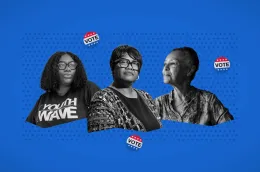
Black women have long played a key role in protecting voting rights and urging their communities to cast ballots. This three-part series highlights their work as they build political power and demand a seat at the table.
ATLANTA ‒ Mary-Pat Hector headed one recent afternoon down the promenade that connects historically Black colleges here, stopping at a table draped with a bright blue tablecloth. “Rise” was emblazoned across the front.
The 26-year-old leader of the nonpartisan organization checked in with organizers who had spent hours urging students at Clark Atlanta University to register to vote.
“Excuse me, queen. Are you registered to vote?’’ one organizer asked a passerby.
Before she left, Hector had collected the 263 cards from students who pledged to vote and seven forms from students who'd registered. The stop was one of many in the organization’s effort to connect with thousands of students across the country.
“It always felt like this was something I just needed to do,’’ said Hector, whose passion to protect voting rights grew during the 2016 presidential election. “I knew that there was a sense of urgency, that we were like beating down the clock ‒ the same feeling that I feel right now.”
Read here the full article published by USA Today News on 20 October 2024.
Image by USA Today News

Over half of Arizona’s voters were women in 2020, according to a CNN exit poll.
This is not a recent phenomenon. Women in the U.S. have had a higher voter turnout than men since the 1960s when the Civil Rights Act of 1964 was put in place to prohibit discrimination, according to the Center for American Women and Politics. Women have longtime made significant impacts on politics, and students expect this year will not be an exception.
However, the path to gender equality in voting has not been easy, and some women still face challenges when trying to be politically active.
Why women are active voters
Ashlyn Mickelson, a junior studying sociology and the secretary of Young Democratic Socialists of America at ASU, said issues on the ballot this year have prompted more women to vote.
"Women tend to prioritize healthcare, education and reproductive rights," Mickelson said. "So one of the reasons women have been more active in politics recently is because those things are more at danger."
Read here the full article published by The State Press on 21 October 2024.
Image by The State Press
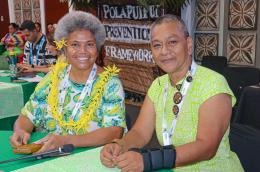
Assistant Foreign Affairs Minister Lenora Qereqeretabua said it is important for the Fiji government to be represented at the Commonwealth Heads of Government Meeting (CHOGM) 2024 Samoa.
Speaking to The Fiji Times, Ms Qereqeretabua said it was a great time for Fiji’s inclusion as it was important to be heard as a country.
“It is important for us to be here and to be one of the many voices in the Pacific in particular when Fiji wanted to be a leader within the region,” Ms Qereqeretabua said.
“With the Ocean of Peace, it is important that the government of Fiji is represented at the CHOGM with nearly 60 other members of the Commonwealth here.
“When the Minister’s Forum begins this Thursday, Prime Minister Sitiveni Rabuka will be here, but in the meantime it is great to be heard as a country.”
The Prime Minister Sitiveni Rabuka is expected to arrive today and will be meeting with the Fijian diaspora in Samoa.
According to the Fijian community in Samoa, Mr Rabuka will be meeting with them at the Secretariat of the Pacific Regional Environment Programme (SPREP).
Read here the full article published by the Fiji Times on 23 October 2024.
Image by Fiji Times
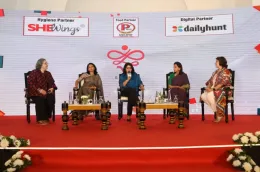
The We Women Want Festival And Awards by NewsX, was a power-packed session, featuring accomplished women from various fields, sharing their experiences and perspectives on empowerment.
The We Women Want Festival And Awards by NewsX, was a power-packed session, featuring accomplished women from various fields, sharing their experiences and perspectives on empowerment.
Hosted by Priya Sehgal, the panel included prominent voices like Kaveree Bamzai (Senior Journalist & Author), Naina Lal Kidwai (Chair of India Sanitation Coalition & Rothschild India), Shaifalika Panda (Trustee & Founder CEO, Bansidhar & Ila Panda Foundation), and Shama Mohamed (Congress National Spokesperson).
Read here the full article published by NewsX World on 14 October 2024.
Image credits: NewsX World
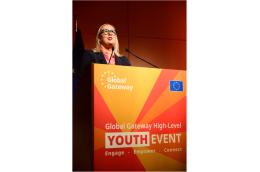
Distinguished Guests,
Dear friends,
It is an absolute pleasure to be here today with so many bright, passionate, young leaders and changemakers.
You are the driving force behind the progress we've made in recent years.
And what an incredible journey it has been!
As we kick off this Global Gateway High-Level Youth Event, I want to acknowledge the many partners that have been essential in driving this movement forward. Many of you are here today, in person as well as online.
But this is more than recognition.
It's a celebration of your passion and dedication.
Together, we have achieved so much.
Two years ago, with your help, the European Commission launched its first Youth Action Plan in External Action.
It was a landmark moment – the culmination of a collective effort that involved more than 220 international stakeholders, including young people and youth organisations.
Our goals were ambitious:
To engage young people by giving them a voice in policy and decision making.
To empower them with the resources they need to lead sustainable change.
Read here the full speech deliver by Commissioner Jutta Urpalainen published on the European Commission website on 10 October 2024.
Image by Commissioner Jutta Urpalainen
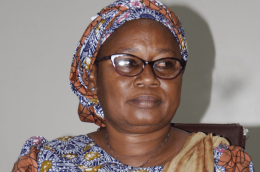
Adamawa State deputy governor, Professor Kaletapwa Farauta, has highlighted the growing need for female leadership to bring about significant change in Nigeria’s political landscape.
Speaking at the 28th Annual National Conference of the National Association of Women in Colleges of Education (WICE) in Yola, Farauta praised the state’s progress in empowering women in politics. She emphasised the pivotal role women can play in leadership, noting, “Nigeria is waiting for great women to make a change in the political arena.”
Farauta underlined the benefits of female leadership, particularly in terms of accountability and effective governance. She also expressed optimism about the possibility of women becoming local government chairpersons soon.
Read here the full article published by the Daily Trust on 9 October 2024.
Image by Daily Trust
There is a persistent gender gap in motivations to run for political office. While exposure to role models is widely believed to increase women’s political ambition, there is little field experimental evidence on whether exposure to female politicians in realistic settings can increase political ambition. We conducted a field experiment in which a sample of 612 female students was randomly assigned to receive emails inviting them to an event that included career workshops with female politicians, or no email. The treatment increased interest in the ongoing national election campaign, but, against expectations, did not have any positive effect on political ambition. Our results suggest that female politicians who discuss their experience bluntly, instead of following a motivational script, may fail to motivate other women to pursue a political career. These results highlight the need for more research into the type of events and messages that bring more women into politics.
Click here to see the study.
IMF examines the impact of gender equality on electoral violence in Africa using micro-level data from the sixth round of Afrobarometer surveys. The sample covers 30 countries. IMF finds that gender equality is associated with lower electoral violence. Quantitatively, their estimates show that an increase in female-to-male labor force participation ratio by 1 percentage point is correlated with a reduction of the probability of electoral violence across the continent by around 4.2 percentage points. Their results are robust to alternative ways to measure electoral violence and gender equality, as well as to alternative specifications. The findings of this paper support the long-standing view that women empowerment contributes to the reduction of violence and underscore the urgency of addressing gender inequality in Africa.
Click here to see the report.
The research had three main objectives: first, to obtain a more detailed picture of the situation regarding women’s political participation in the CARICOM countries; second, to identify contextual factors and analyse how they affect the presence of Caribbean women in politics; and third, to provide a list of necessary measures to increase women’s political participation and presence in decision-making positions. In light of these findings, this regional analysis will be an important resource for political parties, civil society, women’s organizations and governments to help identify the steps necessary to increase the presence and representation of women in politics. Moreover, we hope it will serve as a catalyst for strategic alliances amongst these diverse actors. In particular, we hope that the findings will prompt further research and inspire policy reform that accelerates equal political participation of women and men in decision-making structures and promotes it as an indispensable driver for more effective democratic governance, and ultimately, for sustainable human development.
Click here to see the report.

Women are under-represented on decision-making bodies and in positions of economic power. They continue to earn systematically less than men for the same work. Encouraging women to enter politics is key to changing this. More women in politics, and particularly in parliaments, can have a trickle-down effect for the whole of society. Women’s increasing influence results in positive changes in laws, practices, behaviour and cultures. However, women running for office face numerous challenges – including violence, harassment and intimidation.
Click here to see the factsheet.
The global average for women’s representation in parliaments was 24 per cent in January 2019. Political parties are identified as responsible for women’s underrepresentation, given their role as the main gatekeepers of elected decision-making positions in most countries.
This factsheet illustrates the link of gender in political parties’ programmes and operational policies, processes and practices. It highlights the approach for institutionalizing gender equality in the conceptualization, development and implementation of a party’s strategic plan.
Click here to see the academic article.

This Discussion Paper puts together relevant data on the inclusion of young people and women in European Parliament elections.
It is focused on two pitfalls of EU electoral democracy: voter absenteeism on the part of young people, and the under-representation of women in the European Parliament. Data have been combined from the European Election Studies (EES), the European Parliament, the Gender Statistics Database of the European Institute for Gender Equality (EIGE), face-to-face and telephone interviews, and semi-structured questionnaires. Additionally, policy papers and other relevant texts (authored by organizations dedicated to young people, women and think tanks, as well as Europarties and groups in the European Parliament) have been considered. The scope of the paper is European, although data at a national level from France, Poland and Spain (a founding EU country, an Eastern European country and a Southern European country) are introduced in different sections to shed light on national differences. With the purpose of enriching and making EU electoral democracy stronger, the author presents, as food for thought, some evidence on key elements to foster participation in European Parliament elections, as well as to reach a more balanced composition of the European Parliament in terms of age and gender.
Click here to see the academic article.