Women's Leadership
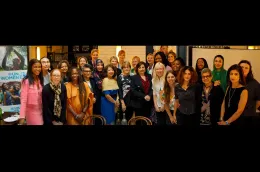
Launched during the 79th session of UN General Assembly, the UN Women Leaders Network unites a global intergenerational and intersectional group of women leaders advocating for gender-equal participation in leadership and decision-making.
The UN Women Leaders Network was launched this week on the sidelines of the 79th UN General Assembly. It is the first permanent network of its kind, composed of intergenerational and intersectional women leaders, and its members represent the change needed in the traditional image of leadership today.
The network includes both emerging and more established leaders across ages, regions, and professions. The network will work together to promote the increase and advancement of women in leadership and decision-making spaces worldwide, and functions as a platform to a diverse group of women leaders to discuss and exchange ideas, solutions and experiences as leaders, community-builders and decision-makers.
Read here the full article published by UN Women on 27 September 2024.
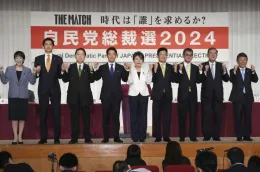
When Japan’s ruling political party, the Liberal Democratic Party (LDP), votes on Friday for its next leader, it will effectively be choosing the country’s next Prime Minister.
A slew of scandals have plagued the tenure of Prime Minister Fumio Kishida, who announced in August he would step down after assuming power in 2021. From his son throwing a party at an official residence to alleged fundraising misconduct by party members, the scandals in addition to underwhelming economic reform have dented the LDP’s popularity and forced a reset.
A record nine lawmakers are standing in the intra-party election, competing for majority support among the party’s 368 members of parliament and 368 representatives of its more than a million dues-paying rank-and-file members. Most candidates, according to AP, have vowed to call for a general election, which isn’t due until October 2025, shortly after being elevated within the party, to try to capitalize on their fresh image.
Read here the full article published by the Time Magazine on 26 September 2024.
Image credits: Time Magazine
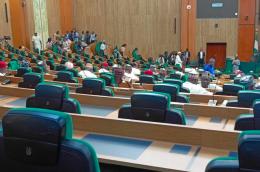
On March 14, 2024, rural women from communities in the Federal Capital Territory of Nigeria expressed concerns over women’s low inclusion in politics. The women lamented neglect and financial constraints as problems in assessing political and leadership positions. The outcome of the 2023 general elections is evidence of low women’s political leadership representation. The low participation of women in political leadership results in less development for the nation since not all capable human resources are utilised.
To build women’s capacity for greater inclusion in leadership, the Nigerian government should foster avenues for knowledge acquisition and networking. The mass media should also commit to projecting the effects of disadvantageous cultural beliefs. Sharing content that influences and shapes cultural beliefs would boost inclusivity. The Nigerian government should likewise invest in initiatives that fund and encourage women’s political dreams and aspirations.
A significant number of Nigerian women still face a lot of social and financial challenges despite having fundamental political rights. These social challenges are exemplified by disadvantageous cultural beliefs. Cultural beliefs such as early girl-child marriage disrupt girls’ education, affecting their political aspirations and dreams. A report by Save the Children International reveals that Nigeria homes 23 million girl-child brides which inadvertently results in the low representation of women. Addressing disadvantageous cultural beliefs such as this requires the full leverage of the media.
Read here the full article published by The Guardian Nigeria on 25 September 2024.
Image credits: The Guardian Nigeria
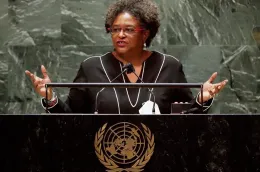
As global instability mounts, the stakes are high for the 79th United Nations General Assembly high-level debate, which begins Tuesday in New York City.
While tensions in Europe and the Middle East continue to dominate the diplomatic agenda and shake up the global order, all eyes will be on the Big Apple for leaders to set the diplomatic agenda for the coming year. This year, once again, the U.N. General Assembly high-level debate will be dominated by men speaking at the rostrum.
A provisional list of speakers published earlier in September - which is likely to change until the very last moment - revealed that less than 10 of the leaders set to speak at the high-level week are women, showing the hill remains steep for women in politics, especially in the top job. There were only 27 countries where 28 women served as Heads of State and/or Government globally as of June, and gender equality in the highest positions of power will not be reached for another 130 years, according to UN Women.
While, so far, only around ten women prime ministers or presidents are set to travel to New York for the event, there is a bright side: the first woman to speak comes earlier than usual.
Read here the full article published by Forbes on 23 September 2024.
Image credits: Forbes
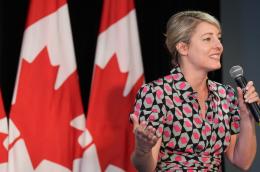
Foreign Affairs Minister Mélanie Joly says it's time for a woman to lead the United Nations, a call echoed by 14 other female foreign ministers Friday.
"Within the UN system, it is time for the next secretary-general to be a woman," she told reporters in Toronto.
"The UN has been existing for more than 75 years, so it is more than time."
States will nominate the UN's tenth secretary-general for a term starting in 2027. Women have only served in the role of deputy secretary-general, including Canadian diplomat Louise Fréchette.
The ministers also say there should be gender parity in the role of the president of the UN General Assembly — out of 72 terms only four women have held the position.
Joly co-hosted women foreign ministers in Toronto alongside her Jamaican counterpart Kamina Johnson Smith, following a similar gathering in 2018. The two-day meeting included ministers from Ghana, Indonesia, Nepal and Romania. It came ahead of high-level visits at the UN General Assembly next week in New York City.
Read here the full article published by CTV News on 20 September 2024.
Image credits: CTV News
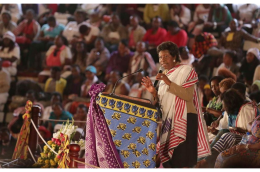
What you need to know:
-
Women politicians face steep costs, both financial and personal, as they navigate a landscape fraught with cultural barriers, discrimination, and systemic challenges.
-
Despite progress made since the 2010 Constitution, women's representation in Kenyan politics remains low.
-
Resilient leaders like Eddah Njeri, Naisula Lesuuda, and Myllene Bosibori encountered multifaceted obstacles, from exorbitant campaign expenses to sexual harassment and societal prejudices.
-
While initiatives to support them show promise, the road to equal representation remains long, calling for comprehensive reforms and a shift in cultural attitudes.
The sun had barely risen over Embu town when Eddah Njeri unlocked the door to one of her M-Pesa shops. As she arranged the day's float, her mind wasn't on mobile money transactions. Instead, it raced with campaign strategies, voter outreach plans, and the daunting financial hurdles that lay ahead. The successful businesswoman, had recently made the bold decision to run for the Kirimiri Ward seat in Manyatta Constituency.
Being a greenhorn in politics, she says, nothing had prepared her for the challenges to expect on the campaign trail and how she would overcome them.
As she embarked on her campaign journey, she would soon face a gauntlet of challenges that would test her resolve, drain her resources, and force her to confront deeply entrenched societal biases.
Read here the full article published by The Nation Africa on 20 September 2024.
Image credits: The Nation Africa
May 3: A preliminary gender audit of the South African elections due to be held on 8 May shows that while there will be a slight increase in women’s representation, women are still missing from the top echelons of political parties and from the media.
“On World Press Freedom Day it is an indictment on South Africa that women still constitute just one fifth of those whose views and voices are heard,” said GL CEO Colleen Lowe Morna at the launch of Gender Links report.
At 55% women will constitute the majority of voters in the 2019 South African elections. Gender Links predicts using available data that the proportion of women in the House of Assembly will increase from 40% in 2014 to 44% in 2019.
But, without a legislated quota, and with vacillating commitment by political parties to gender parity, South Africa will again miss the 50% mark. Apart from Agang, the political party formed by anti-apartheid activist Mamphela Ramphele that is expected to garner less than 1% of the vote, none of the political parties contesting has achieved gender parity in its top five.
“Male leaders either oppose quotas; fail to implement them; or backslide into misogynistic slurs despite the lofty language in their political manifestos,” noted GL advisor Kubi Rama who authored the report.
A further measure of women’s lack of #Voiceandchoice in our society is the fact that women sources in news coverage persists at 22% or about one fifth of those whose views and voices are heard in the elections. Despite being one of the most pressing social justice issues of our time, gender equality represents less than one percent of media coverage, according to Media Monitoring Africa.
“The message as South African go to the polls next week are clear,” says Rama. “Political parties need to engage with the fact the women constitute 55% of the electorate and address their concerns in manifestos, party lists and in leadership. The media must do better. Women sources are available but barely accessed.”
Click here to see the report.
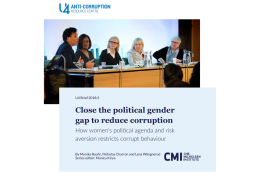
Including women in local councils is strongly negatively associated with the prevalence of both petty and grand forms of corruption. This reduction in corruption is primarily experienced among women. A study suggests that female representatives seek to further two separate political agendas once they attain public office: 1) the improvement of public service delivery in sectors that tend to primarily benefit women, and 2) the breakup of male-dominated collusive networks.
Main points:
- Increased representation of women in elected office can reduce both petty and grand corruption.
- Women in elected office reduce corruption both because they are risk averse and because they have a different political agenda than men.
- Women in elected office reduce petty corruption in their efforts to improve public service delivery and grand corruption because it is detrimental to their political careers.
- Women in elected office reduce the rate of bribery for public services, particularly for women.
- Donors can promote women’s representation and reduced corruption through supporting the anti-corruption agendas chosen by women.
Click here to see the study.
South Africa has made great strides in establishing a constitutional and legislative framework for building a participatory democracy. This paper seeks to explore the extent to which existing participatory mechanisms enable active participation by women in municipal processes, and possible alternative approaches and models to strengthen this. A gap in studies thus far reveals the need to examine to what extent current participation mechanisms accommodate equity issues by enabling marginalized or vulnerable groups to participate in governance, and women living in poverty, in particular. The paper commences with an assessment of the existing policy framework for public participation, and then – drawing on literature and case studies on approaches and models for strengthening women's participation – puts forward recommendations in this regard.
Click here to see the report.
Although Sri Lanka has 51% women, their participation in local governance as well as in the national parliament is 5% in total. The strong social development indicator of women in areas such as health and education has not translated into their increased political participation. As such, this study focuses on the level of women’s participation in local governance and explores why there is a low level of political participation of women in local governance. Both quantitative and qualitative methods comprising of questionnaire survey, interviews and focus group discussions were employed in this study. The findings show organized collective involvement of women was effective only in social welfare, livelihood and social security than political participation. The study also reveals that the low level of political participation by women is attributable to biological, economic, psychological, religious and political factors. Overall, it was found that although women are interested in participating in local governance, they have a lack of space for political participation.
Click here to see the report.
Women are underrepresented in most elected and appointed positions in local government in the United States. This essay details what we know about women’s representation in cities and counties, with a discussion of the factors associated with women’s higher or lower levels of representation. The effects of women’s lack of parity are then discussed including policy attitudes, the policy process, and policy outcomes. In sum, this essay organizes knowledge on women in local government, identifies gaps in what we know, and promotes future investigations to expand our knowledge of gender politics, local politics and governance, and public policy.
Click here to see the report.
Gender quotas have diffused rapidly around the globe in recent decades, suggesting widespread and dramatic transformations in women's access to political power. Yet, quotas often face serious challenges following their introduction, resulting in a gap between quota requirements and electoral outcomes. To explore these dynamics, this article develops a theoretical account of how and why political elites resist the changes called for by quota reforms. It argues that three tools predicated upon women's exclusion from the political sphere – false universalism and political principles, male power and political survival, and gender and leadership norms – are often mobilized to render quotas illegitimate, making resistance understandable and, indeed, even desirable on a host of grounds. The article then catalogues trends in resistance at different stages of the electoral process, integrating materials from case studies around the world – and exposing a wide range of strategies, often creative, to subvert the impact of quota policies. Adopting gender quotas may thus be only the beginning – rather than the end – of a long and contested process to empower women as political actors.
Click here to see the report.