Women's Leadership
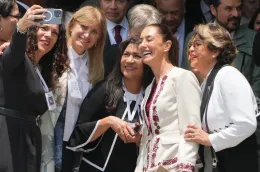
At her rallies and on the campaign trail ahead of Mexico’s presidential election in June, President-elect Claudia Sheinbaum made one phrase in particular her mantra: “It’s women’s time.” She repeated it in a speech at Mexico City’s Metropolitan Theater last month to mark the official certification of her election victory, while also highlighting the fact that, after 200 years of independence and 65 presidentes, Mexico will finally have its first presidenta—with the “a” in Spanish denoting the feminine.
Now that preparations are underway for Sheinbaum’s Oct. 1 inauguration, the historic moment gives Mexico an opening to champion women’s rights and leadership, not just at home, but globally—and at a crucial time. In what has been called the Year of the Election, with countries home to half the world’s population going to the polls in 2024, the number of women serving as heads of state is on the decline, from a peak of 38 out of 195 countries in 2023 to 25 as of last month. Around the world, women in politics are more likely to face violence and harassment than their male counterparts, giving them cause to think twice about running for office or reelection. As it is, though women count for roughly half the global population, they only hold one in four federal legislative seats.
Read here the full article published by World Politic Review on 18 September 2024.
Image credits: World Politic Review
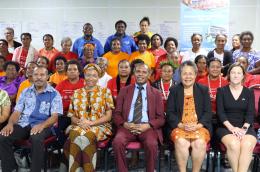
UN Women’s project Women Make Change* underscores the importance of increasing women’s participation and leadership in politics at all levels. Despite global advancements, women continue to be underrepresented in politics, particularly at the subnational level. In Papua New Guinea (PNG), women encounter significant obstacles, including cultural norms, limited resources, and discrimination. Presently, only three out of 118 members of national parliament are women, and just 2 per cent of subnational ward members.
UN Women is dedicated to advancing gender equality and women’s empowerment in PNG. Recently, UN Women conducted the initiative Political Leadership and Campaign Strategies Training for women leaders across the country’s four regions. This initiative aims to enhance the capacity of women leaders at the subnational level who are planning to contest the upcoming election, enabling them to effectively participate in political processes and elections, some for the first time. The trainings were held simultaneously in Lae for the Momase region, Hagen for the Highlands region, and Port Moresby for the Niugini and Southern regions. A total of 121 women attended. Attendants were equipped with knowledge of political systems, campaign strategies, messaging, and communication strategies. The training also fostered networking and collaboration among participants.
“As the sitting ward member of Ward 8 in Kimbe Urban Local Level Government in West New Britain Province, I have gained invaluable skills and knowledge from this training,” said Paula Golpak, one of the participants of the Niugini Islands region training. “It has equipped us with concrete strategies and a deeper understanding of effective governance, further motivating us to plan and prepare thoroughly for the upcoming election and prioritize the needs of the most vulnerable."
Read here the full article published by UN Women Asia & The Pacific on 18 September 2024.
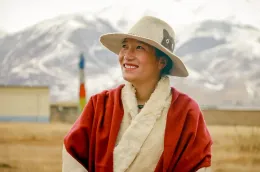
"Environmental work is meaningless and income-less. Why don't you go home and help your mother with housework?" This is what I frequently heard when I firstly began volunteering with the Qinghai Snowland Great Rivers Environmental Protection Association (SGR Association). Many couldn't understand why I dedicated my time to protecting our water sources, attending various trainings, and creating eco-friendly products to promote sustainable living. But I didn’t let their doubts stop me. The urgency of climate action is too significant to ignore.
I live in Qinghai Province, on the Tibetan Plateau in China. My journey into environmental work began in 2018 when I volunteered to start writing an eco-diary. I record daily observations of the local wildlife, and plants, changing weather patterns, and fluctuations in nearby water sources. Through this practice, I became deeply aware of how climate change was affecting my community.
Starting last year, our local water sources began to dry up, and the grassland in our summer pastures became increasingly scarce. The rising temperatures and decreased rainfall left our livestock with insufficient water and food. As a result, villagers were forced to travel further to get water and purchase additional grass to feed their cows, increasing family expenses. Moreover, the reduced yield of caterpillar fungus—used in traditional Chinese and Tibetan medicine—led to significant financial losses for many in the community.
Read here the full article published by UN Women Asia & The Pacific on 18 September 2024.
Japan could soon have its first female prime minister.
The country's ruling Liberal Democratic Party (LDP) will later this month choose a new leader who will be virtually guaranteed the top job.
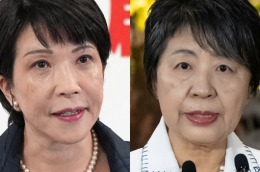
In the running are two formidable women: Foreign Minister Yoko Kamikawa and Economics Minister Sanae Takaichi.
Having either become prime minister would seem to be a dramatic leap forward for a country which lags behind most of the world in measures of political gender equality.
However, observers say having Ms Takaichi smash the political glass ceiling would not necessarily be good for progressive issues in Japan more generally.
Who are the women running for the leadership?
Ms Takaichi has been a member of Japan's diet, or parliament, since 1993 and ran unsuccessfully for the leadership of the LDP in 2021.
A protege of former prime minister Shinzo Abe, she has labelled her big spending economic stimulus policies "Sanaenomics" following his famous "Abenomics".
She's also known as a hardline conservative on social issues and often cites Margaret Thatcher, the UK's conservative "Iron Lady" prime minister from the 1980s, as an inspiration.
Read here the full article published by the ABC News on 13 September 2024.
Image credits: ABC News
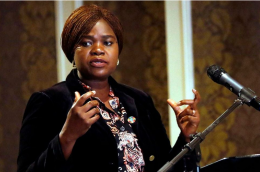
What you need to know:
In the bustling corridors of the UN Kenya office, a quiet revolution has been taking place under the stewardship of an unassuming powerhouse. Anna Mutavati, with her calm demeanour and disarming simplicity, has been reshaping the landscape of women's rights and political participation in Kenya for the past five years.
As she prepares to ascend to a new role as Deputy Director of the UN Women regional office for Eastern and Southern Africa, her legacy serves as a testament to the power of dedicated leadership and strategic intervention.
Read here the full article published by The Nation on 10 September 2024.
Image credits: The Nation
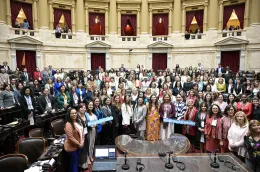
In one of the biggest electoral years in recent history, 107 countries have never had a woman Head of State. In 2024, women held only 27 per cent of seats in national parliaments and 35.5 per cent of seats in local governments.
The United Nations promotes the principles that underly the ideal of democracy: peace, security, development, and human rights. In democratic systems, women and men have equal rights and are free from discrimination, and people have a say in decisions and can hold decision-makers accountable.Women’s political participation is critical for a well-functioning democracy.
Their inclusion is a matter of justice and a key factor in creating more effective governance. Having more women in policymaking has shown to help advance legislation on crucial issues, such as health, education, childcare, infrastructure and ending violence against women and serve as an inspiration for girls to pursue higher education and career opportunities.Yet, women’s voices are missing from decision-making in every region of the world.
On the International Day of Democracy on 15 September, and in the run-up to the 30th anniversary of the visionary Beijing Declaration and Platform for Action—the most comprehensive global agenda for the achievement of gender equality and the empowerment of women and girls—find out why there are so few women in decision-making and what can be done to close the gap.
Read here the full article published by UN Women on 10 September 2024.
The Second Annual Summer School for Young Leaders from African Political Parties took place in Kigali, Rwanda, on 6–8 June 2018. The overall theme was ‘Youth participation in political processes: emerging trends of the negative aspects of money in politics’.
The Summer School unfolded in a context that recognized that youth participation in politics, especially by young women, either in the form of direct representation in political structures or within less formal modes of political engagement, remains limited across Africa.
These low levels of active participation and influence by young people unfold in a situation where young people constitute a very large and growing proportion of the general population.
Click here to see the report.
Gender quotas are a means to improve women’s political representation. This article examines the impact of Jordan’s municipal quota enacted in 2007. The quota drew into the political arena women who would otherwise not have run for office. Women councillors have firmly established their rightful presence on the local councils, a public realm previously deemed only for men. They successfully navigated the give-and-take of local Jordanian politics. In the process they gained a hard-won, invaluable political education and emerged as Jordan’s first sizable body of experienced women politicians on the local level. This article draws on extensive personal interviews with twenty-six female councillors from the first cohort of women elected under the quota. The results show that even a quota enacted in a clientelist system such as Jordan’s can bring positive change for women’s representation in politics.
This GSoD In Focus showcases global and regional data around trends in and the progression of gender equality, based on data from the Global State of Democracy (GSoD) Indices. The GSoD Indices are International IDEA’s measurement of democracy for 158 countries between 1975 and 2017.
The political position of women today is better than just 20 years ago. Trends in the GSoD Indices Gender Equality subcomponent show improvement in gender equality in every region of the world. Women are in more positions of political power, are more represented in the political sphere, have higher access to education and less barriers to civil society participation. In 1997, only 3 per cent of countries had a lower chamber legislature made up of more than 30 per cent women; in 2017, this had risen to 28 per cent of countries. These gains should be celebrated, although much progress remains to be made before most countries have a critical minority of women in parliament. Furthermore, progress with women in ministerial positions is slower. Although gender equality is a necessary ingredient for a healthy democracy, some of the countries in the GSoD sample have a high proportion of women in political office coupled with low levels of democratic performance overall. While these countries are often hailed for their high levels of gender equality, these gains need to be analysed critically, as women’s political agency within regimes that have democratic deficits may be limited.
Click here to see the report.
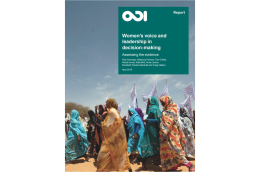
The report looks at whether women’s capabilities and actions in different spheres lead them to have more presence and influence within private and public decision-making. Based on a review of over 400 sources, the report is organised around thematic chapters on women's:
- political participation, including in peace processes, constitutional reform, political parties and through quotas;
- social activism, through social mobilisation and social accountability processes; and
- economic empowerment, through access to financial and productive assets and the labour market.
Overall, it is known much more about women’s exercise of voice, than about when and how they are effective leaders and influencers. A large body of research clearly shows that a woman’s ownership of assets and employment can increase her power within the household, but little is known about how this effects her public power. While increases in the number of women in leadership positions is itself a measure of gender equality, there is no automatic link between increases in the power of individual women and more equitable political settlements or improved outcomes for women more broadly. However, the evidence is unequivocal that women women’s collective action through social movements, political coalitions and economic associations has driven legal, policy and social norm change in many countries. What is less understood is how different political settlements shape women's power and influence, and how women in public navigate and reshape gendered institutions, relationships and networks.
Click here to see the report.

The government's disposition toward citizens' rights and freedoms is a measure of its openness and an indicator of the type of relationship it holds with them. The constitution stands as the most powerful reflection of that relationship. Egypt certainly has a long-standing tradition of drafting constitutions as a political process. Throughout that tradition, granting certain rights or consolidating some forms of government were constantly pursued and this is evident in Egyptian constitutions since 1923. Citizen participation has always been an integral part of drawing Egyptian constitutions up, with advocacy playing a role in guaranteeing rights for all, men and women.
Egyptian women played a major role in the country’s transformations throughout history, especially in drafting constitutions. Since Egyptian women participated in the 1919 Protests, their rights have become a key issue in the public sphere. Demands were put forward to include some rights for women in Egyptian constitutions.
Nazra for Feminist Studies is issuing this paper in February 2019, after the Egyptian Parliament’s general session of February 14, when Parliament referred the Constitutional Amendments Proposal (suggesting amendments to several articles in the 2014 Egyptian constitution) to the Constitutional and Legislative Committee for review. In this paper, we shall discuss the overall state of women’s rights in Egypt in light of the proposed amendments, as we attempt to answer some basic questions: will amendments to the 2014 Constitution benefit women? Do the proposed amendments include more rights for women? Do Egyptian women in 2019 need constitutional amendments that would extend the president’s term, hence detract from the principle of separation of powers and other rights and freedoms (including women’s rights), already guaranteed by the 2014 Constitution? Finally, would raising women’s quotas in Egyptian elected councils be conducive to women’s right to participate in politics or is women’s limited participation attributed to more complex factors?
Click here to see the report.
This paper is part of a Gender Briefing Series to support women’s meaningful participation and the integration of gender perspectives in peace processes that aim to end violent intrastate conflict. The key target audience of these series of papers is women, gender equality advocates, and others engaged in peace processes, who wish to influence negotiations with a view to:
- addressing the particular experiences of women during conflict, and
- achieving lasting peace process outcomes that will improve women’s lives and the lives of those around them
This Brief presents the different forms of territorial power-sharing that arise in peace agreements, and the potential opportunities and risks for women’s inclusion that these can entail. It proposes critical questions that women could ask of peace processes if territorial power-sharing is likely to be negotiated, and highlights strategies and tactics that women and allies have used in conflict-affected contexts to navigate inclusion issues.
Click here to see the paper Gaining ground: Women and territorial power-sharing in peace processes.