Women's Leadership

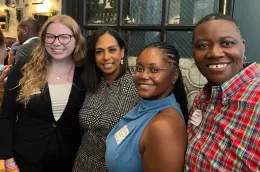
The personal is political” is a popular feminist slogan that emerged in the late 1960s and became central to the feminist movements of the 1970s. This concept fundamentally changed how personal experiences and societal structures were perceived, arguing that personal experiences are often rooted in broader social and political contexts.

Often attributed to Carol Hanisch, a feminist activist who wrote an influential essay of the same title in 1969, Hanisch herself noted that the phrase was coined as a rallying cry during feminist consciousness-raising sessions. These were gatherings where women shared their personal experiences, realizing common patterns that highlighted systemic issues rather than isolated personal problems. This sharing helped uncover the political nature of seemingly personal issues, like domestic labour, childcare, and reproductive rights.

As humans, we are all products of our socialization. Hence, personal experiences often reflect the political structures that we belong to and the ideologies that we project. Personal experiences, particularly those of women, are often shaped by broader social, political, and economic structures. For example, issues like domestic violence, workplace discrimination, and reproductive rights are not just individual concerns but reflect systemic inequalities and power imbalances.

Read here the full article published by the Nigerian Tribune on 1 August 2024.

Image by Nigerian Tribune 


Executive Summary

In August 2013, RepresentWomen launched the Gender Parity Index (GPI) to help researchers and advocates track progress toward gender-balanced governance and identify opportunities for increasing women’s political representation in the U.S. Each year, we assign all 50 states a Gender Parity Score, letter grade, and ranking according to their proximity to parity. One of the key takeaways from this exercise is that progress toward gender balance is slower and less stable than it first appears.

In the first GPI, 40 states earned a “D” grade (< 25.0) or worse (< 10.0); the remaining 10 states were split evenly between “Cs” (< 33.0) and “Bs” (< 50.0), and no state achieved an “A” (50.0 and above). Eleven years later, two states (Oregon and Maine) have earned “A” grades, 22 states have earned “Bs” and “Cs,” and 26 states received a “D.” For the first time ever, no state has received an “F.”

However, great improvements in women’s representation often overshadow smaller changes that occur year-to-year. The 2024 Index reflects our complex political landscape, suggesting progress in women’s political representation may stagnate or even backslide. Every year shows differences both in the changes themselves and the magnitude of change. This Index shows the most movement for women at the state and local levels: Louisiana elected two new woman state executives, and Indiana elected nine new women to local offices.

Overall, women are still underrepresented at every level of government in the U.S., comprising over 50% of the population but holding just under one-third of all elected positions. To make lasting progress in women’s representation, we must take a systems-level approach that creates opportunities for women to enter the political sphere and supports the women already in office.

Read here the full report published by RepresentWomen on 30 July 2024.

Image by RepresentWomen


WOMEN make up half the population here, so it only makes sense that the rate of women’s participation in politics is improved to better represent Malaysia’s demographic.

Those in academia and civil societies working on this issue say having more women in important leadership positions in politics and the government will foster a more inclusive and democratic society.

“Women’s participation in politics is necessary for a more inclusive democracy and for them to exercise their political rights,” says Dr Lai Suat Yan, senior lecturer in the gender studies programme at Universiti Malaya’s faculty of arts and social sciences.

The country also stands to benefit from the unique perspectives and invaluable contributions that women can bring to the table that will enrich decision-making processes and governance outcomes.

Parliwomen co-leader Aisyah Adly says women in politics can ensure that the often overlooked concerns of women can be highlighted in discussions revolving around policies and decision-making.

“Their advocacy leads to the formulation of more comprehensive and responsive policies that address the needs of all citizens, thereby promoting social cohesion and sustainable development.

Read here the full article published by The Star on 28 July 2024.

Image by The Star


As a young woman in politics, I often wonder when it will no longer matter that I’m a woman in politics and when I’ll be commended for my work alone, no matter my sex.

I speak very proudly of my role and responsibilities as an MSYP, and I’m forever grateful that I’m able to do what I do.

Though sometimes, I have to remind myself that society wasn't always so accepting of ambitious, influential, and opinionated women - and to an extent, it still isn’t.

I fully recognise that female representation is continually growing within Scottish and UK politics, and I think it’s fantastic that being a woman is no longer a barrier to this world that it once was.

Only a couple of weeks ago did we see the proportion of women elected into the House of Commons increase to more than 40%, while In the Scottish Parliament, women account for 46% of members.

Meanwhile, in the Scottish Youth Parliament, the board of trustees is fully female and the membership as a whole is the most diverse and inclusive parliament in the UK.

Read here the full article published by the Greenock Telegraph on 29 July 2024.

Image by Greenock Telegraph 


There are too many accomplished women in the democracy reform movement whose voices go unheard—which perpetuates misrepresentation in U.S. politics. RepresentWomen, an organization dedicated to creating gender-balanced representation in elected and appointed government positions, maintains a database that aims to change this.

Their Women Experts in Democracy Directory is meant to help organizations and media outlets connect with women in politics to ensure their meaningful representation in today’s important political conversations. It allows users to search almost 100 women by their location and area of expertise.

The directory was born out of RepresentWomen’s annual convening of women experts, the Democracy Solutions Summit, a three-day online conference that brings together hundreds of women experts, advocates and elected officials to share solutions to creating a stronger, more representative democracy.

“The Women Experts in Democracy Directory is a one-of-a-kind directory for finding qualified and knowledgeable women experts in the democracy reform space for various events, conferences and more,” said Victoria Pelletier, national partnerships director at RepresentWomen. “With the existence of so many manels [all-male panels], it’s an incredible resource to make sure women’s voices, experiences and expertise are part of all conversation.”

Read here the full article published by Ms. Magazine on 23 July 2024.

Image by Ms. Magazine


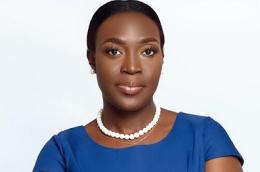
Transport Minister Barbara Creecy and Transnet CEO Michelle Phillips will be critical in changing the direction of South Africa’s economy.

Transnet’s inefficiencies have seriously inhibited growth in South Africa, with manufacturers, miners, and farmers struggling to move their goods.

In 2023, South Africa recorded historically low coal and iron-ore exports due to logistics troubles, specifically rail.

According to the consultancy research group Gain, the issues at Transnet’s Freight Rail (TFR) led to a projected loss of R353 billion in 2023, roughly 4.9% of GDP – in line with the National Logistics Crisis Committee’s estimates.

The picture is not much better when goods reach the coast.

The Cape Town port was also named the worst port in the world in the recent 2023 Container Port Performance Index (CPPI), coming 405 out of 405.

However, Ngqura (404), Durban (398), and Port Elizabeth (391) also ranked incredibly poorly.

Exporting is not the only issue, with importers struggling to access goods across the country.

For instance, Woolworths previously said that its Fashion, Beauty and Home business was impacted by poor availability, primarily caused by the late arrival of certain summer ranges arising from congestion at Transnet’s ports.

Amid these struggles, Creecy and Phillips will be heavily responsible for the performance of the economy.

Read here the full article published by Business Tech on 22 July 2024.

Image by Business Tech


Recent years have witnessed a troubling rise in reports of assault, intimidation, and abuse directed at politically active women. The United Nations General Assembly first called for zero tolerance for violence against female candidates and elected officials in Resolution 66/130 in 2011. In 2012, Bolivia became the first country in the world to criminalize political violence and harassment against women, in response to a more than decade-long campaign by locally elected women to document the numerous injuries and abuses they confronted. Resonating across the region, this development led the states parties to the Inter-American Convention on the Prevention, Punishment and Eradication of Violence against Women to endorse a Declaration on Political Violence and Harassment against Women in 2015.

Click here to see the academic article.

Latin America has been at the vanguard in implementing diverse strategies to combat violence against women in politics (VAWIP). In 2012, Bolivia became the first country to criminalize “political violence and harassment against women” with Law 243. Soon, Ecuador, Peru, Costa Rica, and Mexico followed with similar proposals (Krook and Restrepo Sanín 2016). Despite high levels of criminal impunity (Piscopo 2016), legislative measures have been the preferred strategy to combat VAWIP within the region. The Inter-American Commission on Women (CIM) recently published a model law, drawing on experiences in Bolivia, to serve as inspiration for other legislative measures in the region. What can these legislative definitions tell us about the phenomenon of VAWIP, its limits, and its challenges?

Click here to see the academic article.

Violence against women in politics (VAWP) is a human rights violation, as it prevents the realization of political rights. Violence against women in political and public life can be understood as “any act or threat of gender-based violence, resulting in physical, sexual, psychological harm or suffering to women, that prevents them from exercising and realizing their political rights, whether in public or private spaces, including the right to vote and hold public office, to vote in secret and to freely campaign, to associate and assemble, and to enjoy freedom of opinion and expression” (UN Women/UNDP 2017, 20).

Although awareness of the gravity and increasing levels of VAWP is growing, the issue is a relatively new area of investigation, with no global statistics or measurements available on prevalence or incidence, a lack of commonly agreed definitions and indicators, a reliance on anecdotal evidence, and underreporting because of the stigma attached to genderbased violence in many societies. The absence of commonly agreed definitions and methodologies for measuring VAWP is a barrier to the advancement of research, monitoring, and policy and programming responses in this field. Are agreed indicators and methodologies for measuring VAWP necessary? How can consistency across different measurement approaches be ensured? This essay examines the extent to which VAWP is measured, identifying gaps in current violence against women (VAW) measurements and considering new opportunities for measuring and monitoring VAWP.

Click here to see the academic article.

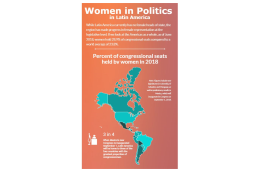
Four years ago, Latin America was home to a third of the world’s female presidents. Today, it has none. But that doesn’t mean the region hasn’t made progress in advancing women’s role in the political sphere. In fact, as of the inauguration of Colombia’s new administration on August 7, there are more female vice presidents—in 12 different countries—in the hemisphere than ever before.

Latin America is also moving ahead when it comes to balancing the male-to-female ratio in legislative branches. The Inter-Parliamentary Union’s last update on June 1, registered that 28.9 percent of all congressional seats in the region were occupied by women, an increase of 3.7 percent since January 2014, and 5.1 percent above today’s global average. When Mexico’s new Congress is inaugurated on September 1, Latin America will be home to three of the four countries with the greatest proportion of congresswomen.

Click here to see the full Infographic.

Two years after Hillary Clinton became the first woman to win the presidential nomination of a major U.S. political party, and with a record number of women running for Congress in 2018, a majority of Americans say they would like to see more women in top leadership positions – not only in politics, but also in the corporate world – according to a new Pew Research Center survey. But most say men still have an easier path to the top and that women have to do more to prove their worth. And the public is skeptical that the country will ever achieve gender parity in politics or in business.

Republicans and Democrats have widely different views about where things stand today and what factors are holding women back. Democrats and Democratic-leaning independents are more than twice as likely as Republicans and those who lean Republican to say there are too few women in high political offices (79% vs. 33%). And while 64% of Democrats say gender discrimination is a major reason why women are underrepresented in these positions, only 30% of Republicans agree.

There are also wide gender gaps in views about women in leadership. About seven-in-ten women say there are too few women in high political offices and in top executive business positions; about half of men say the same.

Click here to see the report.

This report reflects discussions held during the May 2018 Expert Group Meeting hosted by UN Women on women’s meaningful participation in negotiating peace and the implementation of peace agreements. The meeting included some 50 experts from a diverse range of countries and contexts, including Bosnia, Colombia, Kenya, Kosovo (under UNSCR 1244), Georgia, Mozambique, Myanmar, Philippines, South Sudan, Syria, and Yemen.

The report highlights how far the international community and Member States have come in advancing women’s meaningful participation in conflict resolution since the adoption of UN Security Council resolution 1325 (2000). The report highlights the aims and outcomes of the convening, which included:

  • the exchange of current research and good practice on women’s representation and “meaningful” participation in peace processes;
  • the exploration of the concept of “meaningful participation”—what it includes and how the United Nations, Member States, civil society, and other relevant actors can best effectively advocate for it and consistently operationalize it;
  • discussion of the barriers to women’s meaningful participation; and
  • assessment of the trends and challenges in gender-responsive provisions of peace agreements and their implementation.

The report includes a menu of actions for relevant actors and recommendations that reflect on nearly 20 years of implementation of the women, peace, and security agenda.

Click here to see the report.