Women's Leadership

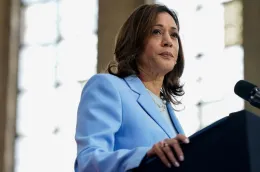
Less than four months out from the election, Vice-President Kamala Harris found herself in a difficult position.

President Joe Biden's poor performance on the debate stage spurred mounting criticism about his ability to win the election. As anxiety turned to tension within the Democratic party, her name rose up the list of replacement candidates.

With Mr Biden’s announcement that he will be ending his campaign and putting his support behind her, Ms Harris has finally reached a position she’d long sought: the top of the Democratic ticket, and potentially the presidency.

But the journey there has been fraught and full of difficult questions, especially in recent months.

Four years ago, the one-time candidate for the Democratic nomination would have welcomed the party's praises. By July 2024, Harris was in a more precarious position as part of an embattled incumbent ticket, her chances of another term tethered to Mr Biden’s performance.

In the 24 hours after the debate debacle, Ms Harris chose strong loyalty to Mr Biden.

The vice-president spoke on CNN, MSNBC and at a campaign rally. She defended her political partner's record and attacked their opponent, former President Donald Trump.

Read here the full article published by the BBC on 21 July 2024.

Image by BBC


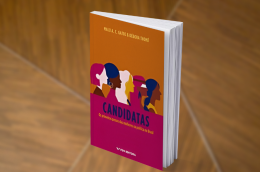
In the run-up to Brazil’s municipal elections, FGV Press has just published an intense and long book featuring the moving stories of a hundred Brazilian women from all over the country who decided to tackle various obstacles and fight for a place in politics.

According to the book, Brazil is currently one of the worst countries in the world when it comes to the presence of women in politics, and the worst in Latin America. Despite often having a minimal chance of success, every two years a huge number of women run for office. They include teachers, small businesswomen, police officers and community leaders, who learn to balance politics with work and family life. They invest a lot of time and energy in this endeavor, but only a handful manage to get elected. As a result, just 17.7% of seats in the House of Representatives are currently held by women and 82.3% are held by men. In practice, men end up making the decisions in all areas, including those that concern women.

Concerned about this huge under-representation of women, Malu Gatto of University College London and Débora Thomé of Fundação Getulio Vargas, both of whom have doctorates in politics, set out in search of answers to try to understand what was happening to women and their struggles to get elected. In the 2020 and 2022 elections, they went out into the field to ask them what made them run for office, how they experienced this process, what types of violence they had faced and what their strategies were for getting along better with their parties.

Based on 188 interviews with 102 candidates (79 women and 23 men) and official data from the Superior Electoral Court, their book, “Candidatas: os primeiros passos das mulheres na política do Brasil” (“Female candidates: Women’s first steps in Brazilian politics”), published by FGV Press, draws on the academic literature to analyze evidence extracted directly from the voices of the protagonists of these stories. It presents the experiences of empowered black, white, young and old women, from all regions of the country and from all parties, with very different backgrounds. Moreover, the book presents the voices of these women. Divided into 10 chapters, it covers everything from the initial factors that make them run for office, their choice of party and relationship with it, election campaigns, political violence, post-election moments, and what happens when they are elected.

Read here the full article published by FGV Brazil on 22 July 2024.

Image by FGV Brazil


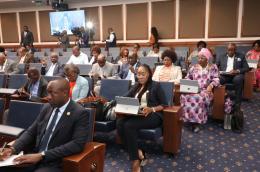
Luena — The ombudswoman, Florbela Araújo, highlighted, this Thursday, in Luena, Moxico province, the presence and leadership of women in the country, which is 'in great development'.

Speaking at a lecture on the 'role of the ombudsperson as a defender of women's rights', at the Casa da Cultura do Luena, the official said that today women are demonstrating that they have the physical and intellectual capacities to occupy decision-making positions.

According to the ombudsperson, the President of the Republic, as the Holder of the Executive Power, has been concerned with increasing the presence of women in decision-making positions at all levels, in the Executive, Judicial and Legislative branches.

He reiterated that women are the driving force to leverage a better world, far from the 'such and glaring' gender inequality that has been verified, so there is a need to empower them, as one of the ways to develop an increasingly just society.

He called on women to tirelessly continue to fulfill their role in society, as a way to contribute to the development of an increasingly just and good nation to live in.

Read here the full article published by All Africa on 19 July 2024.

Image by All Africa


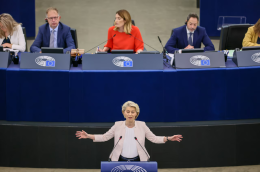
STRASBOURG — The European Parliament elected Ursula von der Leyen for another five years as European Commission president, choosing stability and continuity for the EU’s most powerful institution and the bloc.

Von der Leyen, who hails from the centre-right European People’s Party, won 401 votes in a secret ballot, well above the 361 votes she needed to be elected. There were 284 votes in opposition, 15 abstentions and 7 votes declared invalid.

Von der Leyen had the backing of the three mainstream, pro-EU groups — the center-right European People’s Party, the Socialists and the liberals of Renew. In the weeks and months leading up to the vote, some lawmakers within those centrist groups said they would not vote for her, forcing her to look for support from outside her current coalition, including among the left-leaning Greens. 

Now that von der Leyen has the support of both the European Council and the European Parliament, she will begin to assemble her new European Commission. 

Read here the full article published by Politico on 18 July 2024.

Image by Politico


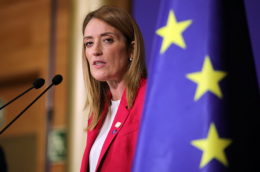
STRASBOURG — Roberta Metsola has been reelected as president of the European Parliament.  

First elected to the post in January 2022, the Maltese European People’s Party (EPP) politician will remain in the role for 2.5 more years after gathering the support of a majority of the newly elected 720 members of the European Parliament, with 562 votes in her favor.

She was widely expected to be reelected as she ran virtually unopposed. Only The Left’s Irene Montero, Spain’s former minister of equality, symbolically submitted her candidacy against Metsola. Montero got 61 votes.

The Parliament president’s five-year mandate has been traditionally split in two between the center-left Socialists and Democrats (S&D) and the center-right EPP.  

When it comes time for the S&D to pick a successor to Metsola, options include Spain’s Iratxe García, leader of the S&D group in Parliament, or a leading figure within Italy’s Democratic Party, which is the largest force in the S&D.

Read here the full article published by POLITICO on 16 July 2024.

Image by POLITICO


Despite progress in codifying women’s rights into law, advances in gender equality around the world have been halting, at best. This, despite the additional attention that the #MeToo movement brought to incidents of sexual assault and harassment in parts of the Global North—and increasingly in the Global South.

In South Africa, President Cyril Ramaphosa made news in 2019 when he appointed a Cabinet that included as many women as men. Later the same year, the European Commission also achieved the European Union’s self-imposed goal of gender parity. The thinking behind gender parity in government is that with greater levels of representation, women policymakers and legislators will pay more attention to issues that are often ignored by men, like gender-based violence or inheritance laws that discriminate against women.

But where quotas are used, they have failed to achieve parity for women in all but a few cases. Nor are they a panacea. Even with increased representation, policymakers must figure out how to turn good intentions into change on the ground, so that removing restrictions on education, to take one example, actually leads to improved school attendance rates for girls and young women.

Read here the full article published by the World Politics Review on 16 July 2024.

Image by World Politics Review


The objective of this study is to generate evidence-based policy recommendations for Arab States, in order to help them scale-up efforts to meet their commitments as relates to goal 5 of the United Nations’ Sustainable Development Goals (SDGs), pertaining to gender equality, in particular target 5.5, which aims to ensure women’s equal opportunities for leadership at all levels of decision-making in political and public life.

A thorough desktop review was conducted to develop the conceptual framework for the study and establish a knowledge base on the status of women’s presence in decision-making and public life. This was supported by a survey completed by member States on the status of women’s political representation, as well as national measures to enhance it. Interviews were carried out with women who sought to participate in public life, regardless of whether they were successful or not. Case studies were conducted in four countries in the region, in order to establish an in-depth understanding of the status of women’s representation within their national political context.

This study examined women’s representation in the legislative, executive, and judiciary branches, as well as in local councils, with the understanding that the analysis was incomplete in certain cases due to data limitation. Regional analysis was conducted to showcase new forms of women’s representation, such as their participation in peace talks, national dialogues and constitutional committees, which challenge traditional roles and representations.

Click here to access the report. 

[[{"fid":"12899","view_mode":"media_original","fields":{"format":"media_original","field_file_image_alt_text[und][0][value]":false,"field_file_image_title_text[und][0][value]":false},"type":"media","field_deltas":{"2":{"format":"media_original","field_file_image_alt_text[und][0][value]":false,"field_file_image_title_text[und][0][value]":false}},"link_text":null,"attributes":{"class":"media-element file-media-original","data-delta":"2"}}]]

[[{"fid":"12898","view_mode":"default","fields":{"format":"default","field_file_image_alt_text[und][0][value]":false,"field_file_image_title_text[und][0][value]":false},"type":"media","field_deltas":{"1":{"format":"default","field_file_image_alt_text[und][0][value]":false,"field_file_image_title_text[und][0][value]":false}},"link_text":null,"attributes":{"class":"media-element file-default","data-delta":"1"}}]]

Gender equality and the political empowerment of women are key elements for the consolidation of sustainable democracies worldwide.

Global and regional organizations play an important role in the development of legal and policy frameworks, as well as in the design of effective action plans to better support the advancement of the gender equality agenda at the global, regional and national levels.

This report presents key instruments for promoting gender equality and political empowerment of women that are currently in place at the global and regional levels, highlighting the challenges, opportunities and successes that each organization has encounter in the implementation within their respective regions.

International IDEA, the Community of Democracies and UNDP present this report as an instrument to inform policymakers and relevant actors on what is the current situation of gender equality, what has been done in terms of the political empowerment of women, and what is expected from the global community in order to successfully advance Sustainable Development Goal 5 to achieve gender equality and empower all women and girls by 2030.

Click here to access the report. 

Why are women still under-represented in politics? Can we speak of democracy when women are not fully included in political decision-making? Some argue that we are on the right track to full gender equality in politics, while others talk about women hitting the glass ceiling or being included in institutions with shrinking power, not least as a result of neo-liberalism. 

In this powerful essay, internationally renowned scholar of gender and politics Drude Dahlerup explains how democracy has failed women and what can be done to tackle it. Political institutions, including political parties, she argues, are the real gatekeepers to elected positions all over the world, but they need to be much more inclusive. By reforming these institutions and carefully implementing gender quotas we can move towards improved gender equality and greater democratization.

Click here to access the book. 

Business as usual is not an option. To fulfil the 2030 Agenda for Sustainable Development, including Sustainable Development Goal 5 on achieving gender equality and empowering all women and girls, concrete actions and intensified commitments to improve women’s participation and representation are needed.

In early 2016, the International Gender Champions–Geneva started to look closely at the number of women in delegations to governing bodies of Geneva-based international organizations. At its annual meeting in 2016, the United Nations Governing Bodies Secretariat further discussed gender balance in the governing bodies of international organizations and agreed to support efforts to promote women’s participation and advance the goal of gender balance across their conferences and meetings.

This publication aims to build knowledge on women’s participation in national delegations to meetings of international organizations’ governing bodies and their leadership roles in these meetings. It is based on responses to a questionnaire addressed to members of the United Nations Governing Bodies Secretariat and of the International Gender Champions–Geneva. Although the results of the survey may not be representative of all United Nations organizations, they have yielded important information on the current policies and practices in the 23 entities that took part.

Based on the responses, six types of actions to improve women’s participation in governing body meetings have been identified: (a) explicit policies and mandated targets; (b) tracking and reporting; (c) training and capacity-building; (d) financial support; (e) advocacy and networking; and (f) communications strategies.

The survey results are complemented by an overview of intergovernmental and inter-agency frameworks and trends in women’s participation in national Governments and intergovernmental forums. Best practices in promoting women’s participation at different levels – national and multilateral – are also presented with the aim of informing concrete recommendations on the way forward to realize gender balance in international organizations’ governing bodies.

Click here to access the publication. 

This book is an overview of women’s activism and political struggles in contemporary Africa, and the ways in which the continent's women are shaping the struggle for women’s rights internationally.

Throughout Africa, growing numbers of women are coming together and making their voices heard, mobilising around causes ranging from democracy and land rights to campaigns against domestic violence. In Tanzania and Tunisia, women have made major gains in their struggle for equal political rights, and in Sierra Leone and Liberia women have been at the forefront of efforts to promote peace and reconciliation. While some of these movements have been influenced by international feminism and external donors, increasingly it is African women who are shaping the global struggle for women’s rights.

Bringing together African authors who themselves are part of the activist groups, this collection represents the only comprehensive and up-to-date overview of women’s movements in contemporary Africa. Drawing on case studies and fresh empirical material from across the continent, the authors challenge the prevailing assumption that notions of women’s rights have trickled down from the global north to the south, showing instead that these movements have been shaped by above all the unique experiences and concerns of the local women involved.

Click here for more information. 


iKNOW Politics expert Farida Jalalzai submitted the following article to be published on International Women’s Day 2017.

Few social changes have been as dramatic and rapid as women’s increased political representation worldwide. Simultaneously, nowhere do women hold equal power to men in influencing and exercising political authority worldwide. This story of huge gains and shocking barriers plays out daily in our news, and for good reason. These are all threads of a compelling story – women’s global political empowerment. Changes that were fuzzy and uncertain at first can no longer be ignored. The UN has declared women’s empowerment as the third of its Millennium Development Goals (http://www.un.org/millenniumgoals/). Within this broad charter, political empowerment is one of a variety of areas, often less fully articulated and studied in comparison to economic indicators. Yet, gains in women’s political empowerment directly decrease the role of gender inequality as an obstacle to incorporation as social and economic equals, and open, rather than close, the political domain to all members of society. Indeed, as the largest group today that worldwide encounters current and historical barriers to political incorporation, women’s political empowerment is a fundmental process of transformation for benchmarking and understanding more general empowerment gains across the globe. Thus, women’s political empowerment is a political public good insofar as progress legitimates and strengthens a larger committment to equal political incorporation generally.

What is women’s global political empowerment? In 2015, we began a cross-national and inter-disciplinary discussion of these concepts and are publishing resulting work in an edited collection Alexander, Bolzendahl, and Jalalzai (forthcoming)[1]. As we have continued to develop these ideas, we define women’s global political empowerment as the enhancement of assets, capabilities, and achievements of women to gain equality to men in influencing and exercising political authority worldwide. This definition builds from important previous work on gender, empowerment, and development (Kabeer 2005). First, empowerment denotes a process of transformation from a position of no or limited agency to one of greater agentic opportunity and effectiveness. This captures the transformative essence of empowerment processes writ large. Importantly, it incorporates the systematic marginalization of women as a group from access to and achievement of equal levels of political influence, representation, and integration. Second, we focus on the fact that women’s political empowerment is achieved as part of a political process, not at one particular moment (e.g., women reaching 50% of the legislature). Political empowerment goes beyond the power enjoyed by particular individuals by shedding light on power configurations positioning groups, and recognizes political authority as the legitimate access to state mediated power.  Third, women’s political empowerment distributes power more evenly between men and women and undermines entrenched patterns of gender inequality across a broad range of economic, familial, and social institutions.

While the challenges are steep, there is a great deal of positive momentum toward expanding measures of women’s political empowerment worldwide. Data from sources such as the World Bank, the Inter-Parliamentary Union (www.ipu.org); and the UN Women program (www.unwomen.org) are slowly prioritizing measures related to gender, women’s empowerment, and politics. Mirroring the construction of gender as a social structure with individual, interactional, and institutional levels, measures of women’s empowerment must consider women’s individual capacities and opportunities (e.g., political knowledge, access, rights), community-based factors (e.g., political mobilization, campaigning, local representation), and broader arenas (e.g., women’s election nationally, women’s lobbies and political organizations, women’s power and leadership in office). While the bulk of available information relates to women’s formal political power (i.e., election to national office), our collection of research will expand this, for example in including cross-national measures of women’s election to local council, approaches to include women’s committee and caucus memberships, frameworks for linking women’s rights and emancipative values in survey research, broadening international data on women’s executive leadership, and  measures of the intersection of gender and minority status worldwide. Moving forward on these measurement issues requires collaboration across disciplines and a commitment by organizations and their resources to prioritize the collection of such data and share it widely.

We argue that we need to still better understand women’s elite involvement and influence.  The majority of prior work on elites charts cross-national and longitudinal trends in women’s presence in national legislatures.  While women’s presence in legislatures has grown over time, women still remain vastly underrepresented in most countries worldwide.   Comparative research on cross-level trends in women’s office-holding also shows that women’s incorporation varies considerably (Bolzendahl 2014). Thus, women’s presence at the national level should not be taken for granted as an indicator of similar achievements in other levels of office-holding. As a point of comparison, we briefly analyze women holding national executive positions (prime ministerships, presidencies, or equivalent posts).

While the current world average of women in parliaments is 23 percent (www.ipu.org) and thus still quite low, compare this to the percentage of women holding executive office. A mere six percent of all executives in power in 2017 worldwide are women.  A record year for women would only require 20 women to hold power simultaneously. Even in this scenario, women would comprise less than eight percent of all executives. More stunning is that the numbers of women leading their countries is actually declining rather than increasing[2].  While quantities can indicate some important aspects of political empowerment, we must also account for quality of position and influence of the country. Women, compared to their male counterparts, more often ascend to relatively weak executive posts and gain offices through appointment as opposed to popular election (Jalalzai 2013).  Even with high profile female executives such as German Chancellor Angela Merkel (consistently ranked as the world’s most powerful female leader by Forbes Magazine) women still rarely lead more visible countries on the world stage. No doubt, media interest in women in executive power increased as Hillary Clinton’s election as the first woman president of the United States seemed likely. Given her loss and other setbacks for women including the impeachment of two sitting female presidents--Dilma Rousseff of Brazil and South Korea’s Park Guen-hye--it is fair to say that 2017 has not started out as a banner year for women executives.  Focusing only on women in national legislatures, therefore, neglects key alternative arenas where women gain in decision-making authority that may be even more influential, including women’s presence including executive positions, but also positions of party leadership, in the courts and security forces.

Our work also suggests the need to incorporate more work on political empowerment of average female citizens since this may strongly influence elite behavior, such as the provision of entitlements, especially those supporting gender equality (Alexander and Welzel 2011). Therefore, average female citizens’ level of political motivation and participation as well as the strength of women’s advocacy networks are fundamental to women’s political empowerment.

Overall, our research on identifies a number of key conceptual issues and opportunities for further developing definitions of women’s political empowerment worldwide. In particular, we see that a critical mass of scholarship exists that provides the launching point for research to expand globally and rethink conclusions across geo-political areas. Through continued work and data collection, a broad theoretical framework can emerge to understand how women have gained fuller access to political power and where challenges toward equality remain. 

References

Alexander, Amy C. and Christian Welzel. 2011. “Explaining Women’s Empowerment: The Role

of Emancipative Beliefs.” European Sociological Review 27(3): 364-384.

Alexander, Amy, Catherine Bolzendahl, Farida Jalalzai. Measuring Women’s Political Empowerment

across the Globe- Strategies, Challenges and Future Research. New York: Palgrave Macmillan (forthcoming).

Alexander, Amy, Catherine Bolzendahl, Farida Jalalzai. 2016. “Defining Women’s Global

Political Empowerment: Theories and Evidence.” Sociology Compass.

Jalalzai, Farida. 2013. Shattered, Cracked and Firmly Intact: Women and the Executive Glass

Ceiling Worldwide. Oxford: Oxford University Press.

Kabeer, Naila, 2005. "Gender Equality and Women's Empowerment: A Critical Analysis of the

Third Millennium Development Goal 1." Gender & Development 13:13-24.


[1] We thank the Thyssen Foundation for support of our conference in Cologne, Germany, 2015.

[2] Currently, only 15 women hold executive posts. In the previous year, 19 women held executive power.  Excluded from analysis women occupying positions not conforming to presidential or prime ministerial office such as collective executives (as in San Marino or Bosnia etc.).Leaders of non-autonomous countries are also omitted since ultimate authority lies with another government.  Since Taiwan’s independence from China is contested, President Tsai is excluded. A small number of women served in both prime ministerial and presidential capacities in the same country. Others led officially as interim leaders prior to securing more permanent appointments. Since the unit of analysis is the woman leader, they are not considered separate cases. In instances where the same woman held two different types of executive positions, they are analyzed in the position they held longer. Farida Jalalzai compiled cases of women leaders from the Worldwide Guide to Women in Leadership, Zarate’s Political Collection and different media articles.