Women's Leadership
Welcome to the first installment of the new "International Election Series," where they explore the vital role women play in shaping democratic processes around the world. In this episode, they delve into the recent Mexican elections, examining how women candidates influence politics.
RepresentWomen’s Communications Director Ashley Thurston, International Research Manager Fatma Tawfik, and Mexican scholar interviewed Jennifer Piscopo and Catherine Reyes-Housholder about the historic Mexican elections.
See here the full episode published by RepresentWomen on 8 July 2024.
Image by RepresentWomen
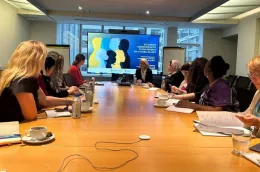
The Friedrich Naumann Foundation’s Washington, D.C. office hosted a distinguished international delegation of twelve female professionals working in politics, from May 4th – May 11th, 2024 in Washington, D.C., and Denver, Colorado. The group comprised of participants from: Argentina, Armenia, Bhutan, Bulgaria, Chile, Germany, Hungary, Jordan, Lithuania, Pakistan, Philippines, and Tanzania. The delegation met with experts across various political women’s institutions, non-profit organizations, political NGOs, legislative offices, and more specifically with The World Bank Group, researchers, journalists, and academics. The group discussed in detail initiatives and policies that have helped to promote gender equality as well as the persistent economic, political, legal, and social barriers for women.
Across meetings there was one consistent theme: we are far from reaching gender equality and there is much to do. However, the bleak outlook was countered with many examples of policies and tangible ways to take steps toward equality. One cannot start to draft policies without fully understanding the economic, political, legal, and social barriers that exist for women in the context of their home country. What might be feasible or encouraged somewhere, will not always work in someone else’s context. For the purposes of this policy takeaway, we will focus pointedly on the United States.
Read here the full article published by the Friedrich-Naumann-Stiftung für die Freiheit on 27 June 2024.
Image by Friedrich-Naumann-Stiftung für die Freiheit

This year, countries accounting for nearly half of the world’s population are holding national elections. Instead of representing a triumph of democracy, however, the results suggest something darker: in many places, voters have flocked to the polls only to elect or reelect autocratic populists. They have notched victories this year in some of the largest countries, including India, Indonesia, and Russia. And these wins come on the heels of last year’s populist victories in Argentina and Turkey.
Today, more than 70 percent of the world’s population lives under autocratic rule, and a minority of the world’s governments are democratic, according to the most recent annual report from the V-Dem Institute, an organization that studies democracy. What the report does not reveal is that a central component of this assault on democracy is the targeting of women political leaders and women’s rights by far-right extremists and elected autocratic populists who represent the leading edge of democracy’s decline. For three decades, the share of women legislators across the globe was growing thanks to mandated quotas in many countries, but the rate of increase has stalled over the past two years, a signal U.S. Ambassador-at-Large for Global Women’s Issues Geeta Rao Gupta calls “scary.” Women today only occupy 27 percent of the world’s legislative seats. An even starker sign is that the number of women leading countries has sharply declined in the past year.
Read here the full article published by Foreign Affairs on 3 June 2024.
Image by Foreign Affairs
India, the world’s largest democracy, has made significant strides in women’s political participation since its independence in 1947. However, a substantial gender gap persists in Indian politics, reflecting deeper societal inequalities and cultural barriers. This article examines the current state of women’s representation in Indian politics, the progress made so far, and the challenges that continue to hinder gender parity in the political sphere.
Current State of Women’s Representation:
While women constitute nearly 50% of India’s population, their representation in political bodies falls far short of this proportion. As of 2024, women make up approximately 15% of the Lok Sabha (the lower house of parliament) and 14% of the Rajya Sabha (the upper house). At the state level, women’s representation in legislative assemblies averages around 9%. These figures, though gradually improving, highlight the significant underrepresentation of women in Indian politics.
Read here the full article published by Odishabarta on 27 June 2024.
Image by Odishabarta
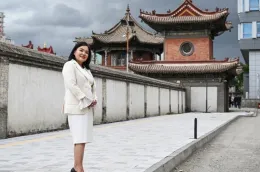
Mongolians go to the polls in parliamentary elections on Friday, with the ruling Mongolian People's Party widely expected to retain a majority it has held for eight years.
But for the first time in almost a decade, parties are required by law to ensure that 30 percent of their candidates are women, in a country where politics is overwhelmingly dominated by men.
As a result, more women than ever before are running this year, in a new voting system that balances proportional lists with district candidates elected directly by the people.
"The era we are living in demands the quota," Dorjzodov Enkhtuya, a 51-year-old former TV anchor running for the main opposition Democratic Party, told AFP in capital city Ulaanbaatar.
"There are almost no women in decision-making positions," she said.
"We are changing the game."
Read here the full article published by France 24 on 27 June 2024.
Image by France 24
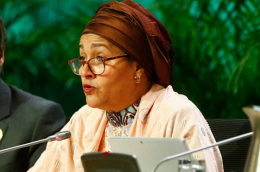
A lack of women at decision-making tables around the world is hindering progress when it comes to tackling conflicts or improving health and standard of living, the highest ranking woman in the UN has said.
“We’re half the population. And what we bring to the table is incredibly important and it’s missing,” said Amina Mohammed, the United Nations deputy secretary general. “I think it’s why mostly our human development indices are so bad, why we have so many conflicts and we’re unable to come out of the conflicts.”
Since her appointment in 2017, Mohammed has been a constant voice in pushing back against the under-representation of women in politics, diplomacy and even the UN general assembly. Her efforts have helped cast a spotlight on the fact that women remain relegated to the margins of power around the world; last year the global proportion of female lawmakers stood at 26.9%, according to Switzerland’s Inter-Parliamentary Union.
Speaking to the Guardian, Mohammed said “flexing muscle and testosterone” often dominated at tables of power around the world.
“This win, win, win at all costs – I think that would change if women were at the table,” she said.
Read here the full article published by The Guardian on 19 June 2024.
Image by The Guardian
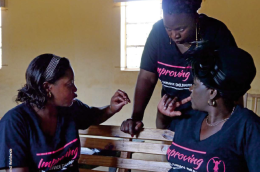
A short piece of research was carried out in Zimbabwe in August 2015, as part of a larger research programme undertaken by Womankind Worldwide to look into the different spaces (explained further in section 7) that had been created for women to promote their political participation at community level in four countries. In Zimbabwe this was the Ward Level, and the women who came represented all of the villages within each Ward. The purpose was to explore how women use these spaces to bring about positive change in their lives, especially the opportunities provided by these spaces to raise issues with women leaders and other decision makers. The research was funded as part of the Funding Leadership and Opportunities for Women (FLOW) programme, by the Dutch Government, which was designed to improve women’s political participation in four countries through training and education, skills-building and working together in order to influence local development plans, get into leadership positions in the community, and to enable the women at the local level to promote their interests and hold decision makers to account. It was also designed to strengthen the accountability from national policy structures to local-level structures and from local-level political structures and personnel to individual communities. The projects had different priorities and different approaches in each country context, though there were many overlaps in implementation.
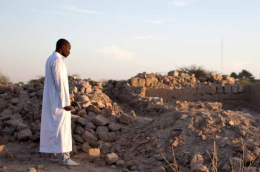
With a special attention to gender, this four-year regional development project is designed to strengthen the development responses to mitigate the growth of violent extremism in Africa.
This focus is motivated by the ever-increasing presence of violent extremist groups on African soil. Violent extremism is having a devastating impact on the lives and livelihoods of populations across the continent - particularly the most vulnerable, and including youth, women and children.
The Independent Commission on Multilateralism (ICM) is a project of the International Peace Institute (IPI). It asks: How can the UN-based multilateral system be made more “fit for purpose”? In answering that question, the ICM has analyzed fifteen topics. These include armed conflict, humanitarian engagements, sustainable development, and global public health, among others (see complete list in Annex 2). The goal of the ICM is to make specific recommendations on how the UN and its member states can improve responses to current challenges and opportunities. The ICM undertook simultaneous tracks of research and consultation for each issue area on its agenda. The Commission initially launched in New York in September 2014, followed by subsequent launches in Vienna, Geneva, and Ottawa. In February 2015, the ICM briefed delegates from the five UN Regional Groups in New York. The Commission also convened meetings with Ambassadorial and Ministerial Boards in New York, Vienna, and Geneva. Global outreach included briefings to officials in Addis Ababa, Berlin, Brasilia, Copenhagen, New Delhi, London, Madrid, Montevideo, and Rome. Civil society and private sector outreach and engagement also constituted an important component of the ICM’s consultative process, including a briefing specifically for civil society in June 2015. The research process began with a short “issue paper” highlighting core debates and questions on each of the fifteen topics. Each issue paper was discussed at a retreat bringing together thirty to thirty-five member state representatives, UN officials, experts, academics, and representatives from civil society and the private sector. Based on the inputs gathered at the retreats, each issue paper was then revised and expanded into a “discussion paper.” Each of these was uploaded to the ICM website for comment and feedback, revised accordingly, and presented at a public consultation. The public consultations were webcast live on the ICM’s website to allow a broader audience to take part in the discussions. This paper is one of the fifteen final “policy papers” that emerged from this consultative process. An overview of participation in consultations on this specific issue area is included in Annex 3. The recommendations from all the policy papers are summarized in the ICM’s September 2016 report “Pulling Together: The Multilateral System and Its Future.” The ICM thanks the three sponsoring governments for their financial support for its operations: Canada, Norway, and the United Arab Emirates. Without their support, the ICM would not have been possible.
Like many countries around the world, the Hashemite Kingdom of Jordan faces risks from “violent radicalization,” often defined as a process through which a person comes to embrace the use of violence to serve an ideology, religion or political goal. Violent radicalization may lead to violent extremism and terrorism, therefore threatening the rights and well-being of citizens. The ways in which violent extremism affects women—both as victims and participants—are rarely discussed and remain underexplored. As Jordan moves toward taking new efforts to combat violent extremism within its borders, it is necessary for all involved to have a deeper understanding of how women in Jordan play roles in preventing or promoting such radicalization.
2015 was UN Women’s fifth year. As we marked this milestone, the United Nations celebrated 70 years of fostering human rights, and governments and civil society assessed 15 years of implementation of the Beijing Platform for Action, and of Security Council resolution 1325 on Women, Peace and Security. Informed by these reviews, we looked ahead to the world we want with the Paris Agreement on climate change, and saw the transformative power of women and girls set at the heart of the 2030 Agenda for Sustainable Development.
Unexpected and transformative revolutions broke off in North Africa and quickly spread to the Middle East and the rest of the world in 2010 and 2011. Spontaneous, leaderless, youth-driven, and backed by social media, these revolutions called for karamah (dignity) and democracy. Centering on women’s movements before, during, and after the revolutions, Women’s Movements in Post-“Arab Spring” North Africa highlights the broader sources of authority that affected the emergence of new feminist actors and agents and their impact on the sociopolitical landscapes of the region. Until recently, studies of North African women’s movements have focused on single aspects of women’s achievements at a time. By providing a comparative analysis, this book for the first time sheds light not only on the role that these superstructures play in shaping women’s experiences in North Africa, but also on the rich variety of women’s responses to authority, and their potential contributions to African and global feminist thought. From the pre-history of the revolutions to their aftermath, the far-reaching historical and national scope of this collection expands the study of women’s movements in North Africa beyond national borders, while still paying close attention to local characteristics. Click here to access the book.