Women's Leadership
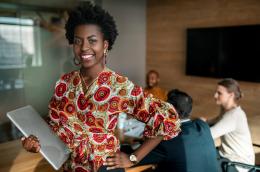
The European Union and partners launch the Women’s Leadership Initiative, a component of the Women and Youth in Democracy Initiative (WYDE), in New York today during the 68th Session of the Commission on the Status of Women.
Commissioner for International Partnerships Jutta Urpilainen said: “In recent years, we have witnessed the erosion of democratic values. And when democracy is being eroded, women’s rights are under attack as well. Protecting democracy means ensuring an open civic and political landscape in which women can participate safely. This is the objective of the Women Leadership programme which I am pleased to launch today with our partners as part of the EU’s Women and Youth in Democracy Initiative.”
With €11.5 million from the EU for a period of three years, the WYDE | Women’s Leadership Initiative will promote the full and effective participation in decision-making of diverse women, especially those most often left furthest behind, by leveraging collective action, partnerships, coordination, knowledge, and resources at global level. The initiative will prioritise changing the social norms and cultural attitudes that portray the roles of women in communities and society as incompatible with political power. It will build the political skills of young women, and engage men, boys, office holders and the media as allies for gender equality and women’s empowerment.
Read here the full article published by the EU International Partnerships on 14 March 2024.

The landscape of women leadership in Bangladesh presents a paradox: despite notable female figures in key political positions, the overarching advancement of women into leadership roles remains stagnant. Despite having a female prime minister, a female speaker, women ministers and lawmakers and women heading the major political parties, the desired progress towards gender parity in leadership is yet to be achieved.
The mandated quota of 33% female representation in all political party committees by 2020 has not been met. While there has been an increase in the participation of women in politics, their ascension to leadership roles lags significantly behind.
Apart from the Awami League and the BNP, the left-wing political parties have fallen short of meeting the prescribed targets, with little visible action towards fulfilling the goal of one-third female representation by 2030.
Zara Zebin Mahbub, a seasoned MP representing the Awami League's reserved women's seat from Chapainawabganj, highlights the systemic barriers hindering women's progress.
She said: "Women are as active as men in politics, but only men are promoted. Despite women's equal efforts, men dominate party nominations, media coverage, and resources. The main obstacles for women in elections are men's influence, muscle power, and financial advantage."
Read here the full article published by the Dhaka Tribune on 8 March 2024.
Image source: Dhaka Tribune

In commemoration of International Women's Day, Global Voices is delving into the state of women's political participation around the world. This year, over 3 billion people are eligible to vote, making it the largest electoral moment in history. Women’s participation in this election year, whether through advocating for policies that benefit women and girls, turning out to vote, or outright running for office, can create significant and meaningful change and is an essential part of fostering gender equality around the world.
In this special coverage, we highlight the distinct stories, triumphs, and challenges faced by women in the political arena. While the strides towards gender equality have been significant, systemic barriers persist — often in the form of gender-based harassment or violence — hindering the full realization of women's political potential.
Already in the first quarter of the year, women politicians and voters from Argentina to Indonesia have faced unique gendered attacks and harassment for daring to participate in the political ecosystem. In many contexts, these harassment campaigns are launched because women are challenging the status quo and trying to reshape the political landscape of their nations away from oppressive patriarchal norms.
Read here the full article published by Global Voices on 8 March 2024.
Image source: Global Voices

Today, China joins the world in celebrating International Women’s Day. Mao Zedong once famously said that women hold up half the sky. According to World Bank data, China’s female labour force participation rate of more than 61 per cent is higher than many developed economies.
Chinese women work alongside men and contribute in almost every domain and at almost every level. All of China reaps the benefits of this participation and representation.
Unfortunately, one glaring exception is arguably the most important – high-level politics. Women have represented only a small percentage of the full members of the Communist Party of China’s Central Committee, with no clear upward trend and only slight fluctuations in this figure.
The past two decades represented the pinnacle of female representation in the Politburo, with one woman present among 25 members and even two between 2012 and 2017. But this is no longer the case, as the current Politburo includes only 24 men.
Read here the full article published by the South China Morning Post on 8 March 2024.
Image source: South China Morning Post

The shock of Alexey Navalny's death in the Arctic Yamal penal colony Harp on February 16, 2024, was felt by millions of people in Russia and abroad. The informal leader of the opposition to Putin, he was optimistic about his and Russia's future even after three years in jail and over 300 days in unbearable solitary confinement.
With his death has come an overwhelming, sense of hopelessness, as witnessed by the social media feeds of people with opposition views and people mourning his death at the funeral.
However, on February 19, only three days after the death of her husband, Yulia Navalnaya stepped in. In her first ever video posted on both her husbands and her own new X account and YouTube account, she said […]
For a lot of people, this meant that the hope returned.
Navalnaya has since given a speech at the EU Parliament, met with President Biden and the EU member states’ foreign ministers. She had just called for people in Russia to express their protest and show how many people would vote against Putin.
Read here the full article published by Global Voices on 8 March 2024.
Image source: Global Voices
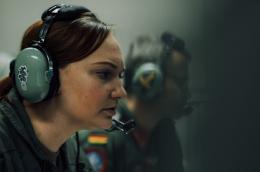
NATO recognises the disproportionate impact that conflict has on women and girls, the vital roles women play in peace and security, and the importance of incorporating gender perspectives in all that the Alliance does. The Women, Peace and Security agenda was launched on 31 October 2000 with the adoption of United Nations Security Council Resolution 1325 and now includes nine additional Resolutions (1820, 1888, 1889, 1960, 2106, 2122, 2422, 2467 and 2493). NATO’s approach to the Women, Peace and Security agenda is framed around the principles of integration, inclusiveness and integrity.
Guiding principles
NATO’s common values of individual liberty, democracy, human rights and obligations under the Charter of the United Nations underpin the principle that the full rights and participation of women are essential. Drawing from the UN Security Council Resolutions (UNSCRs) on Women, Peace and Security (WPS), the Alliance works to address gender inequality by integrating gender perspectives through the Alliance’s three core tasks of deterrence and defence, crisis prevention and management, and cooperative security.
Three principles guide NATO’s work on WPS: integration, inclusiveness and integrity.
Read here the full article published by NATO on 7 March 2024.
Image source: NATO