Women's Leadership

Discover how the University of Tasmania's Pathways to Politics for Women program is empowering aspiring female politicians in Tasmania. Supported by political vanguards, this initiative is reshaping the political landscape and fostering inclusive representation.
Imagine a political landscape where the voices of women are not just heard but amplified, where the halls of power resonate with the diverse experiences and perspectives of over half the population. This vision is on the cusp of becoming a reality in Tasmania, as the University of Tasmania steps into the spotlight with its groundbreaking Pathways to Politics for Women program. Supported by a formidable alliance of Tasmania's political vanguards, this initiative is poised to dismantle the barriers that have historically sidelined Tasmanian women from political arenas.
A Unifying Endeavor
The Pathways to Politics for Women program, originally kindled in 2016, has burgeoned into a beacon of hope and action for aspiring female politicians across Australia. Its expansion into Tasmania, facilitated by the Trawalla Foundation's generous funding, is a testament to its remarkable success in catalyzing political careers. The program's ethos, championed by figures like Tasmania's first female premier Lara Giddings, former Greens leader Christine Milne, and past premier Will Hodgman, transcends partisan lines, emphasizing the universal benefit of diversifying political representation.
Click here to read the full article published by BNN Breakings News on 22 February 2024.
Image source: BNN Breakings News
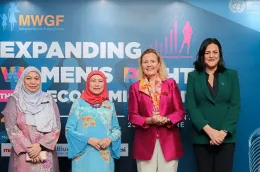
Discover the impactful conversations and calls to action from the Women's Rights Conference 2024 in Malaysia, addressing the critical issues of female political representation and the collective efforts towards gender equality.
In the heart of Nairobi, a seismic shift in the narrative of law enforcement is underway. The Kenyan government, in a move as bold as it is necessary, has announced a substantial 40% salary increase for National Police officers, a decision set to roll out in July this year.
This initiative, born from the recommendations of the Maraga-led committee, is not merely a financial adjustment; it's a beacon of hope, signaling a transformative era for police welfare and institutional reforms within the police and prisons departments.
Click here to read the full article published by BNN Breakings News on 24 February 2024.
Image source: BNN Breakings News
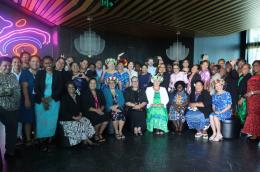
Auckland, New Zealand – Numbers speak volumes, and in the Pacific, they tell a concerning story: less than 7 percent of parliamentarians are women.
Serving as the impetus for further collective action, women leaders from parliaments across the Pacific have convened on Auckland for the Pacific Women in Power Forum.
The three-day forum – supported by the people of New Zealand, Australia and Japan – sees women members of parliaments as well as parliamentary officials coming together to discuss opportunities for improving women’s representation, approaches to improving inclusivity, and the effectiveness of parliaments in tackling gender inequality.
The forum will discuss the many challenges women in politics face, including persistent online harassment fueled by the anonymity of social media; abuse that unfortunately dominates the daily lives of many women MPs worldwide.
Despite women's representation in politics still languishing as the worst in any region across the world – and progress sitting somewhere between stalled and gradual – a shift in attitudes across the Pacific is demanding change.
Click here to read the full article published by UNDP on 21 February 2024.
Image source: UNDP

When will the next general election be? No one knows. Well, perhaps Rishi Sunak does; the Prime Minister not-so-helpfully said he had a ‘working assumption’ that it would take place in late 2024.
As it happens, this will be a busy year in politics. Americans will also be going to the polls – the first time our two countries’ electoral cycles have synced since 1992. Already, there have been warnings about global disinformation campaigns – fuelled by AI and spread on social media – and what they may do to our already fragmented countries.
In total, over 60 nations – from India, Pakistan and Mexico to Taiwan and Ukraine – will be going to the polls before the end of 2024. Just under half of the world’s population is eligble to vote in some form of election this year, making it the biggest year for democracy in history. The world may well be a very different place by the time 2025 comes around.
Click here to read the full article published by Elle on 22 February 2024.
Image source: Elle

Recently, the minister responsible for women, family and community development, Nancy Shukri, reportedly said the 30% quota for women previously set by the government should be reconsidered given the current situation that “42% of women actively participated in decision making roles within the public service sector”.
The minister reportedly said many women now possess the qualifications, including experience and academic achievements, to compete equally with men in decision-making positions across various service levels.
“Considering that we have already surpassed the 30 per cent mark, reaching 42 per cent in the public sector, setting a new target at 50 per cent or beyond should not be hindered by ceilings or limitations,” she added.
Click here to read the full article published by Aliran on 19 February 2024.
Image source: Aliran
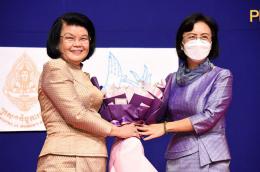
On 15 February 2024, an article titled “Why Cambodia needs to incorporate more women into its foreign policy process” was published on the Diplomat and has caught attention from various readers including the Ministry of Foreign Affairs and International Cooperation of Cambodia, which is also now requesting for clarifications from the author. While the article highlighted the significance of having more women in leadership and decision-making positions and some important statistical facts on the disproportionately low number of women in politics and diplomatic field, it failed to acknowledge the efforts and significant progress made by the government over the years to promote and mainstream gender equality in all sectors.
In Cambodia, commitments to empower and increase women leadership come from the highest level of the government. As often heard, women are considered as the “backbone of the society and economy”. Gender equality has been one of the government’s priority agendas, as manifested in various national policies and strategies, the Rectangular Strategy, the National Strategic Development Plan (NSDP), the five-year Strategic Neary Rattanak, and National Plan for Sub-National Democratic Development (NP-SNDD), just to name a few.
Click here to read the full article published by the Khmer Times on 20 February 2024.
Image source: Khmer Times