Women's Leadership
Normal
0
false
false
false
EN-US
X-NONE
X-NONE
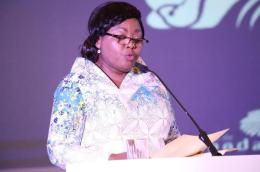
The Angolan vice-president, Esperança da Costa, will open this Thursday, 25th, the 1st International Women’s Forum for Peace and Democracy, in an event that will also involve, as speakers, like Ellen Johnson Sirleaf (former President of the Republic of Liberia), Epsy Campbell Barr – former Vice President of Costa Rica (Member of the UNHCR Permanent Forum for People of African Descent) and Zahira Virani (Resident Coordinator of the United Nations System Nations in Angola).
Click here to read the full article published by The Guardian on 25 May 2023.
Normal
0
false
false
false
EN-US
X-NONE
X-NONE
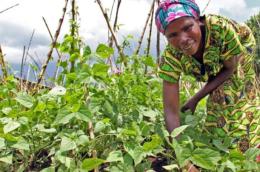
A new study shows that conservation and agricultural production can improve when women farmers widely participate in group decisions about sustainable practices.
The report, published in February in Communications Earth & Environment, highlights that agricultural production and conservation outcomes improved among a study group when gender diversity was increased.
The findings complement a growing body of research that highlights the important influence women can have in effective and efficient management of both natural resources and agricultural pursuits.
Click here to read the full article published by Premium Times on 25 May 2023.
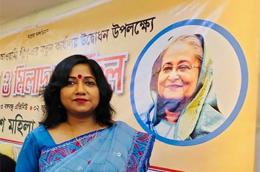
Despite the remarkable progress of women in many professions, politics is not one of them. Indeed, around the world, women have been conspicuous by their absence in decision and policy making in government.
The real empowerment of women is achieved when they can participate at all levels in both public and private sectors.
The inclusion of women in political processes is a key element in achieving a truly inclusive democracy, and women must have the chance to exercise their political rights and participate in all political decision-making.
Click here to read the full article published by The Daily Observer on 20 May 2023.
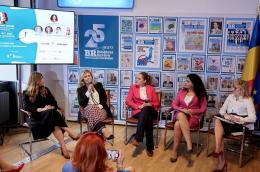
The gender equality index in Romania in 2022 was 53.7, a score that places Romania in 26th place in the European Union, according to the European Institute for Gender Equality. The European average is 68.6, and the highest level is 77.8 in Denmark. Romania is far from the European average, and it is obvious that we still have a lot to do. Gender equality also leads to economic growth, but also to the reduction of social inequities, and this was the theme of the Inspiring Voices event.
Held at the InfoEuropa Center, the office for information, promotion, and dissemination of foreign policy objectives and European issues of the Romanian Ministry of Foreign Affairs, Empowering Women Leaders & Entrepreneurs was organized by Business Review in partnership with the Representation of the European Commission in Romania.
Click here to read the full article published by Business Review on 18 May 2023.
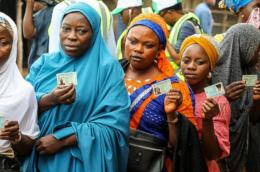
Despite the narrative that women in the north are not as ‘active’ in frontline politics as women from other regions of the country, there are many examples that dispel that notion. In three of the last four general elections, there has been at least a prominent gubernatorial bid by a woman in a northern state.
In 2011, after serving as the first northern female deputy governor, Pauline Tallen contested the Plateau state governorship election as a member of the Labour Party and finished second behind her boss, Jonah Jang. In 2015, Aisha Alhassan, popularly known as Mama Taraba, sought to get elected in Taraba and similarly finished second. However, her bid was closely followed because she was a candidate of the eventual ruling All Progressives Congress and had been declared winner by a court injunction – the first such announcement.
Click here to read the full article published by The Centre for Democracy & Development (CDD-West Africa) on 10 May 2023.
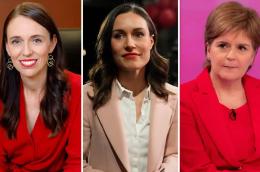
The growth in the number of female leaders has plateaued around the world, while representation in national parliaments remains static
On a recent speaking tour in Australia, Barack Obama offered up his idea on how to turn the tide on more than a decade of democratic erosion, to steer the world on to a path of sustainability and peace.
“I am actually convinced that if we could try an experiment in which every country on Earth was run by women for just two years … I am confident the world would tilt in a better direction.”
Obama’s interviewer – former Australian foreign minister Julie Bishop – replied saying female leaders would only need six months. Data, however, shows that even the far more modest goal of gender parity in global leadership remains distant.
Fewer than a third of the UN’s 193 member states have ever had a female leader*, and while the last two decades have seen a huge proportional rise in the number of women at the top of global politics, the actual numbers remain incredibly low.
Click here to read the full article published by The Guardian on 5 April 2023.