Women's Leadership

This chapter surveys the literature on gender and politics in Portugal, focusing on explanations for gender differences in political participation and representation. We map trends in women’s inclusion in key areas of political life: from conventional to unconventional political participation, to the election of women to parliamentary parties (descriptive representation), and responsiveness to women’s policy demands (substantive representation). Examining Portugal in comparative perspective, we highlight the crucial roles of state feminism, women activists within parties, and strategic incentives for parties to advance gender equality. We propose several avenues for developing future research which leverages the Portuguese case, including the downstream impacts of political gender quotas, intersectional and non-binary analysis, and the symbolic impact of women’s inclusion in public life.
Click here to access the article.
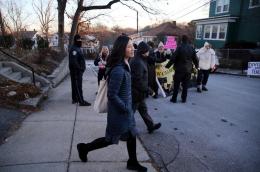
Boston Mayor Michelle Wu has become a target for white supremacists. Congresswoman Pramila Jayapal of Washington was stalked outside her house by a man with a gun. And New York Rep. Alexandria Ocasio-Cortez receives an “astronomical” number of threats on a daily basis.
Politics has become increasingly dangerous for women in the United States, where they are three times more likely than their male colleagues to be targeted, according to a new national database.
“I wouldn’t be surprised if a senator or House member were killed,” Sen. Susan Collins of Maine recently told The New York Times.
Click here to read the full article published by Forbes on 2 November 2022.
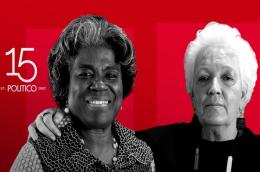
Linda Thomas-Greenfield and Gayle Smith on the choices they had to make to succeed, and why — from Iran to Afghanistan to America’s heartland — they think today’s young women will build a better world.
Linda Thomas-Greenfield and Gayle Smith both know what it’s like to be the only woman in the room. “I seethe every time I think about it,” says Thomas-Greenfield, U.S. ambassador to the United Nations, recalling the moment at a U.N. meeting when a man across the table told her, “we thought you were going to be a good girl.”
Fearful of being labeled an “angry Black woman” she bit her tongue, and regrets it to this day.
In the latest installment of POLITICO’s 15 Conversations series, Thomas-Greenfield talks with Smith, a former USAID administrator, President Joe Biden’s global Covid response coordinator and now head of the ONE Campaign, about how to make sure more women are involved in crafting the future of the world — and why that would be better for everyone.
Click here to access the video.
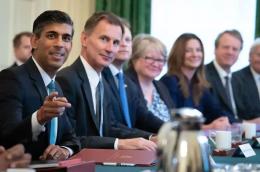
Women’s groups express concern as just 23% of those named to new PM’s cabinet are female.
Women’s groups have reacted with concern and anger over the low representation of women in the new cabinet.
Rishi Sunak removed 11 members of his predecessor’s top team on Tuesday as he put together a cabinet that he said “reflects a united party” by showcasing “all the talents”. Under the changes, however, fewer than a quarter of all people – about 23% – able to attend cabinet meetings will be women.
Click here to read the full article published by The Guardian on 26 October 2022.
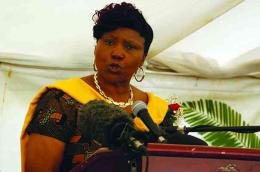
The world we live in is marked by a profoundly unequal distribution of the burden of adversity between men and women. From Japan to Africa, to the United States of America, gender disparity exists in almost every country. Inequality between men and women, on the other hand, can take various forms. It shows up in the unequal portrayal of men and women in diverse fields, disparities in remuneration, lingering gender stereotypes, and sexual discrimination.
In Africa, women's political representation has risen dramatically in recent decades. Between 1980 and 2015, the proportion of women in Parliament nearly doubled, while women's representation in Cabinet grew fivefold to 22%. Regrettably, numbers alone do not always imply power.
Click here to read the full article published by News Day on 2 November 2022.
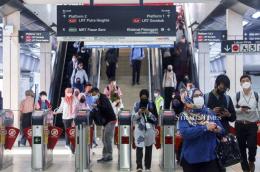
MALAYSIA is viewed as progressive where gender equality and advancing women's rights are concerned.
The government has supported women's empowerment and will continue to do so. Despite the progress, however, several issues and challenges exist, and data suggest disparities and shortfalls.
Figures by the All-Women's Action Society (Awam) and PantauPRU15 show that in the last general election, 7.3 million women made up 50.4 per cent of registered voters but only 251 out of 2,333 candidates were women.
Click here to read the full article published by The Straits Times on 1 November 2022.