Women's Leadership

Latinas are serving in record numbers across levels of elective office, but we are still vastly underrepresented when compared to our numbers in the population.
Data from the 2020 U.S. Census shows that those identifying as Hispanic or Latino accounted for more than half of the country’s population growth in the previous decade, with the greatest increases in Texas, California, and Florida. Latinas are key to that rise. But has representation in elective office kept pace with that population growth? This report helps to answer that question. It provides a review of the current status of Latinas in elective office in the U.S. within a historical context and with attention to what is possible in the 2022 election
Click here to access the report.
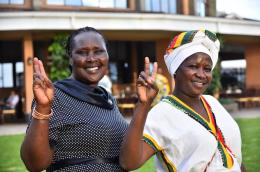
Across Kenya, local conflicts driven by diverse factors have one thing in common: they’re increasingly being mediated by women. From ethnic tensions to land disputes, some of these conflicts stretch back decades; remaining unresolved despite the lasting instability and violence they create among communities. So women are stepping up to end longstanding strife through local dialogues and outreach, approaches male-dominated leadership has not always been willing to take. But in order to build lasting peace, they need support from both their communities and the state—which some are receiving, and many are not.
Old conflicts, new harm
In the country’s western region, longstanding tensions are driving new security risks in the neighbouring counties of Kisumu and Nandi. Their predominant ethnicities mirror the tribal background of the two leading presidential candidates in this year’s election, and the border region has been identified as a hotspot for elections-related violence.
Click here to read the full article published by UN Women on 24 October 2022.
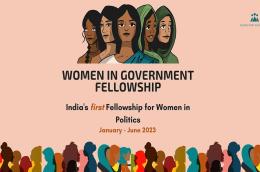
The Women in Government Fellowship is a six-month program that is focused on capacity-building, training, and mentorship of women in politics. It seeks to enhance and improve the quality of political participation of women.
The fellows will undergo in-person workshops, intensive virtual learning sessions, and hands-on mentorship by seasoned women politicians. This three-pronged approach will provide an academic grounding of democratic frameworks and policy-making, up-skill them with practical know-hows of electioneering, build the fellows' personal brands through personalised Public Narrative trainings by coaches from Harvard Kennedy School, and learn the ropes of politicking directly from a mentor who is undergoing the realities and tackling the challenges of being a woman in public office.
Application deadline: 30th November 2022
Shortlisted applicants' interviews: 5-15th December 2022
Selected Fellows list: 21st December 2022
Click here to learn more.
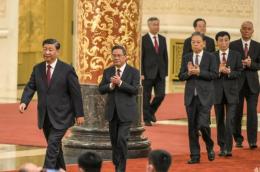
BEIJING – The Communist Party congress has laid bare the striking gender imbalance in the upper echelons of Chinese politics, with not a single woman making the 24-person Politburo for the first time in at least a quarter of a century.
As Xi Jinping and his allies concentrated power over the weekend, the party’s highest-ranking woman leader retired.
Veteran politician Sun Chunlan, a vice premier overseeing China’s health policies, was absent from the Central Committee list published Saturday, meaning she has stepped down.
Click here to read the full article published by The Japan Times on 24 October 2022.
Pourquoi privilégier l’étude des médias quand on travaille sur les questions de genre ?
En ce qui me concerne, je poserai la question des femmes politiques à partir de mon terrain d’observation qui est celui des médias, et plus spécifiquement, des médias d’information. Pourquoi privilégier cette focale quand on travaille sur les questions de genre ? Parce que, pour reprendre le propos du philosophe Michel Foucault, les médias sont « des technologies de pouvoir ». Reprenant Michel Foucault, Teresa de Lauretis, grande théoricienne du genre, va plus loin, et parle quant à elle de « technologies de genre » : à l’instar de l’école, de la famille ou des tribunaux, les médias participent à l’imposition de valeurs et de normes, de genre en particulier, tout en prétendant n’en être que le reflet.
Les médias d’information se présentent volontiers comme «le reflet de la réalité», «le miroir du monde». Il n’en est rien: comme le dit le Chat de Gelück, une autre de mes grandes références ! : «Quand on lit le journal, on croit apprendre ce qui se passe dans le monde. En réalité, on n’apprend que ce qui se passe dans le journal.» Journalistes et rédactions sont pétris des stéréotypes de genre et des rapports de domination genrés qui caractérisent la société dans son ensemble.
Cliquez ici pour lire l’article publié par 50/50 Magazine, le 22 septembre 2022.

This article presents the results of a randomized survey experiment demonstrating that the public evaluates women politicians more highly than men across multiple characteristic assessments. This finding is consistent with a recent wave of research indicating greater preference for women politicians. Which respondents rate women politicians more highly, and why? The survey found that women and younger voters do not account for the greater marks given to women politicians. Instead, respondent partisanship and the presumed partisanship of the politician account for a great deal of the findings, with gender playing a complicating role. Democratic and Republican respondents are apt to project their own partisanship onto politicians, and across both parties, the survey found higher assessments for co-partisan politicians and for women politicians. On the whole, women politicians are evaluated on par with of significantly higher than men politicians across six characteristics, scoring especially well relative to men when politicians are presumed to be members of the opposing party and when traditionally feminine characteristics are assessed.
Click here to access the article.