Women's Leadership
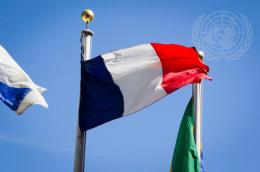
OPEN DEBATE ON « WOMEN, PEACE AND SECURITY »
STATEMENT BY MR. JAY DHARMADHIKARI
DEPUTY PERMANENT REPRESENTATIVE OF FRANCE TO THE UNITED NATIONS
TO THE SECURITY COUNCIL
(TRANSLATED FROM FRENCH)
New York, 6 of October 2025
Mr. President,
I would first like to thank the Secretary-General and the Executive Director of UN Women, Ms. Sima Bahous, for their statements and their commitment to the Women, Peace and Security agenda.
Twenty-five years after the adoption of Resolution 1325, this agenda has led to significant progress.
The protection of women in armed conflict and their participation in peacekeeping are now at the heart of peace operation mandates, like MONUSCO and UNMISS, as well as peace agreements—I am thinking, for example, of the peace agreements in Colombia and South Sudan.
Although they remain underrepresented, women continue to grow in number in national diplomatic services, military contingents, police contingents, and the United Nations more broadly.
However, the brutal deterioration of the situation of women in armed conflict and the increasing attacks on their rights are today putting this agenda at risks.
In Gaza, Sudan, the Democratic Republic of Congo, Haiti, Myanmar, and many other conflicts, the exposure of women and girls, their proportion among the victims, and the number of cases of sexual violence verified by the United Nations are unprecedented.
In Ukraine, the armed forces of a permanent member of this Council—Russia—are committing rape and other form of sexual violence against civilians and prisoners of war. In Afghanistan, the segregation of women by the Taliban is so severe that it could amount to a crime against humanity.
In response, we must protect the achievements of the past two decades and place the Women, Peace and Security agenda back at the heart of a reformed United Nations and effective multilateralism.
I would like to emphasize four key areas for action which are within reach for the members of this Council.
Firstly, continue to strengthen women’s participation in all aspects of peacekeeping.
In line with CEDAW Committee General Recommendation No. 40, we must enhance women’s representation in decision-making systems, moving towards the goal of parity—including in United Nations governance.
We must encourage initiatives that aim at promoting women’s participation in peace processes and peace operations. I am thinking in particular of training for women in uniform.
Secondly, we must effectively implement the Council’s Women, Peace and Security resolutions on the ground.
France will continue to negotiate to ensure that these resolutions remain at the heart of peace operation mandates.
France also calls for strengthening the presence of women’s protection advisers and military advisers on gender issues in these operations.
Thirdly, we need to fight impunity and ensure that victims obtain reparation.
We must provide greater support to national authorities in this regard, particularly judicial authorities. We commend the work of the Special Representative of the Secretary-General on Sexual Violence in Conflict, Ms. Pramila Patten, as well as her efforts to create an international network of prosecutors to combat impunity for perpetrators of sexual violence in conflict.
We call for the strengthening of the Council’s use of targeted sanctions against those responsible for these crimes.
France reiterates its full support for the International Criminal Court and for international mechanisms that investigate sexual crimes.
Fourth, support the United Nations and civil society organizations, which play a key role on the ground.
France welcomes the commitment of UN Women and UNFPA to implementing the Women, Peace and Security Agenda. We also support feminist organizations through a dedicated national fund, one of the world’s largest both in terms of geographical scope and financial scale.
Mr. President,
As France is about to adopt its fourth national action plan on women, peace, and security for 2026-2030, which will take into account emerging issues such as digital technology and climate change, I would like to pay tribute to the negotiators, mediators, women in uniform, female humanitarian workers, representatives of civil society, and so many other women who work daily to promote peace. Their courage compels us to act.
As a sign of this commitment, the Women, Peace and Security agenda will be among of priorities of the 4th Ministerial Conference on Feminist Diplomacy, to be held in Paris on October 22 and 23.
Thank you.
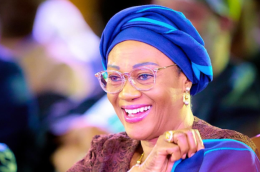
First Lady of the Federal Republic of Nigeria, Sen. Oluremi Tinubu, has emphasized the importance of inclusive political participation, calling for increased women’s representation in nation-building efforts.
Sen. Tinubu made the call during the 774 Explode Programme; an empowerment initiative organized by the Office of the All Progressives Congress (APC) National Women Leader, themed, “Enhancing Gender Space in Politics”, which took place at the Victor Uwaifo Creative Hub in Benin City.
Represented by the Minister of Women Affairs, Hon. Imaan Sulaiman Ibrahim, Sen. Tinubu celebrated women’s invaluable contributions in nation building and growth.
Senator Tinubu joined forces with key stakeholders, including the Coordinator, Office of the Edo State First Lady, Mrs. Edesili Okpebholo Anani; Commissioner for Women Affairs and Social Development, Chief Bisi Idaomi Esq.; and the All Progressives Congress (APC) National Women Leader, Dr. Mary Alile, to advocate for increased women’s representation in politics.
The event aimed to address the cultural and systemic barriers that limit women’s participation in governance. The dignitaries emphasized the need for economic empowerment, reserved political seats for women, and inclusive policies to ensure gender equality and stronger nation-building.
Across Latin America, democracy is coming under severe pressure. Authoritarian leaders across the continent have been entrenching political power through constitutional manipulation, militarised policing and the persecution of dissent.
In Venezuela, Nicaragua, El Salvador and Argentina, regimes are increasingly eroding democracy and mounting a backlash against human rights.
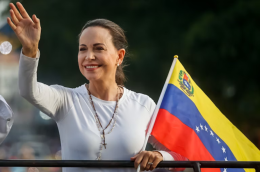
It is in this bleak regional landscape that the Nobel Committee’s decision to award the 2025 peace prize to María Corina Machado has landed. The award is a recognition of one woman’s defiance. But it is also an opportunity to ask what kind of democracy and what kind of peace the world should aspire to.
Machado has long been the face of Venezuela’s democratic opposition. Disqualified from public office, vilified by Nicolás Maduro’s regime and repeatedly threatened, she embodies the persistence of civic dissent.
The Nobel prize committee’s citation reads: “She is receiving the Nobel Peace Prize for her tireless work promoting democratic rights for the people of Venezuela, and for her struggle to achieve a just and peaceful transition from dictatorship to democracy.”
Yet that transition is a long way from being achieved and remains deeply uncertain. Venezuela has fallen victim to increasing political polarisation and is now suffering one of the worst displacement crises in the hemisphere, with 8 million people having left the country since 2014. And the threat of US interference is ever present.
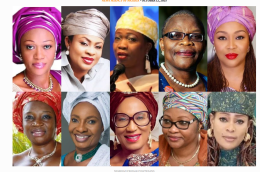
Member Adiguve, the coordinator of the Young Women in Politics Forum in Benue, has called for more women’s participation in politics.
Ms Adiguve said on Sunday in Makurdi that women should stop restricting themselves to the position of women leaders in politics.
The coordinator urged women to aspire to occupy all positions within their political parties and the government.
She said the forum was already conducting extensive public enlightenment across the 23 local councils, educating women on the need to join active politics.
Ms Adiguve stated that the forum was also pushing for the full implementation of the 35 per cent affirmative action on women in the state.
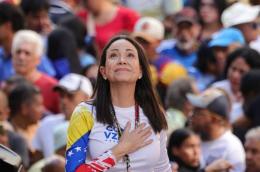
The opposition movement in Venezuela, spearheaded by María Corina Machado, has many allies worldwide.
After last year’s election, the US and the European Parliament formally recognised Edmundo González as Venezuela's President. The UK dismissed Nicolás Maduro’s election win as "fraudulent".
When Machado was briefly arrested during protests ahead of President Maduro’s inauguration, Donald Trump posted a statement saying that she and the "president-elect González" are "peacefully expressing the voices and the WILL of the Venezuelan people with hundreds of thousands of people demonstrating against the regime".
He added that: "These freedom fighters should not be harmed and MUST stay SAFE and ALIVE!"
Both Machado and González were accused of "treason" after the election by the Venezuelan government.
Full article here.
Newswise — Washington, D.C. - October 6, 2025 − As the non-partisan Women & Politics Institute at American University marks its 25th anniversary, a new nationwide survey underscores both the progress women have made in politics and the barriers that remain. The poll, She Leads: Progress and Persistent Barriers for Women in Politics, finds that while voters strongly support electing more women and trust them on key issues, lingering biases and double standards continue to shape the path to the presidency.
The poll of 801 registered voters, conducted September 3–6, 2025, by Breakthrough Campaigns in conjunction with WPI’s Gender on the Ballot project, highlights a paradox in public opinion: progress in attitudes toward women leaders coupled with persistent resistance to a woman in the Oval Office.
“These findings capture both the momentum and the headwinds for women in politics,” said Betsy Fischer Martin, Executive Director of the Women & Politics Institute. “As we mark WPI’s 25th anniversary, the results remind us why our mission matters. Voters clearly value the perspective women bring and want to see more women in office. But when it comes to the presidency, stereotypes and double standards still cast a long shadow. That tension will define the next chapter in women’s political leadership.”

Building on the data in the global report on Gender Equality in Public Administration (GEPA), this policy brief looks at women's participation in and leadership of environmental protection ministries as well as all ministries tasked officially with each country's response to climate change. While progress in women's participation in public administration across many other sectors has improved, there are still significant gaps – with the largest ones affecting environment and climate spheres.
Click here to access the report.

increase gender parity in politics, global efforts have struggled to ensure equal female representation. This is likely tied to implicit gender biases against women in authority. In this work, we present a comprehensive study of gender biases that appear in online political discussion. To this end, we collect 10 million comments on Reddit in conversations about male and female politicians, which enables an exhaustive study of automatic gender bias detection. We address not only misogynistic language, but also other manifestations of bias, like benevolent sexism in the form of seemingly positive sentiment and dominance attributed to female politicians, or differences in descriptor attribution. Finally, we conduct a multi-faceted study of gender bias towards politicians investigating both linguistic and extra-linguistic cues. We assess 5 different types of gender bias, evaluating coverage, combinatorial, nominal, sentimental and lexical biases extant in social media language and discourse. Overall, we find that, contrary to previous research, coverage and sentiment biases suggest equal public interest in female politicians. Rather than overt hostile or benevolent sexism, the results of the nominal and lexical analyses suggest this interest is not as professional or respectful as that expressed about male politicians. Female politicians are often named by their first names and are described in relation to their body, clothing, or family; this is a treatment that is not similarly extended to men. On the now banned far-right subreddits, this disparity is greatest, though differences in gender biases still appear in the right and left-leaning subreddits. We release the curated dataset to the public for future studies.
Click here to read the full article published by Plos One on 26 October 2022.

The Gender Equality Index developed by the European Institute for Gender Equality (EIGE) in 2013, is recognised in the European Union as an important tool for analysing the state of gender equality in a society as well as comparing current trends and the current situation at the European Union (EU) level. Since 2016, the Agency for Gender Equality of Bosnia and Herzegovina within the Ministry of Human Rights and Refugees of Bosnia and Herzegovina together with the Agency for Statistics of Bosnia and Herzegovina have been engaged in activities that have led to the development of a Gender Equality Index for Bosnia and Herzegovina. The Gender Equality Index for Bosnia and Herzegovina 2022 presents the full index scores for two full domains, Knowledge and Power and the partial index scores for the domains of Work and Health. With the development of this report, Bosnia and Herzegovina will for the first time be able to rely on a statistically legitimate, objective and up-to-date statistical tool for the comparison of the state of gender equality in the country wth countries in the region and in the EU. The combined efforts of the Agency for Statistics of Bosnia and Herzegovina and the Agency for Gender Equality of Bosnia and Herzegovina within the Ministry for Human Rights and Refugees of Bosnia and Herzegovina, under the invaluable guidance of EIGE and supported by UN Women and financed by the European Union, have resulted in the development of this Gender Equality Index.
Click here to access the report.

In December 2020, Sustineo was engaged UN Women under the Women in Leadership in Samoa (WILS) Project to lead the design and implementation of Research on Leadership Pathways of Women in Samoa.
The purpose was to better understand the barriers that hinder Samoan women’s access to leadership roles across different levels of society and to identify innovative strategies to support women’s access to leadership.
The research had four objectives:
- To identify pathways of leadership for Samoan women.
- To identify factors that facilitate women’s access to leadership in Samoa and factors that create barriers.
- To identify strategies used by Samoan women leaders to gain access to leadership positions.
- To identify innovative strategies for development partners on how to support and encourage an increase in women’s access to leadership in Samoa.
These research objectives were investigated through a mixed-method approach, drawing primarily on qualitative data.
Click here to access the report.

This chapter surveys the literature on gender and politics in Portugal, focusing on explanations for gender differences in political participation and representation. We map trends in women’s inclusion in key areas of political life: from conventional to unconventional political participation, to the election of women to parliamentary parties (descriptive representation), and responsiveness to women’s policy demands (substantive representation). Examining Portugal in comparative perspective, we highlight the crucial roles of state feminism, women activists within parties, and strategic incentives for parties to advance gender equality. We propose several avenues for developing future research which leverages the Portuguese case, including the downstream impacts of political gender quotas, intersectional and non-binary analysis, and the symbolic impact of women’s inclusion in public life.
Click here to access the article.

Gender equality and women’s empowerment are central to the 2030 Agenda for Sustainable Development and the Community Vision 2025 of the Association for Southeast Asian Nations (ASEAN). They are also key to fostering a more sustainable and inclusive region. Providing women with equal access to decision-making power and leadership not only supports their well-being, but also enables their contribution towards regional progress and inclusiveness.
Data, however, shows that substantial progress is needed to empower a new generation of ASEAN women leaders. This factsheet explores, through available official statistics, the various leadership roles that women play in the ASEAN region, and sheds light on areas where improvement is needed.
Click here to access the report.