Women's Leadership
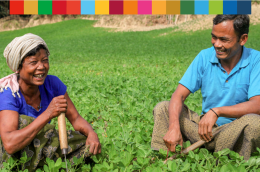
Advancing Gender Equality in National Climate Plans: Progress and Higher Ambitions highlights the latest data on country progress in integrating gender considerations into their national climate plans, or Nationally Determined Contributions (NDCs), under the UNDP Climate Promise initiative. UNDP supports 120 countries through the Climate Promise to reach their climate goals as part of the Paris Agreement. The brief also explores how countries can scale up ambitions on gender integration in the NDC implementation process, as well as the challenges and opportunities that could arise as countries move from pledges to realizing these gender commitments.
Click here to access the report.

This article analyses how women governors, mayors, and local elected officials promoted public health and social protection in countries where men chief executives failed to take steps to contain the virus. We focus on adverse circumstances in six cases: Brazil, the United States, the Philippines, Japan, Mexico, and India. While individual women may not see their leadership in feminist terms, their pandemic response contrasted with men chief executives’ hypermasculine bravado and slapdash decision-making. Women leaders relied on science, co-ordinated community outreach, and attended to the needs of marginalised groups. Their stories reveal women’s resiliency, resourcefulness, and resolve at the local level.
Click here to access the article

Indians accept women as political leaders, but many favor traditional gender roles in family life.
More than half a century ago, India was one of the first countries in the world to elect a woman as prime minister, and the country currently has several highly influential women politicians, including Sonia Gandhi, the head of one of the major national parties. Today, most Indians say that “women and men make equally good political leaders,” and more than one-in-ten feel that women generally make better political leaders than men, according to a recent Pew Research Center survey of nearly 30,000 adults throughout India. Only a quarter of Indian adults take the position that men make better political leaders than women.
Click here to access the report.

Indian adults nearly universally say it is important for women to have the same rights as men, including eight-in-ten who say this is very important. At the same time, however, there are circumstances when Indians feel men should receive preferential treatment: 80% agree with the idea that “when there are few jobs, men should have more rights to a job than women,” according to a new Pew Research Center report.
The report, based on a face-to-face survey of 29,999 Indian adults fielded between late 2019 and early 2020, before the COVID-19 pandemic, looks at how Indians view gender roles at home and in society more generally. The survey, which was also the basis for a 2021 report on religion in India, was conducted by local interviewers in 17 languages and covered nearly all of India’s states and union territories.
Click here to read the full article published by Pew Research Center on 2 March 2022.
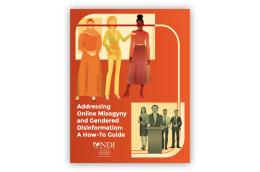
The internet is a tool that can simplify and encourage democratic engagement, but the rise of online disinformation challenges even the world’s most robust democracies. While the most recognizable disinformation campaigns are related to national politics, disinformers frequently employ narratives targeting women’s gender and sexuality in order to disrupt democracy. This is often then amplified by media agents and the general population, who may not have the intent to drive disinformation nor the capacity to discern it. NDI’s robust research in this field concludes that gendered disinformation is the use of false information to confuse or mislead by manipulating gender as a social cleavage to attack women and/or to sway political outcomes. It has three primary goals: to keep women out of politics; to change the views of women and men about women’s political participation; and specifically to change party policies or political outcomes. In short, it aims to undermine women’s free and equal participation in politics to the detriment of inclusive, resilient democracy.
Based on research conclusions, this paper outlines recommendations for NDI, its partners and those working globally to mitigate the democratic harms of disinformation, to ensure women’s safe participation and leadership in politics, and to monitor the social media and information environment in elections.
Click here to access the guide.

An innovative program to advance female participation in Australian politics is calling for new participants and launching a knowledge hub, sharing leading research, articles and interviews on the eve of International Women’s Day 2022.
The Pathways to Politics Program for Women is a non-partisan initiative aiming to change the face of politics by equipping women with the skills, knowledge, confidence and networks they need to run for elected office and thrive as political leaders.
The University of Melbourne is a founding partner of the program which has achieved great success in advancing female political participation since its inception six years ago, with alumni achieving fifteen electoral successes across local, state, and federal levels of government.
Click here to read the full article published by The University of Melbourne on 7 March 2022.