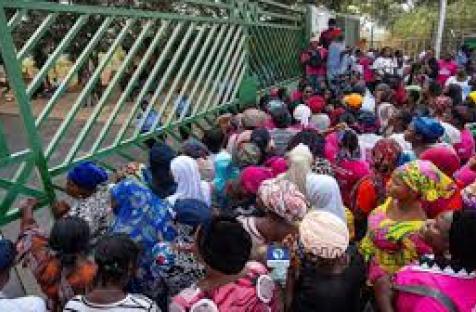
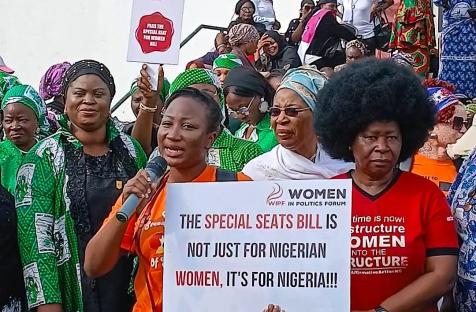
More than 750 women from across Nigeria are staging a peace walk in Abuja today, Monday, September 22, 2025, urging lawmakers to pass the long-awaited Special Seats Reserved for Women Bill aimed at increasing female representation in governance.
Advocacy and development are effective tools for gender advocates, male champions, civil society, and other stakeholders to hold leaders accountable to their commitments on concrete, measurable actions that guarantee women can fully and equally enjoy their rights. These include the ability to exercise freedom and choices, go to school, live free from violence, earn equal pay for equal work, and meaningfully engage in decision-making and political processes. Advocacy groups can collectively put pressure their leaders for legislative reforms to protect and promote women’s rights and concerns, which may require coalition-building, fundraising, civic education, awareness-raising and consensus-building on key issue platforms. Influencing legislation itself may require convince policy makers and legislators to address specific issues relevant to gender equality and women’s empowerment, which may involve introducing or revising legislation and policy.
More than 750 women from across Nigeria are staging a peace walk in Abuja today, Monday, September 22, 2025, urging lawmakers to pass the long-awaited Special Seats Reserved for Women Bill aimed at increasing female representation in governance.
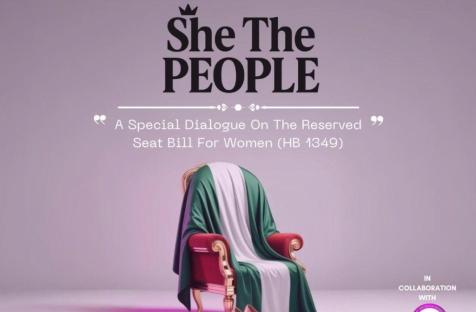
More than 750 Nigerian women, representing all 36 states of the federation and the Federal Capital Territory (FCT), have converged on Abuja in a historic show of solidarity to submit a memorandum at the National Public Hearing for the Special Seats Reserved for Women Bi
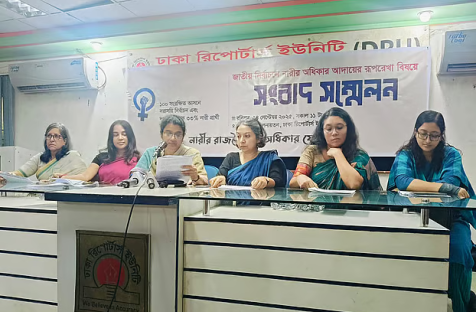
Speakers at a press conference have called on the political parties to reconsider their stance on reserved seats for women in the Jatiya Sangsad (parliament).
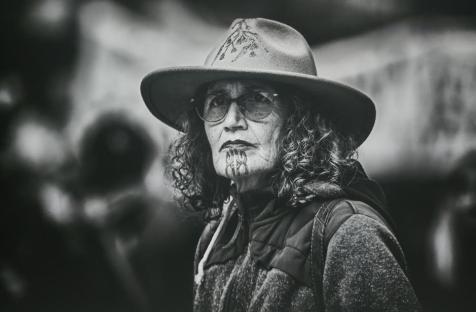
The herstoric Hine E Hine gathering concluded today after three days celebrating 40 years of the Māori women’s refuge movement.
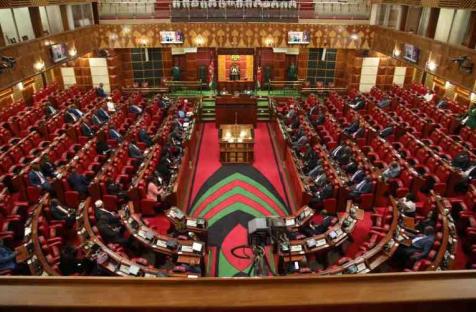
In Kenya’s political arena, women are rarely seen as leaders in their own right. Instead, they are often labelled with degrading terms like flower girls or slay queens, or portrayed as sidekicks to powerful men.
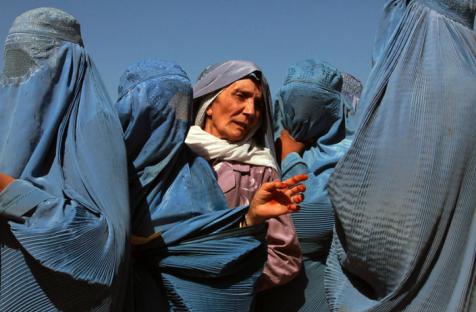
On August 15, 2021, the lives of the Afghan people underwent a stochastic lifestyle shift.
Women’s voices and experiences are crucial for the functioning of our democracy. Yet, despite many women’s roles as community leaders right across the island, they remain significantly underrepresented in our political system North and South.
Reacting to the ratification of the Protocol to the African Charter on Human and Peoples’ Rights on the Rights of Women in Africa, (