100 years on, politics is where the U.S. lags most on gender equality
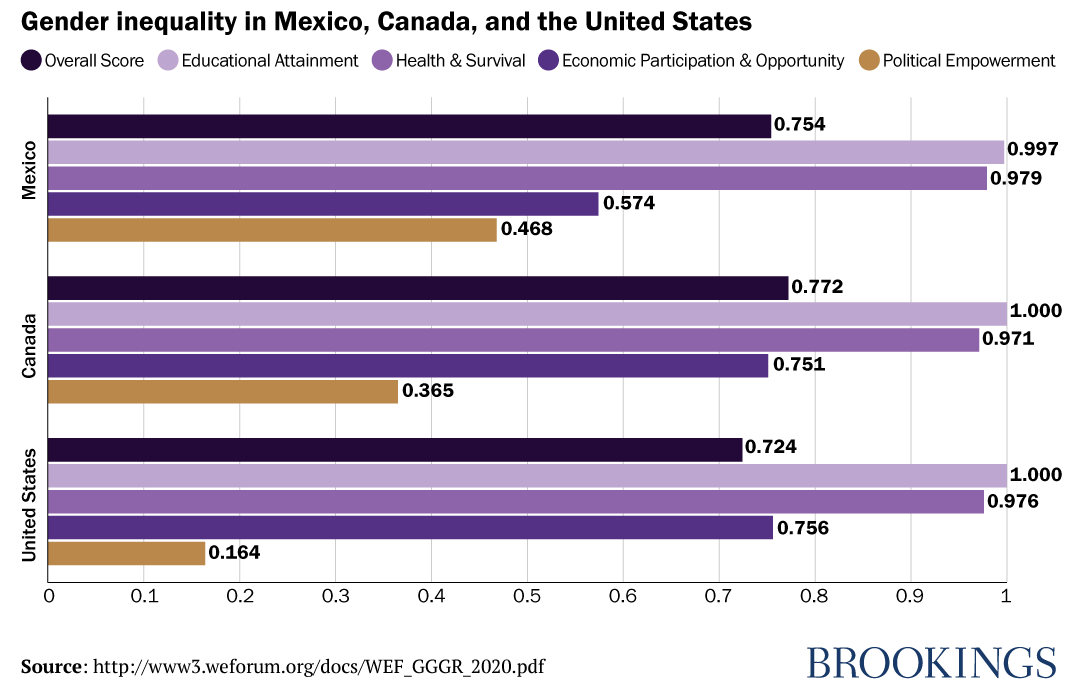
A century on from women winning the right to vote in the U.S., our nation has made huge progress on many fronts.
While there have been important advances in women’s leadership in politics, as of November 1 2017, women make up only 7.2% of Heads of State and 6.2% Heads of Government. Data on women representatives in local government, including as mayors, heads of villages and towns, is not well collected and analyzed. The adoption of an SDG indicator on women’s representation in local government is a great step forward in tracking progress on gender balance, allowing for the systematic collection and analysis of data on women in local government. Women’s access to and continued role in leadership positions is challenged by a range of barriers, including discriminatory laws and practices, as well as social norms that prescribe traditional roles and attitudes towards women’s participation in leadership and decision-making roles. Proactive gender-equality policies within political parties and local government structures, including quotas and special temporary measures, gender-sensitive approaches to electoral processes, support networks, mentoring, training, and engagement of male champions, can all help promote women’s role in political leadership.

A century on from women winning the right to vote in the U.S., our nation has made huge progress on many fronts.

Why are there so few women at the top levels of politics?


Over a dozen House Democrats, led by Rep.

On 2 July 2020, the Congress organised a webinar on “Preventing and Combatting Sexism at Local Level in Ukraine” to release a guide for women and

The African Women Leaders Network Liberia Chapter (AWLN Liberia), in collaboration with the National Elections Commission (NEC) on Wednesday, July

On July 21, 1960 in Sri Lanka, Sirima Bandaranaike became the world's first democratically elected female head of government.

The president of Gabon, Ali Bongo Ondimba, has appointed the country's first female prime minister, Rose Christiane Ossouka Raponda.

When the President, John Pombe Magufuli, addressed the National Assembly on June 16th, this year, the final day before Parliament was dissolved; H