Pakistan ranks second lowest in the world for gender equality, placing at number 148 out of 149 countries.
While there have been important advances in women’s leadership in politics, as of November 1 2017, women make up only 7.2% of Heads of State and 6.2% Heads of Government. Data on women representatives in local government, including as mayors, heads of villages and towns, is not well collected and analyzed. The adoption of an SDG indicator on women’s representation in local government is a great step forward in tracking progress on gender balance, allowing for the systematic collection and analysis of data on women in local government. Women’s access to and continued role in leadership positions is challenged by a range of barriers, including discriminatory laws and practices, as well as social norms that prescribe traditional roles and attitudes towards women’s participation in leadership and decision-making roles. Proactive gender-equality policies within political parties and local government structures, including quotas and special temporary measures, gender-sensitive approaches to electoral processes, support networks, mentoring, training, and engagement of male champions, can all help promote women’s role in political leadership.
Pakistan ranks second lowest in the world for gender equality, placing at number 148 out of 149 countries.
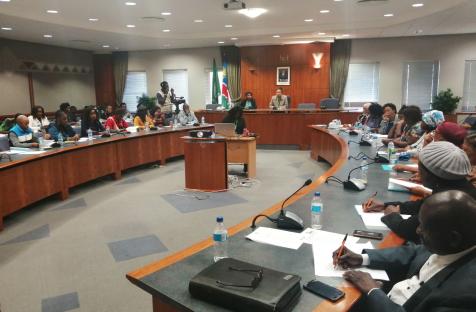
Female under-representation in politics continues to be a problem in Botswana, where only three women won seats in the 57-member National Assembly during last week’s general elections.
This month, the New York Times profiled Zarifa Ghafari, one of the few female mayors in Afghanistan.
MPs have increasingly become the target of abuse - and some women politicians say they are bearing the brunt of it.
Slovakia is walking on the right path when it comes to women’s empowerment. But the country still lags, even behind its closest neighbours.
According to a new study, around 80% of women in Parliament are exposed to gender-based violence. In May, the study surveyed 33 women who are working in or have recently quit Parliament, with 25 women responding.
Belgium’s first female prime minister in its 189-year history has taken office, after Sophie Wilmès was named as the head of the country’s next caretaker government.
Many feminists celebrated the incredible progress made in 2018 when more women were elected to Congress than ever before—but victories at the state level warranted commemoration, too.
Claudia López, a gay politician who advertises herself as "incorruptible", has become the first woman to be elected mayor of Colombia's capital, Bogotá.