
Women's Leadership
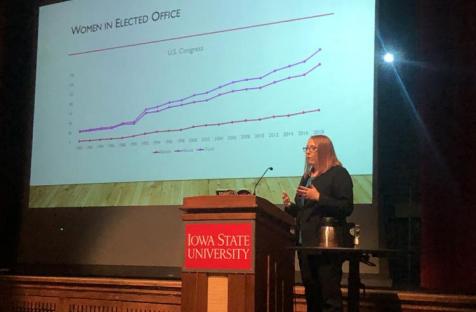
While there have been important advances in women’s leadership in politics, as of November 1 2017, women make up only 7.2% of Heads of State and 6.2% Heads of Government. Data on women representatives in local government, including as mayors, heads of villages and towns, is not well collected and analyzed. The adoption of an SDG indicator on women’s representation in local government is a great step forward in tracking progress on gender balance, allowing for the systematic collection and analysis of data on women in local government. Women’s access to and continued role in leadership positions is challenged by a range of barriers, including discriminatory laws and practices, as well as social norms that prescribe traditional roles and attitudes towards women’s participation in leadership and decision-making roles. Proactive gender-equality policies within political parties and local government structures, including quotas and special temporary measures, gender-sensitive approaches to electoral processes, support networks, mentoring, training, and engagement of male champions, can all help promote women’s role in political leadership.
Bhatia, who also doubles as the Deputy Executive Director of the UN Women said she was pleased that at least 52 percent of positions on the committees in Maaji Refugee Settlement in Adjumani district, Northern Uganda were won by women.
European Parliament Elections 2019: towards parity democracy in Europe
This policy paper aims to reconsider the concept of parity democracy in the current context of the EU and focusing on the elections to the EP in May 2019.
While the European Parliament stands for gender equality, women continue to be under-rep
Deliberate effort to put women in political positions, building institutions and strong legal frameworks, as well as strong human resource capacity, are some of the catalysts that will ensure the African woman is empowered.
Maternal mortality and women's political participation
Raising women’s political participation leads to faster maternal mortality decline. We estimate that the introduction of quotas for women in parliament results in a 9–12 per cent decline in maternal mortality.
Tackling inequality between women and men in the sharing of power and decision-making at all levels is essential to strengthen democracy and achieve peace and sustainable development.
Women in leadership: A Q&A with President Sahle-Work Zewde
Women Deliver President/CEO Katja Iversen and the first female president of Ethiopia, Sahle-Work Zewde, discuss women in leadership and links between sexual and reproductive health and rights and Universal Health Coverage (UHC) to advance gender equa
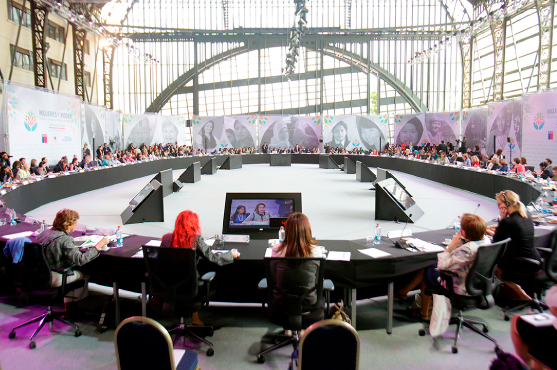
The President of the UN General Assembly, Maria Fernanda Espinosa, is holding this Thursday her latest informal High-Level Panel: Women in Power - Call to Action and Women Leaders - Voices for Change and Inclusion: Joining Forces and Redoubling Effor
Pagination
- Previous page
- Page 171
- Next page