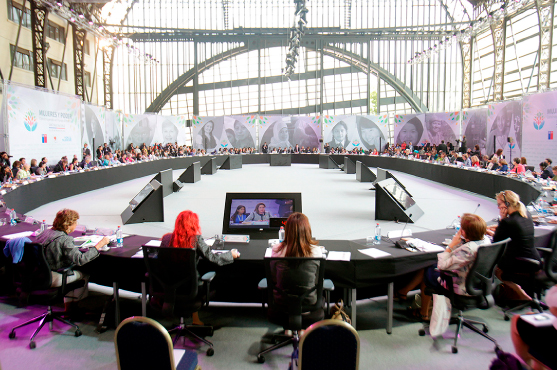
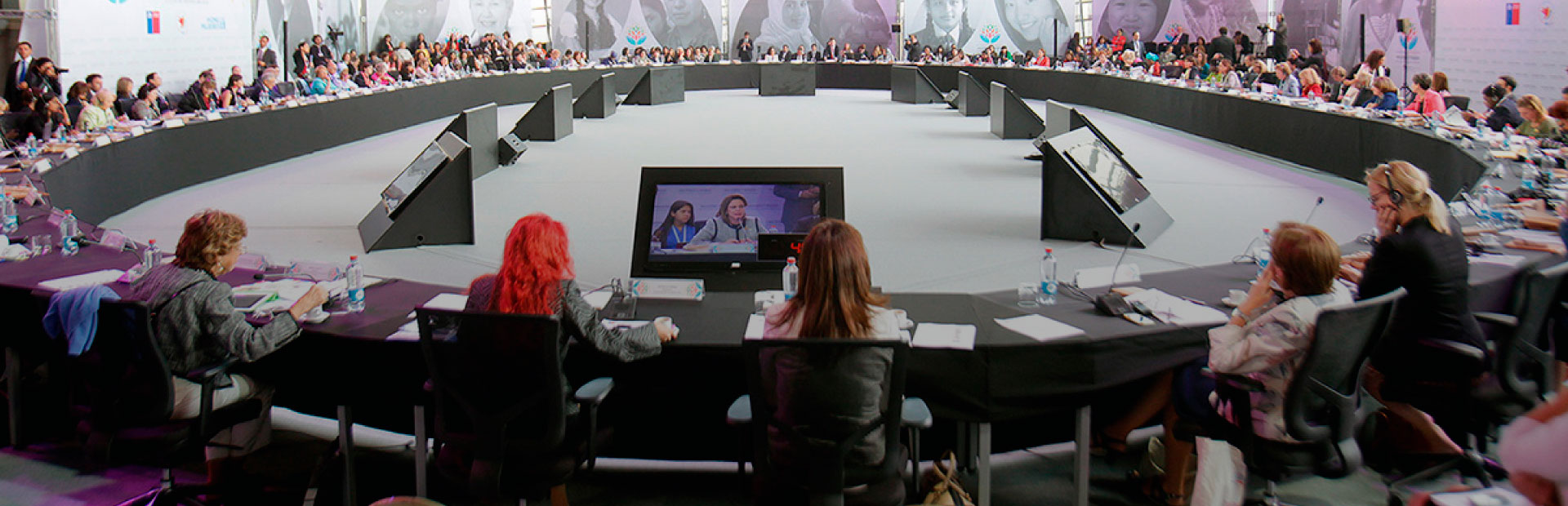
As Liberian prepared to cast their votes in the Montserrado’s Representative and Senatorial by-elections, the UN Women has recently engaged stakeholders to give serious consideration to women leadership and political participation in politics.
While there have been important advances in women’s leadership in politics, as of November 1 2017, women make up only 7.2% of Heads of State and 6.2% Heads of Government. Data on women representatives in local government, including as mayors, heads of villages and towns, is not well collected and analyzed. The adoption of an SDG indicator on women’s representation in local government is a great step forward in tracking progress on gender balance, allowing for the systematic collection and analysis of data on women in local government. Women’s access to and continued role in leadership positions is challenged by a range of barriers, including discriminatory laws and practices, as well as social norms that prescribe traditional roles and attitudes towards women’s participation in leadership and decision-making roles. Proactive gender-equality policies within political parties and local government structures, including quotas and special temporary measures, gender-sensitive approaches to electoral processes, support networks, mentoring, training, and engagement of male champions, can all help promote women’s role in political leadership.
As Liberian prepared to cast their votes in the Montserrado’s Representative and Senatorial by-elections, the UN Women has recently engaged stakeholders to give serious consideration to women leadership and political participation in politics.
A recent survey conducted by Greece‘s Research Center for Gender Equality (KETHI) in April found that 72 percent of Greeks believe that the country needs more women in politics, and their reluctanc
Justin Trudeau, Prime Minister of Canada has said that when women play an active role in conflict prevention and peace building, and when their rights are respected, we are better able to achieve long-term, sustainable peace.
By Ana Stevenson,
For more than a century, the same tactics and tropes have been used against women in politics. Now they must turn the tables.
A major Holyrood drive has been unveiled aimed at getting more women to become MSPs after numbers stalled in recent years.
She was the daughter of a barber and grew up in a New England mill town. In an effort to save for a college education, she began working for wages at the age of 13; it was not enough.
Violence targeted against female politicians and activists will be tracked for the first time by a global database, amid indications of a recent rise in attacks.
For over three decades, the International Foundation for Electoral Systems (IFES) has worked to advance good governance and support all citizens’ rights to participate in credible elections.