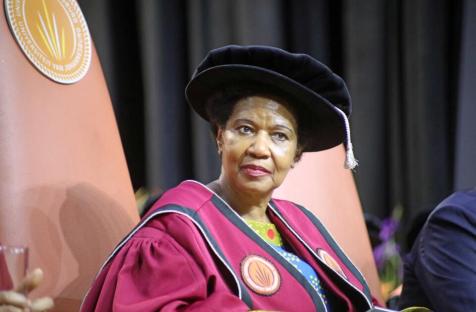
In a parliamentary democracy like Namibia, all power shall be vested in the people through freely elected representatives exercising this power.
While there have been important advances in women’s leadership in politics, as of November 1 2017, women make up only 7.2% of Heads of State and 6.2% Heads of Government. Data on women representatives in local government, including as mayors, heads of villages and towns, is not well collected and analyzed. The adoption of an SDG indicator on women’s representation in local government is a great step forward in tracking progress on gender balance, allowing for the systematic collection and analysis of data on women in local government. Women’s access to and continued role in leadership positions is challenged by a range of barriers, including discriminatory laws and practices, as well as social norms that prescribe traditional roles and attitudes towards women’s participation in leadership and decision-making roles. Proactive gender-equality policies within political parties and local government structures, including quotas and special temporary measures, gender-sensitive approaches to electoral processes, support networks, mentoring, training, and engagement of male champions, can all help promote women’s role in political leadership.
In a parliamentary democracy like Namibia, all power shall be vested in the people through freely elected representatives exercising this power.
Discover how the University of Tasmania's Pathways to Politics for Women program is empowering aspiring female politicians in Tasmania.
Discover the impactful conversations and calls to action from the Women's Rights Conference 2024 in Malaysia, addressing the critical issues of female political representation and the collective efforts towards gender equality.
Auckland, New Zealand – Numbers speak volumes, and in the Pacific, they tell a concerning story: less than 7 percent of parliamentarians are women.
When will the next general election be? No one knows.
Recently, the minister responsible for women, family and community development, Nancy Shukri, reportedly
On 15 February 2024, an article titled “Why Cambodia needs to incorporate more women into its foreign policy process” was published on the Diplomat and has caught attention from various readers including the Ministry of Foreign Affairs and International Cooperation of
For standing up to the dangerous elements of today’s political reality—racial and socio-economic disparities and crackdowns on dissent, among them—both Robredo in the Philippines and Márquez in Colombia faced threats online and offline.
Women's political leadership is evolving, with both progress and challenges. Inspiring figures like Angela Merkel and Jacinda Ardern have made strides, but achieving gender parity is still over a century away.