Youth
While young people play central and catalyzing roles in movements for democracy around the world, they are less engaged than older generations in voting and party activism. As of 2016 people between the ages of 20 and 44 make up 57% of the world’s voting age population but only 26% of the world’s Members of Parliament (MPs). Young people under 30 only represent 1.9% of the world’s MP’s and more than 80% of the world’s upper houses of Parliament have no MPs aged under 30. While male MPs outnumber female MPs in every age category, gender imbalance is less pronounced among younger MPs around the world. This suggests that young men and women may be more likely to make way for new faces and voices to be represented in decision-making (Inter-parliamentary Union Youth Participation in National Parliaments, 2016). Strategies that may promote the engagement of youth in political processes include: youth quotas; legal reforms to align the voting age with the minimum age for elected officials; proportional representation electoral systems; inclusive parliaments and local governance; removal of barriers for youth electoral participation; outreach and recruitment of students by political parties; and targeted outreach to youth political candidates.
Interviews
Zimbabwe: "Fear of sexual harassment keeps young women out of politics"
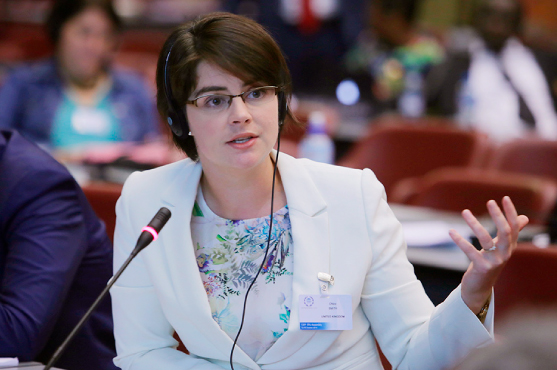
Living in an era when Zimbabwe and the world are fighting for gender equality, it is sad young women still shun politics in fear of sexual harassment which appears to be the greatest challenge in the male dominated sphere, a member of parliament has said.
Australia: Where are the young women?
Driven by the shared belief that all young voices should be heard, Raise Our Voice Australia has proudly partnered with The Body Shop Australia to ask young women and gender diverse Australians about their political engagement.
Young women and gender diverse people are less likely to run for office or join a political party today, than they were 12 months ago.
In a good example of parliamentary outreach to young people, the second edition of the Guyana National Youth Debating Competition takes place on Friday, 8 April.
The Young Women’s Democracy Academy (YWDA) is a three-month capacity-building programme dedicated to empowering young women between the ages of 18 and 24 with the knowledge and skills necessary to enhance their political participation.
The National Women Organiser of the National Democratic Congress (NDC), Dr Louisa Hannah Bissiw, has called on the women leadership of political parties to mentor young ladies in and out of tertiary education to partake in active politics.
Young women of color continue to lead civic and political engagement
Our 2020 data showed that young Asian women, young Black women, and young Latinas were more likely to talk politics, participate in elections, and fight racism.
Training: LeadHerShip
Despite progress, women continue to be under-represented in positions of power and leadership in Government, Business, and public life. This picture is even worse for BAME women, LGBTQ+ women, disabled women, and women who experience additional inequality.
Pagination
- Previous page
- Page 17
- Next page