Advocacy and Development
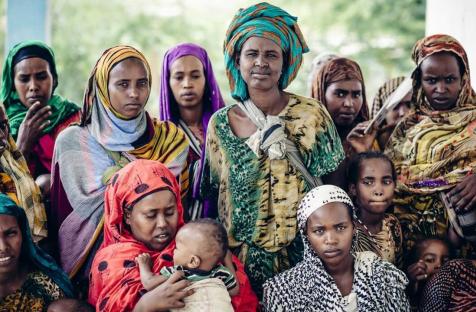
Advocacy and development are activities that represent and promote the needs of specific groups in political and social arenas. One such group is women, who can collectively pressure their leaders for legislative reforms to protect and promote women’s rights and concerns. It is the goal of advocacy groups and lobbyists to ensure that both the public and politicians understand and support their cause, so that it gains strength and credibility. Securing rights and gains for women requires coalition-building, funding, civic education, awareness-raising and individuals willing to lead the way.
While the goals of advocacy and development are similar, the processes are distinctly different. Advocacy involves gaining and exercising power to influence a political action. Employing methods such as demonstrations, public campaigns and civic education, advocacy can be the primary mission of international agencies and civil society organizations seeking to influence global and national decision makers. Women worldwide frequently organize themselves for advocacy purposes, drawing on their collective power to affect legislation, official policies and governmental programs. Lobbying, however, refers to influencing the government and its leaders. Development attempt to sway policy makers and legislators to address specific issues, often by introducing or revising legislation and policy. Development activities may include private meetings with decision makers, public campaigns and demonstrations.


March 19, 2025
Iran: Authorities target women’s rights activists with arbitrary arrest, flogging and death penalty
Iranian authorities have escalated their crackdown on women’s rights defenders, journalists, singers and other activists demanding equality or who defy compulsory veiling using arbitrary detention, unjust prosecution, flogging, and even the death penalty in a bid to qua
CSW69 Interactive Dialogue: Participation, accountability, and gender-responsive institutions

69th Commission on the Status of Women
Interactive Dialogue: Participation, accountability, and gender-responsive institutions
18 March 2025, UNHQ, New York
Women’s Rights in South Asia – Progress, Politics & Patriarchy | International Women’s Day Special

Feminism in South Asia has been a powerful force for change, but it continues to face significant challenges.
Humanitarian Crisis, Climate and Environmental Impacts on Young Women’s Rights in Achieving Beijing +30

International IDEA forging alliances and networks with young women in Africa at the CSW 69th.
Infographic | Inspirational Women in Eastern European Politics

Last Saturday, March 8th, marked International Women’s Day, when the international community celebrates the social, economic, cultural, and political accomplishments of women.
Call for papers - Women's role in politics and public life

Guest Editors
Roopa Dhatt, MD, MPA, Georgetown University, USA
Anna Kalbarczyk, DrPH, Johns Hopkins Center for Global Health, USA
March 14, 2025
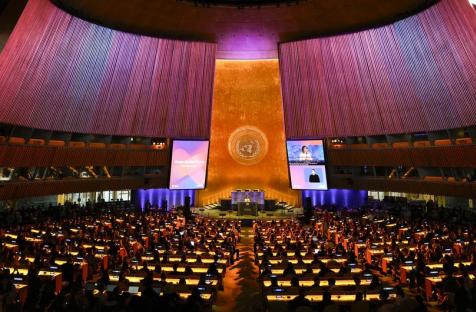
‘Without us, there is no future’: Youth take over UN Women’s Commission
“Support us and include us in intergovernmental processes,” said Ema Meçaj, a medical student and member of Albania’s youth steering committee, who was among young men and women panellists from around the world at an interactive dialogue at the 69th session of world’s l