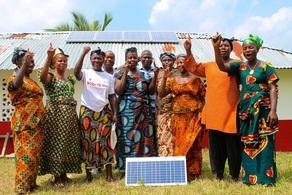
Advocacy and Lobbying

Advocacy and lobbying are activities that represent and promote the needs of specific groups in political and social arenas. One such group is women, who can collectively pressure their leaders for legislative reforms to protect and promote women’s rights and concerns. It is the goal of advocacy groups and lobbyists to ensure that both the public and politicians understand and support their cause, so that it gains strength and credibility. Securing rights and gains for women requires coalition-building, funding, civic education, awareness-raising and individuals willing to lead the way.

While the goals of advocacy and lobbying are similar, the processes are distinctly different. Advocacy involves gaining and exercising power to influence a political action. Employing methods such as demonstrations, public campaigns and civic education, advocacy can be the primary mission of international agencies and civil society organizations seeking to influence global and national decision makers. Women worldwide frequently organize themselves for advocacy purposes, drawing on their collective power to affect legislation, official policies and governmental programs. Lobbying, however, refers to influencing the government and its leaders. Lobbyists attempt to sway policy makers and legislators to address specific issues, often by introducing or revising legislation and policy. Lobbying activities may include private meetings with decision makers, public campaigns and demonstrations.

May 30, 2012
UNDP: Beijing + 15 Highlights of the Day - 2nd March 2010

The Commission on the Status of Women was in full swing on Tuesday, with countries continuing to report on progress since Beijing and UNDP participating in side events on HIV/AIDS, the Beijing Platform for Action’s links to achieving the MDGs, and considerations of gender in the mitigation of and

May 30, 2012
UNDP: Beijing + 15 Highlights of the Day - 3rd March 2010

Women Must Be Involved and Funded in Post-Crisis Responses“Women are not heard, not respected and not funded,” said Mary Robinson, former President of Ireland, at the UNDP/UNIFEM panel discussion, “The Price of Peace: Financing Gender Equality in Post-Conflict Recovery and Reconstruction.” Robins

May 30, 2012
UNDP: Beijing + 15 Highlights of the Day - 4th March 2010

Regional perspectives in progress achieved and remaining gaps and challenges in the implementation of the Beijing Platform for Action On Thursday, representatives of the UN’s five regional commissions presented regional perspectives in progress achieved and remaining gaps and challenges in the i

May 30, 2012
UNDP: Women's Political Participation Needs to Increase, New Publication Says

Democratic and economic transitions and development in the UNDP Europe and CIS region have taken place in the post-Soviet era without the full participation of a major segment of the population—women. The lack of participation by women weakens their position in political life and their

May 30, 2012
UNIFEM: Timor-Leste Passes Groundbreaking Domestic Violence Law

Earlier this month, Timor-Leste approved its first domestic violence law, eight years after it was initially drafted. The legislature voted overwhelmingly in favor of the law, with 30 votes in favor and three abstentions.

May 30, 2012
United Nations: U.N. creates new body on women, gender equality

The new body will be known officially as the U.N. Entity for Gender Equality and the Empowerment of Women, although officials say it will be referred to as U.N. Women (www.unwomen.org). It will consolidate four separate U.N.

May 30, 2012
UNIFEM (now part of UN Women): Online Petition to Say NO to sexual violence against women in conflict

Women and girls hardly ever fight the world's wars, but they often suffer the most. Increasingly, they are the direct targets of fighting, when sexual violence is deliberately used as a tactic of warfare.

May 30, 2012
UN Women: Former Chilean President Bachelet to head new UN agency for women
May 30, 2012
Arab states: The fight for women's rights in the Middle East

Jane Martinson reports from the Women in the World summit, where campaigners are drawing attention to the internet as a tool to aid women in the Middle East.