Message of the UN Secretary-General on International Women's Day 2021
Opening remarks by António Guterres, Secretary-General of the United Nations on the Observance of International Women’s Day 2021.
Advocacy and development are activities that represent and promote the needs of specific groups in political and social arenas. One such group is women, who can collectively pressure their leaders for legislative reforms to protect and promote women’s rights and concerns. It is the goal of advocacy groups and lobbyists to ensure that both the public and politicians understand and support their cause, so that it gains strength and credibility. Securing rights and gains for women requires coalition-building, funding, civic education, awareness-raising and individuals willing to lead the way.
While the goals of advocacy and development are similar, the processes are distinctly different. Advocacy involves gaining and exercising power to influence a political action. Employing methods such as demonstrations, public campaigns and civic education, advocacy can be the primary mission of international agencies and civil society organizations seeking to influence global and national decision makers. Women worldwide frequently organize themselves for advocacy purposes, drawing on their collective power to affect legislation, official policies and governmental programs. Lobbying, however, refers to influencing the government and its leaders. Development attempt to sway policy makers and legislators to address specific issues, often by introducing or revising legislation and policy. Development activities may include private meetings with decision makers, public campaigns and demonstrations.
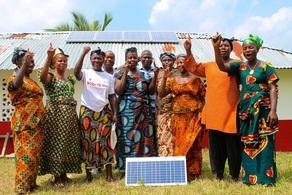
Opening remarks by António Guterres, Secretary-General of the United Nations on the Observance of International Women’s Day 2021.
"Contributing to society on equal terms, with equal opportunities in theory and practice every day. That’s what democracy is all about."

By Randi Davis, UNDP Resident Representative for Trinidad and Tobago, Curacao, Aruba and Sint Maarten

The theme of 2021 International Women’s Day is “Women in leadership: Achieving an equal future in a COVID-19 world.” We asked participants in the UNDP Enhancing Women’s Role in Politics and Decision-Making at the Subnational Level in Ukraine project

The 2021 International Women’s Day (IWD) commemoration is taking place in an unprecedented global context due to the impact of the Covid-19 pandemic, which has resulted in a “new normal” in relation to the various aspects of life, including change
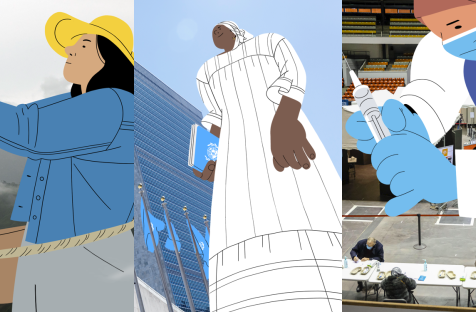
Shirley Chisholm, the first black US Congresswoman once said: “If they don’t give you a seat at the table, bring a folding chair”.

The theme for the United Nations Observance of International Women’s Day 2021 is “Women in leadership: Achieving an equal future in a COVID-19 world,
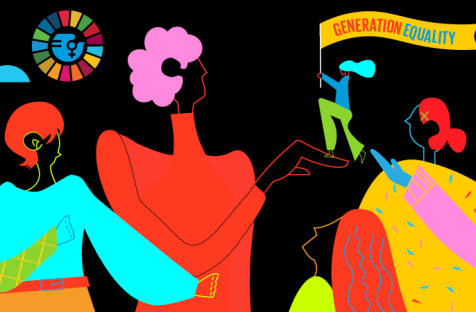
Women of the world want and deserve an equal future free from stigma, stereotypes and violence; a future that’s sustainable, peaceful, with equal rights and opportunities for all.
