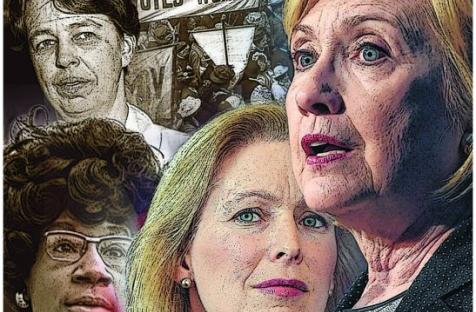
Photo illustration by Jeff Boyer / Times Union
While I was in high school, Ms. Magazine appeared on newsstands, and before long my best friend's girlfriend announced that she was a feminist.
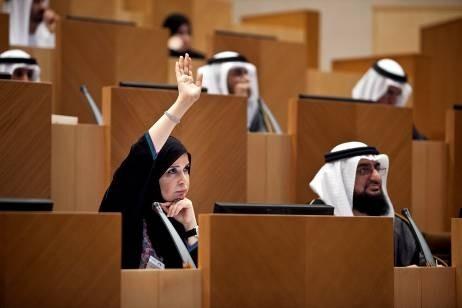
Democracy and the equal participation of men and women in the political arena are closely intertwined. No parliament or any decision-making body can claim to be representative without the participation of both men and women. As stated in the Universal Declaration on Democracy adopted by the Inter-Parliamentary Union’s Member Parliaments in 1997, "The achievement of democracy presupposes a genuine partnership between men and women in the conduct of the affairs of society in which they work in equality and complementarity, drawing mutual enrichment from their differences."
Recent years have seen a steady increase in the number of women in parliament, though the world average of less than 22 percent remains far from the goal of parity between women and men. The election of women to the highest positions of state and government in several countries has also contributed to the changing face of politics.
While the road to election is a difficult one, the challenges for women do not stop there. Once women enter parliament or other bodies, they are faced with many new challenges. Parliament is traditionally a male-oriented domain where the rules and practices have been written by men. It is, therefore, an ongoing challenge to transform parliament into a gender-sensitive environment, to ensure that actions are gender-sensitive and to guarantee that gender is mainstreamed throughout the legislature.
Photo illustration by Jeff Boyer / Times Union
While I was in high school, Ms. Magazine appeared on newsstands, and before long my best friend's girlfriend announced that she was a feminist.
Women are at the forefront of many of this year’s critical and most-watched races. From candidates for governorships making waves from red-to-blue states, to game-changing senate seats up for grabs, women are making their voices heard now more than ever.
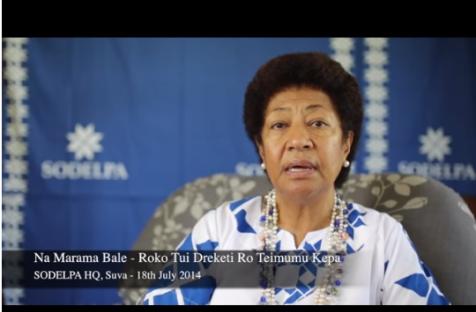
Lawyers, entrepreneurs, academics and civil servants are some of the female candidates standing in Fiji's upcoming elections. Fijians will vote on 17 September, the first elections since the 2006 military coup.
Unfriendly political environmental factors, culture, tradition and religious belief, low level of education as some of the barriers militating against Nigerian women’s participation in politics.
A Comparative Study in Five Southeast Asian Countries: Cambodia,
Malaysia, Indonesia, the Philippines, and Timor-Leste:
A Comparative Study in Five Southeast Asian Countries: Cambodia,
Malaysia, Indonesia, the Philippines, and Timor-Leste:
It is generally recognized that women worldwide make substantial contributions towards politics, society
and the economy in their country. In newly democratic countries in Southeast Asia the role of women
It is generally recognized that women worldwide make substantial contributions towards politics, society
and the economy in their country. In newly democratic countries in Southeast Asia the role of women
Today, gender equality and justice have become global issues. Achieving these goals requires wide
support not only from governments, but also from international organizations in different parts of the
world.
Today, gender equality and justice have become global issues. Achieving these goals requires wide
support not only from governments, but also from international organizations in different parts of the
world.
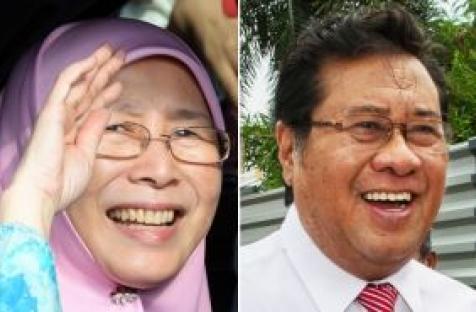
The recent upheaval in Selangor over the post of Menteri Besar (MB) has suddenly led the country to a situation where we might soon be witnessing a major breakthrough for women in politics.