Promoting inclusion and diversity in parliamentary public engagement
This seminar explores how parliament can promote inclusivity and diversity in their public engagement activity.
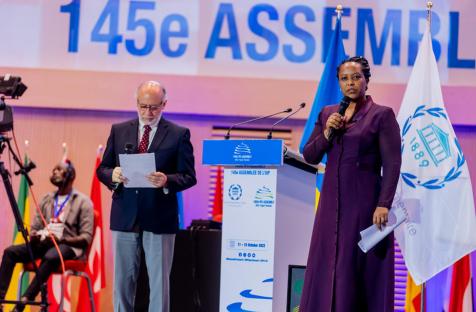
Democracy and the equal participation of men and women in the political arena are closely intertwined. No parliament or any decision-making body can claim to be representative without the participation of both men and women. As stated in the Universal Declaration on Democracy adopted by the Inter-Parliamentary Union’s Member Parliaments in 1997, "The achievement of democracy presupposes a genuine partnership between men and women in the conduct of the affairs of society in which they work in equality and complementarity, drawing mutual enrichment from their differences."
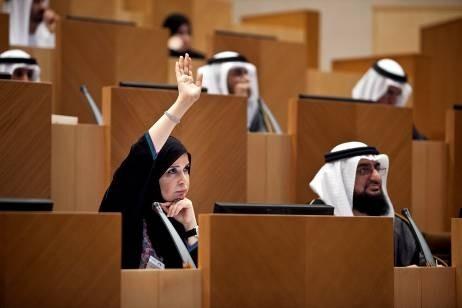
Recent years have seen a steady increase in the number of women in parliament, though the world average of less than 22 percent remains far from the goal of parity between women and men. The election of women to the highest positions of state and government in several countries has also contributed to the changing face of politics.
While the road to election is a difficult one, the challenges for women do not stop there. Once women enter parliament or other bodies, they are faced with many new challenges. Parliament is traditionally a male-oriented domain where the rules and practices have been written by men. It is, therefore, an ongoing challenge to transform parliament into a gender-sensitive environment, to ensure that actions are gender-sensitive and to guarantee that gender is mainstreamed throughout the legislature.
This seminar explores how parliament can promote inclusivity and diversity in their public engagement activity.
Heavy turnout as citizens flock to vote. At least 14 new faces in Parliament.
Women have always been trailblazers in the West. Why are some states falling behind?
A new women’s parliamentary caucus is needed at a time when they are being brazenly discriminated.
In addition to their president, Brazilians will elect 513 members of parliament, one-third of the 81 senators and the country's 27 governors on Sunday.
Juliana Mittelbach, a 40-year-old hospital nurse from the city of Curitiba, Brazil, had long considered a career in politics until the COVID-19 crisis forced a decision. She had noticed it was “mostly Black people” who died.
MotherRED gives grants and support to 50 women, who commit to family-friendly policies, to stand for public office.
Decision taken as part of an initiative launched by the Speaker to interact with MLAs grouped as per their professional degrees, gender and legislative stints.
As Liz Truss becomes the UK’s next PM, here’s how women parliamentarians can gain ground in politics.