Lebanese women are still excluded from the main decision-making positions in Lebanon, such as the presidency of the Republic, premiership and parliament speaker, despite their prominent presence in the human rights and diplomatic fields, and
Democracy and the equal participation of men and women in the political arena are closely intertwined. No parliament or any decision-making body can claim to be representative without the participation of both men and women. As stated in the Universal Declaration on Democracy adopted by the Inter-Parliamentary Union’s Member Parliaments in 1997, "The achievement of democracy presupposes a genuine partnership between men and women in the conduct of the affairs of society in which they work in equality and complementarity, drawing mutual enrichment from their differences."
Recent years have seen a steady increase in the number of women in parliament, though the world average of less than 22 percent remains far from the goal of parity between women and men. The election of women to the highest positions of state and government in several countries has also contributed to the changing face of politics.
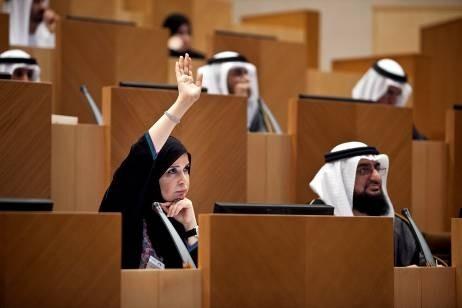
While the road to election is a difficult one, the challenges for women do not stop there. Once women enter parliament or other bodies, they are faced with many new challenges. Parliament is traditionally a male-oriented domain where the rules and practices have been written by men. It is, therefore, an ongoing challenge to transform parliament into a gender-sensitive environment, to ensure that actions are gender-sensitive and to guarantee that gender is mainstreamed throughout the legislature.
Lebanese women are still excluded from the main decision-making positions in Lebanon, such as the presidency of the Republic, premiership and parliament speaker, despite their prominent presence in the human rights and diplomatic fields, and
ASTANA – Human rights activist Saltanat Tursynbekova was nominated to run for the presidency by Qazaq analary – dasturge zhol (Kazakh mothers are a path to traditions) public association on Oct. 11, reported the association’s press services.
ARVADA, Colo. — Not long after the Supreme Court ended the constitutional right to abortion, Robin Kupernik and Elizabeta Stacishin met for lunch and then went for a walk through the Denver Botanic Gardens. “We were both angry,” Kupernik later recalled.
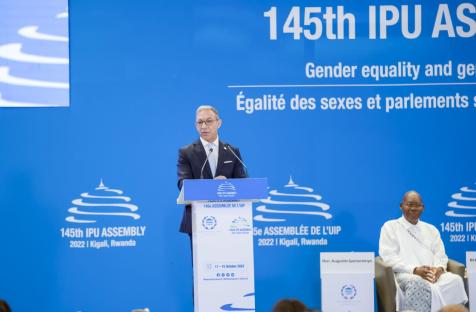
KIGALI, Oct. 12 (Xinhua) -- Female Members of Parliament under the Inter-Parliamentary Union (IPU) vowed to prioritize the empowerment of girls in societies.
Violence against women and girls (VAWG) in digital contexts is not a new phenomenon, however it has rapidly escalated in the shadows of the
Of the 259 women nominated in House primaries this year, 43 percent are women of color — the highest percentage for the demographic in recent cycles.
By Madeline Fitzgerald
India had the largest share of respondents agreeing that countries led by women are better managed, according to a U.S. News survey.
Afro latinos face immense challenges to be represented in politics. These Black women in Latin America have been breaking the mold.
Despite being 53% of eligible voters, participation of women in Brazilian politics is still much lower compared to men.