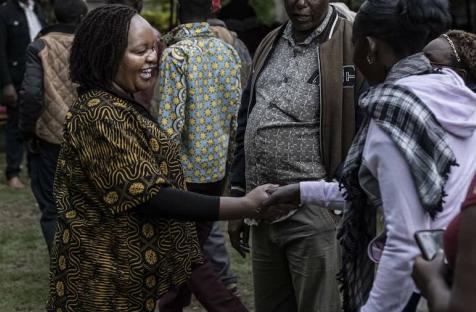
Nairobi (AFP) – Kenyans have elected a record number of women to positions of power in this month's polls, with the list including seven governors, three senators and 26 MPs, in a step towards gender equality.
Democracy and the equal participation of men and women in the political arena are closely intertwined. No parliament or any decision-making body can claim to be representative without the participation of both men and women. As stated in the Universal Declaration on Democracy adopted by the Inter-Parliamentary Union’s Member Parliaments in 1997, "The achievement of democracy presupposes a genuine partnership between men and women in the conduct of the affairs of society in which they work in equality and complementarity, drawing mutual enrichment from their differences."
Recent years have seen a steady increase in the number of women in parliament, though the world average of less than 22 percent remains far from the goal of parity between women and men. The election of women to the highest positions of state and government in several countries has also contributed to the changing face of politics.
While the road to election is a difficult one, the challenges for women do not stop there. Once women enter parliament or other bodies, they are faced with many new challenges. Parliament is traditionally a male-oriented domain where the rules and practices have been written by men. It is, therefore, an ongoing challenge to transform parliament into a gender-sensitive environment, to ensure that actions are gender-sensitive and to guarantee that gender is mainstreamed throughout the legislature.
Nairobi (AFP) – Kenyans have elected a record number of women to positions of power in this month's polls, with the list including seven governors, three senators and 26 MPs, in a step towards gender equality.
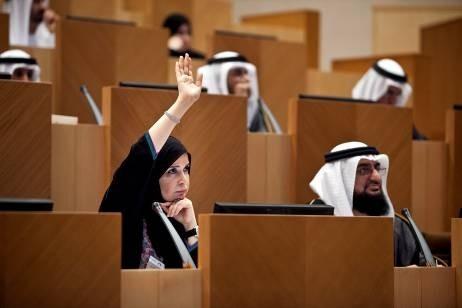
As part of the IPU series called 'A conversation with...', we interview parliamentarians from all over the world to find out who they represent and what motivates them. In this edition, we discover Sara Falaknaz, a parliamentarian from the United Arab Emirates.
As part of the IPU series called 'A conversation with...', we interview parliamentarians from all over the world to find out who they represent and what motivates them. In this edition, we discover Iqra Khalid, a parliamentarian from Canada.
On this International Youth Day, the IPU congratulates all the young MPs making a mark in their respective parliaments. They are the future of democracy but with less than 3% of MPs under 30, young people remain severely under-represented.
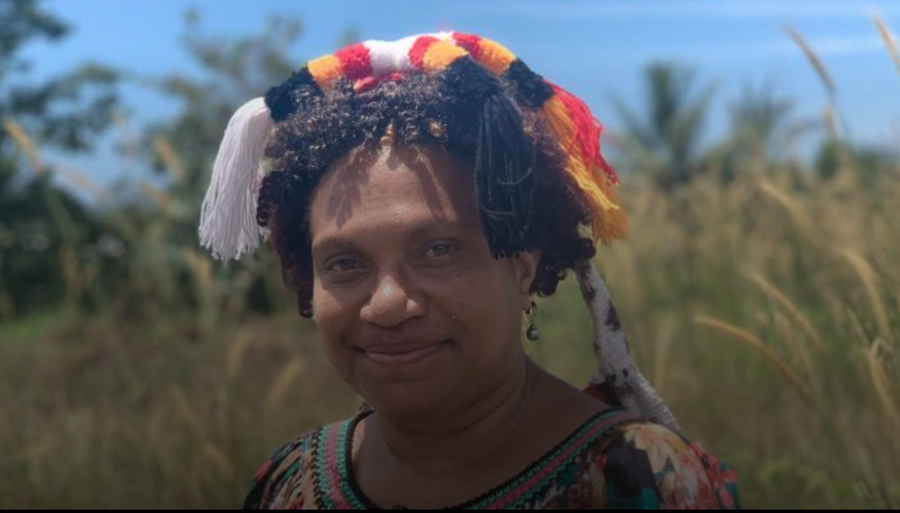
Kessy Sawang has been elected as MP for Madang Rai Coast and joins Rufina Peter as the second woman admitted to PNG's parliament this election.
The Commonwealth Parliamentary Association’s Gender Sensitising Parliamentary Guidelines: A Seven-Step Field Guide (‘Field Guide’) provides a blueprint for Commonwealth parliaments interested in undertaking a Gender Sensitive Parliament (GSP) review of their instituti
Gender and politics scholars are increasingly making appeals to ethnographic methodology to bring important contributions to understand the reproduction of gender, gender hierarchies, gendered relations, and their redress in parliamentary settings.
Honorable Rose Obigah is a politician from Uganda and a newcomer to the legislature. During the just completed 2021 Uganda general elections, she was chosen to serve as a woman member representing Terego district.
A conversation between Curt (Wellington) and Diane Ballantyne, councillor for Wellington County about the barriers female candidates face.