INTER PARES: Gender-sensitive scrutiny guide launch event
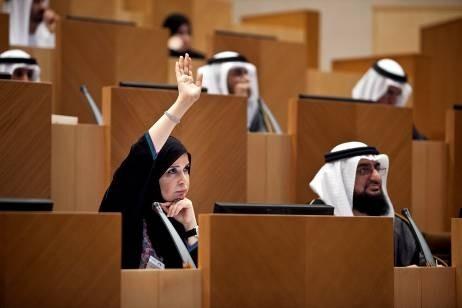
Parliaments are where the diverse needs of citizens are represented, through the people they elect and the decisions they make.
Democracy and the equal participation of men and women in the political arena are closely intertwined. No parliament or any decision-making body can claim to be representative without the participation of both men and women. As stated in the Universal Declaration on Democracy adopted by the Inter-Parliamentary Union’s Member Parliaments in 1997, "The achievement of democracy presupposes a genuine partnership between men and women in the conduct of the affairs of society in which they work in equality and complementarity, drawing mutual enrichment from their differences."
Recent years have seen a steady increase in the number of women in parliament, though the world average of less than 22 percent remains far from the goal of parity between women and men. The election of women to the highest positions of state and government in several countries has also contributed to the changing face of politics.
While the road to election is a difficult one, the challenges for women do not stop there. Once women enter parliament or other bodies, they are faced with many new challenges. Parliament is traditionally a male-oriented domain where the rules and practices have been written by men. It is, therefore, an ongoing challenge to transform parliament into a gender-sensitive environment, to ensure that actions are gender-sensitive and to guarantee that gender is mainstreamed throughout the legislature.
Parliaments are where the diverse needs of citizens are represented, through the people they elect and the decisions they make.
By Mirgul Kuhns
By Mirgul Kuhns
One potential consequence of increasing women’s numeric representation is that women elected officials will behave differently than their men counterparts and improve women’s substantive representation.
Exclusive: presiding officer Alison Johnstone says it will be disappointing if parliament cannot attract more female politicians.
Bringing together parliamentarians from all around the world and recognizing the urgency for concrete and bold legislative actions towards women’s pol
By Roudabeh Kishi
By Roudabeh Kishi
Pakistan’s constitution makes no distinction between genders but women in parliament know that’s not the reality in politics.
To commemorate a decade of Gender-sensitive parliaments and take stock of parliaments’ achievements in transforming their institutions to enable women’s full and effect