A politician has called for an end to the insults that women receive on social media when they enter the political spotlight.
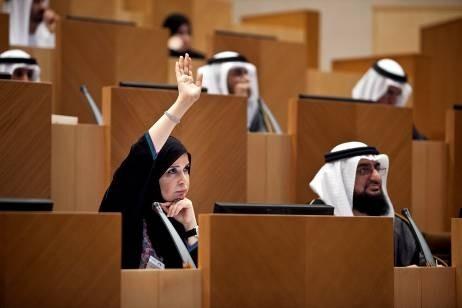
Democracy and the equal participation of men and women in the political arena are closely intertwined. No parliament or any decision-making body can claim to be representative without the participation of both men and women. As stated in the Universal Declaration on Democracy adopted by the Inter-Parliamentary Union’s Member Parliaments in 1997, "The achievement of democracy presupposes a genuine partnership between men and women in the conduct of the affairs of society in which they work in equality and complementarity, drawing mutual enrichment from their differences."
Recent years have seen a steady increase in the number of women in parliament, though the world average of less than 22 percent remains far from the goal of parity between women and men. The election of women to the highest positions of state and government in several countries has also contributed to the changing face of politics.
While the road to election is a difficult one, the challenges for women do not stop there. Once women enter parliament or other bodies, they are faced with many new challenges. Parliament is traditionally a male-oriented domain where the rules and practices have been written by men. It is, therefore, an ongoing challenge to transform parliament into a gender-sensitive environment, to ensure that actions are gender-sensitive and to guarantee that gender is mainstreamed throughout the legislature.
A politician has called for an end to the insults that women receive on social media when they enter the political spotlight.
Just before Christmas, a government report highlighted that over half of the Irish population believes the most important role for a woman is to take care of her home and family. The most important role for a man, according to a significant proportion of the popu
The new government has been sworn into office in the Netherlands, a record 299 days after the country's last election.Mark Rutte is now set to become the Netherlands’ longest-serving prime minister as he leads a fourth separate executive.
As the Columbia City Council begins its first full week of business in the new year, it also marks the start of the tenures for two history-making women. Dr.
Domestic responsibilities and social constructs are the biggest hurdles to improving women's participation in politics, a researcher at the University of Indonesia's Politics Review Center (Puskapol UI), Beni Telaumbanua, has said.
Papua New Guinea (PNG) is one of only five countries in the world that have no female members of Parliament (alongside Yemen, Qatar, Micronesia, Vanuatu) and is below the global average of 23% female representation in Parliament.
Indonesian Women's Congress (Kowani) Chairwoman Giwo Rubianto called to address the issue of low women's participation in national politics, especially the national legislature, by promoting participation and boosting political education among women.
By Glinda Carr
By Glinda Carr
Maendeleo Ya Wanawake Organisation now wants the government and political parties to recognise its members by ensuring that more women acquire elective positions ahead of the next General election.