Parliaments and Representatives

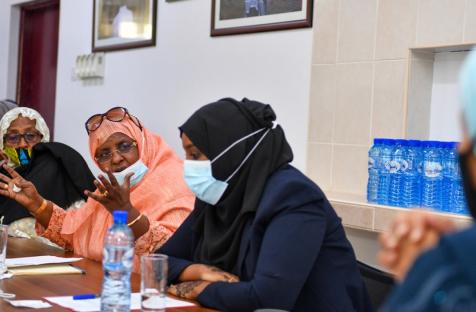
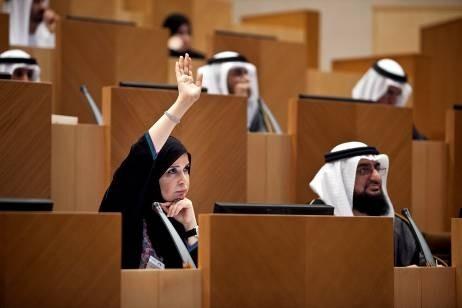
Democracy and the equal participation of men and women in the political arena are closely intertwined. No parliament or any decision-making body can claim to be representative without the participation of both men and women. As stated in the Universal Declaration on Democracy adopted by the Inter-Parliamentary Union’s Member Parliaments in 1997, "The achievement of democracy presupposes a genuine partnership between men and women in the conduct of the affairs of society in which they work in equality and complementarity, drawing mutual enrichment from their differences."

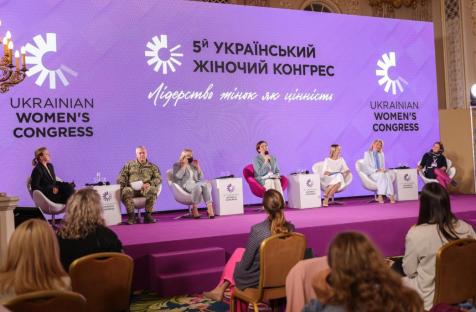
Recent years have seen a steady increase in the number of women in parliament, though the world average of less than 22 percent remains far from the goal of parity between women and men. The election of women to the highest positions of state and government in several countries has also contributed to the changing face of politics.

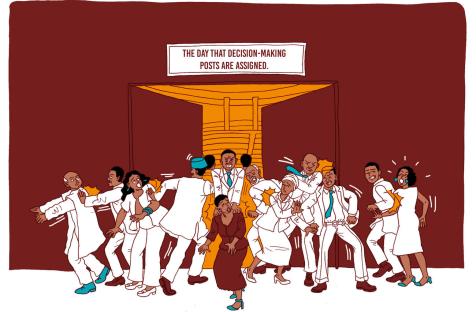
While the road to election is a difficult one, the challenges for women do not stop there. Once women enter parliament or other bodies, they are faced with many new challenges. Parliament is traditionally a male-oriented domain where the rules and practices have been written by men. It is, therefore, an ongoing challenge to transform parliament into a gender-sensitive environment, to ensure that actions are gender-sensitive and to guarantee that gender is mainstreamed throughout the legislature.

Youth participation in national parliaments

Back
October 11, 2021

Youth participation in national parliaments

The global proportion of MPs aged under 30 has edged up to 2.6 per cent, according to the latest IPU report on Youth Participation in National Parliaments. This represents an increase of 0.4 percentage points compared with two years ago.

The global proportion of MPs aged under 30 has edged up to 2.6 per cent, according to the latest IPU report on Youth Participation in National Parliaments. This represents an increase of 0.4 percentage points compared with two years ago.

The Bundestag could use more women

Back
October 11, 2021

The Bundestag could use more women

Just over one-third of the members in Germany's newly elected parliament are women. That's troubling — and not at all representative of our society, DW's Melina Grundmann writes.

Just over one-third of the members in Germany's newly elected parliament are women. That's troubling — and not at all representative of our society, DW's Melina Grundmann writes.

October 7, 2021
Peru president names woman environmentalist as new PM

Peruvian President Pedro Castillo accepted the resignation of his prime minister Wednesday and replaced him with a female environmental activist.

October 5, 2021
Iceland no longer has more female than male MPs after recount

Initial election result gave women 33 seats, but total was later revised down to 30.

Qataris vote in the Gulf Arab state's first legislative elections for two-thirds of the advisory Shura Council
October 4, 2021
Qatar: No women elected in nation's first ever legislative polls

Male candidates were elected in all 30 of the seats up for grabs on the Shura Council, despite 26 women running in the polls.

October 1, 2021
Women candidates upbeat of winning seats in Qatar's Shura Council polls

With the election campaign for the Shura Council is nearing its end, the women candidates seem very confident to secure seats as since the beginning of election campaign only two women have withdrawn, compared to the withdrawal of 53 male candidates.

Najla Bouden Ramadhane has been named Tunisia's first female prime minister. President Kais Saied appointed her to lead a transitional government after her predecessor was sacked and parliament suspended. Slim Abid/AP
September 30, 2021
Tunisia's new Prime Minister is the first woman to lead a government in the Arab world

Najla Bouden Ramadhane, a university engineer with World Bank experience, has been lifted from political obscurity to become Tunisia's — and the Arab world's — first female prime minister.

Videos

September 28, 2021
As Merkel bids farewell, German women wish for more equality

BERLIN (AP) — Angela Merkel, Germany’s first female chancellor, has been praised by many for her pragmatic leadership in a turbulent world and celebrated by some as a feminist icon.