Every day for more than four years, Kiah Morris lived in fear. She developed a safety routine for her family with the help of an international security expert, installed security cameras outside their home and received firearms training.
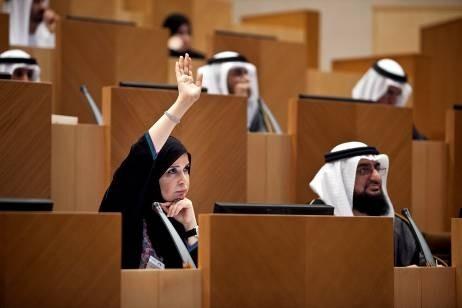
Democracy and the equal participation of men and women in the political arena are closely intertwined. No parliament or any decision-making body can claim to be representative without the participation of both men and women. As stated in the Universal Declaration on Democracy adopted by the Inter-Parliamentary Union’s Member Parliaments in 1997, "The achievement of democracy presupposes a genuine partnership between men and women in the conduct of the affairs of society in which they work in equality and complementarity, drawing mutual enrichment from their differences."
Recent years have seen a steady increase in the number of women in parliament, though the world average of less than 22 percent remains far from the goal of parity between women and men. The election of women to the highest positions of state and government in several countries has also contributed to the changing face of politics.
While the road to election is a difficult one, the challenges for women do not stop there. Once women enter parliament or other bodies, they are faced with many new challenges. Parliament is traditionally a male-oriented domain where the rules and practices have been written by men. It is, therefore, an ongoing challenge to transform parliament into a gender-sensitive environment, to ensure that actions are gender-sensitive and to guarantee that gender is mainstreamed throughout the legislature.
Every day for more than four years, Kiah Morris lived in fear. She developed a safety routine for her family with the help of an international security expert, installed security cameras outside their home and received firearms training.
PACE called on member States to promote the participation of women from under-represented groups in political decision-making by acting at several lev
HANOI, June 11 (Xinhua): A total of 499 out of 866 candidates have been elected to the 15th National Assembly (NA) of Vietnam, the country's top legislative body, for the 2021-2026 tenure, the country's National Election Council announced at a press
Kristina Wilfore and Lucina Di Meco are global experts and passionate advocates for women’s digital rights.
Women’s political leadership is important for ensuring that women’s perspectives and experiences are included in political decision-making. Over the past 25 years, the overall percentage of women in parliaments has more than doubled.
Gender Impact Studies Center at IMPRI organized an IMPRI #WebPolicyTalk - The State of Gen
Development of local or regional caucus for women councillors – identifying interest and examining possible supports.
TOKYO – Japanese political parties are competing with each other to promote female candidates ahead of a lower house election that must be held by this fall, but some worry that, like similar efforts before, the initiative may be more sloganeering th
No matter which party prevails in Virginia’s elections in November, the result of the lieutenant governor’s race will be the same in one way: A woman of color will hold a statewide office in the commonwealth for the first time in history.