Parliaments and Representatives

Democracy and the equal participation of men and women in the political arena are closely intertwined. No parliament or any decision-making body can claim to be representative without the participation of both men and women. As stated in the Universal Declaration on Democracy adopted by the Inter-Parliamentary Union’s Member Parliaments in 1997, "The achievement of democracy presupposes a genuine partnership between men and women in the conduct of the affairs of society in which they work in equality and complementarity, drawing mutual enrichment from their differences."

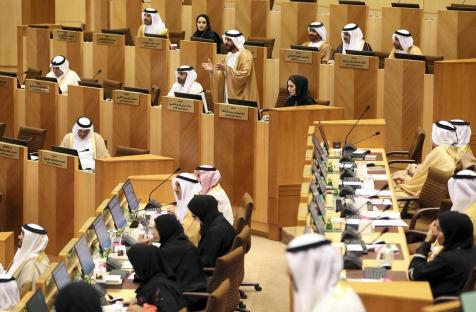
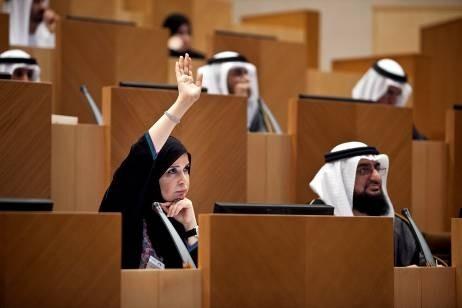
Recent years have seen a steady increase in the number of women in parliament, though the world average of less than 22 percent remains far from the goal of parity between women and men. The election of women to the highest positions of state and government in several countries has also contributed to the changing face of politics.

While the road to election is a difficult one, the challenges for women do not stop there. Once women enter parliament or other bodies, they are faced with many new challenges. Parliament is traditionally a male-oriented domain where the rules and practices have been written by men. It is, therefore, an ongoing challenge to transform parliament into a gender-sensitive environment, to ensure that actions are gender-sensitive and to guarantee that gender is mainstreamed throughout the legislature.

Event

Women MPs of the world conference: Strengthening visibility, driving change

Back

Women MPs of the world conference: Strengthening visibility, driving change

To mark the 100th anniversary of the first women in this country winning the right to stand for election to parliament, the House of Commons will host

November 5, 2018
In the words of Halima Askari: “Our victory is our unity”

Halima Askari became the first woman head of the Provincial Council in Afghanistan’s conservative Wardak province in 2017. She is part of a new generation of women leaders who, little by little, are pushing for the transformation of governance.

Conceptualizing and measuring women’s political leadership: From presence to balance

Back
October 22, 2018

Conceptualizing and measuring women’s political leadership: From presence to balance

This article conceptualizes an innovative understanding and measurement of women’s political leadership, theoretically justifies its application, and analyzes contemporary variation in its patterns through comparative case studies.

This article conceptualizes an innovative understanding and measurement of women’s political leadership, theoretically justifies its application, and analyzes contemporary variation in its patterns through comparative case studies.

October 19, 2018
Kagame reshuffles Cabinet in Rwanda, women take up more slots

President Paul Kagame yesterday reshuffled his cabinet, making broad changes in a trimmed cabinet, in which women comprise 50 per cent.

Sexism, harassment and violence against women in parliaments in Europe

Back
October 16, 2018

Sexism, harassment and violence against women in parliaments in Europe

This regional study seeks to take the initial findings of a 2016 IPU report further, focusing specifically on the situation in parliaments in Europe.

This regional study seeks to take the initial findings of a 2016 IPU report further, focusing specifically on the situation in parliaments in Europe.

October 4, 2018
Shinzo Abe reshuffle leaves just one woman in Japanese cabinet

Japan’s prime minister, Shinzō Abe, has appointed just one woman to his new cabinet, raising questions about his commitment to

October 2, 2018
Women in Mexico face increasing violence—will a wave of women in government change that?

By Oscar López,

Violence against women in politics: Expert group meeting report and recommendations

Back
October 2, 2018

Violence against women in politics: Expert group meeting report and recommendations

UN Women, the Office of the High Commissioner on Human Rights (OHCHR), and the UN Special Rapporteur on violence against women, its causes and consequences (Special Rapporteur), in collaboration with the Inter-Parliamentary Union (IPU) and the Nation

UN Women, the Office of the High Commissioner on Human Rights (OHCHR), and the UN Special Rapporteur on violence against women, its causes and consequences (Special Rapporteur), in collaboration with the Inter-Parliamentary Union (IPU) and the Nation

Gender Responsive Assemblies Toolkit

Back
September 28, 2018

Gender Responsive Assemblies Toolkit

The Gender-Responsive Assembly Toolkit is intended for all actors that drive change within organizations, including Director-/Secretary-Generals, Secretariats, Member States, civil society and staff.

The Gender-Responsive Assembly Toolkit is intended for all actors that drive change within organizations, including Director-/Secretary-Generals, Secretariats, Member States, civil society and staff.