Joint Press Release
UNDP and UN Women
Democracy and the equal participation of men and women in the political arena are closely intertwined. No parliament or any decision-making body can claim to be representative without the participation of both men and women. As stated in the Universal Declaration on Democracy adopted by the Inter-Parliamentary Union’s Member Parliaments in 1997, "The achievement of democracy presupposes a genuine partnership between men and women in the conduct of the affairs of society in which they work in equality and complementarity, drawing mutual enrichment from their differences."
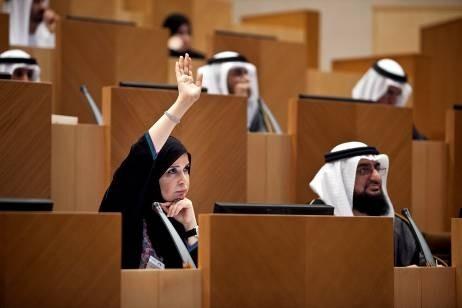
Recent years have seen a steady increase in the number of women in parliament, though the world average of less than 22 percent remains far from the goal of parity between women and men. The election of women to the highest positions of state and government in several countries has also contributed to the changing face of politics.
While the road to election is a difficult one, the challenges for women do not stop there. Once women enter parliament or other bodies, they are faced with many new challenges. Parliament is traditionally a male-oriented domain where the rules and practices have been written by men. It is, therefore, an ongoing challenge to transform parliament into a gender-sensitive environment, to ensure that actions are gender-sensitive and to guarantee that gender is mainstreamed throughout the legislature.
Joint Press Release
UNDP and UN Women
When the 2010 parliament comes to an end on 30 March, 10 of the Labour party’s most high-achieving female MPs and former ministers will be standing down. Some of them began their parliamentary careers in 1987, and together they have clocked up 200 years in parliament.
A recent campaign designed to promote the need for women in the traditionally male-dominated politics of Georgia comes as statistics show that female representation is no better than before, and in some areas worse.
Women organisers of the National Democratic Congress (NDC) and the Convention People’s Party (CPP) are advocating reforms to their party constitutions to allow for more women to seek political office.
The Women in Politics 2015 Map launched by the Inter-Parliamentary Union (IPU) and UN Women today shows that although the numbers of women in executive government and in parliament continue to inch forward, the slow rate of progress will severely check global development plans due to be
The Map, which presents latest data and global rankings for women in politics, reveals a mixed picture on gender equality in executive government and in parliament at regional and national levels.
Labour MP, Sharon Hodgson, attended the recent CPA Women Parliamentarians’ Conference, setting out how this Commonwealth group is helping to reduce gender based violence.
Women are conspicuously absent from the cabinet of Prime Minister Alexis Tsipras. They have traditionally been underrepresented in Greek politics, but Syriza was different. Joanna Kakissis reports from Athens.