Parliaments and Representatives
Democracy and the equal participation of men and women in the political arena are closely intertwined. No parliament or any decision-making body can claim to be representative without the participation of both men and women. As stated in the Universal Declaration on Democracy adopted by the Inter-Parliamentary Union’s Member Parliaments in 1997, "The achievement of democracy presupposes a genuine partnership between men and women in the conduct of the affairs of society in which they work in equality and complementarity, drawing mutual enrichment from their differences."
Recent years have seen a steady increase in the number of women in parliament, though the world average of less than 22 percent remains far from the goal of parity between women and men. The election of women to the highest positions of state and government in several countries has also contributed to the changing face of politics.
While the road to election is a difficult one, the challenges for women do not stop there. Once women enter parliament or other bodies, they are faced with many new challenges. Parliament is traditionally a male-oriented domain where the rules and practices have been written by men. It is, therefore, an ongoing challenge to transform parliament into a gender-sensitive environment, to ensure that actions are gender-sensitive and to guarantee that gender is mainstreamed throughout the legislature.
November 7, 2014
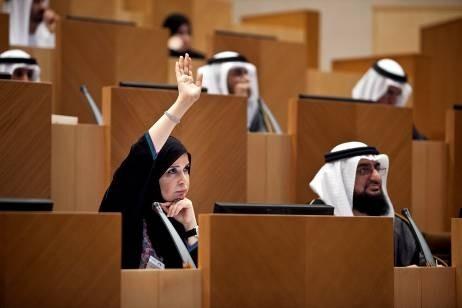
Despite trailblazing victories by women, many girls reluctant to enter politics
The midterm elections brought landmark victories for female candidates.
November 7, 2014
Meet Elise Stefanik, the Youngest Woman Ever Elected to Congress
Republican Elise Stefanik has become the youngest woman elected to Congress in history,
November 7, 2014
The Most Female Congress Ever Will Be Terrible for Women
For the first time, Congress will h
November 5, 2014
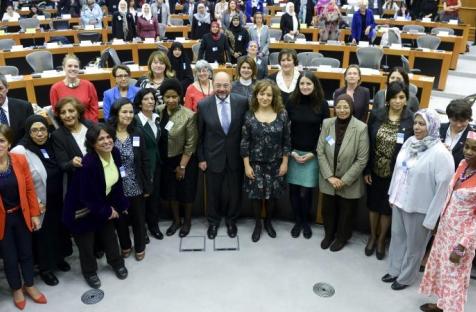
Long way to go, on achieving gender equality
This week Schulz kicked off the spring forward for women conference, which aims to bring about ideas for encouraging political representation of women, with particular focus on women in Arab countries.
November 5, 2014
There Are 100 Women in Congress for the First Time Ever
The gender breakdown of the next Congress is still to be determined, but a major milestone was reached Tuesday night: For the first time in American history, the number of women sitting in Congress will hit t
November 5, 2014
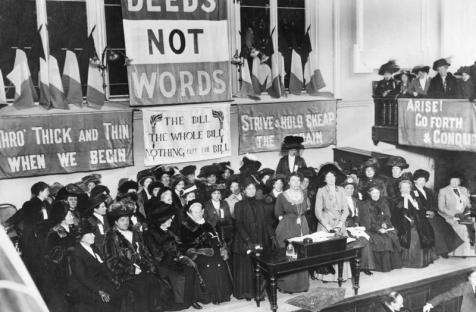
Milestone: Alma Adams Victory Means 100 Women in Congress
USA marked a milestone in Tuesday's midterm elections with the victory of Democrat Alma Adams, who became
New European Commission with old dilemmas
Back
November 4, 2014
New European Commission with old dilemmas
By Malgorzata Bratkrajc, A new European Commission took office on November 1st, 2014.
Print article

By Malgorzata Bratkrajc, A new European Commission took office on November 1st, 2014.
October 31, 2014
Plea for Enforcement of Law Relating to Fight Violence Against Women, Algeria