Parliaments and Representatives

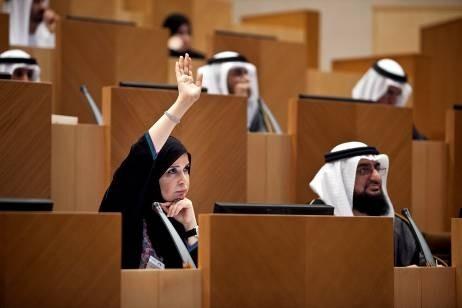
Democracy and the equal participation of men and women in the political arena are closely intertwined. No parliament or any decision-making body can claim to be representative without the participation of both men and women. As stated in the Universal Declaration on Democracy adopted by the Inter-Parliamentary Union’s Member Parliaments in 1997, "The achievement of democracy presupposes a genuine partnership between men and women in the conduct of the affairs of society in which they work in equality and complementarity, drawing mutual enrichment from their differences."

Recent years have seen a steady increase in the number of women in parliament, though the world average of less than 22 percent remains far from the goal of parity between women and men. The election of women to the highest positions of state and government in several countries has also contributed to the changing face of politics.

While the road to election is a difficult one, the challenges for women do not stop there. Once women enter parliament or other bodies, they are faced with many new challenges. Parliament is traditionally a male-oriented domain where the rules and practices have been written by men. It is, therefore, an ongoing challenge to transform parliament into a gender-sensitive environment, to ensure that actions are gender-sensitive and to guarantee that gender is mainstreamed throughout the legislature.

November 18, 2013
Women in democracy? We still have a long way to go, UK

Almost 10 years ago, in early spring 2004, I was one of 14 women appointed to the House of Lords. At the same time, 33 men were appointed.

November 18, 2013
AU Observer team’s parting shot on elections, Swaziland
SWAZILAND needs to reserve a quota for women and physically challenged persons in the electoral process. This would guarantee full representation of women and marginalised groups in elective positions.The Africa
November 18, 2013
Stark inequality: Only 80 of 1,110 candidates are women, India

The 1,110 affidavits filed by candidates during the nomination process till Saturday throw up some interesting figures and information about those who want to represent Delhiites in the Assembly. 

November 16, 2013
What do we look for in women’s political representation?

There’s something I need to get off my chest. It’s been weighing on me, and I want to come clean before the next election cycle: I didn’t vote for Hillary Clinton in the 2008 primary.

November 15, 2013
Percentage of women in Parliament better than a decade ago: Low Yen Ling

The percentage of women in Singapore's Parliament is better compared to a decade ago and it is more important to anchor political representation on meritocracy rather than impose gender quotas, Parliamentary Secretary for Ministry of Social and Family Development Low Yen Ling said on Tuesday.

November 15, 2013
Westminster has enough women, say 40% of men

A poll published today suggests that almost 40 per cent of men in the UK think that there are enough women in Parliament.

November 14, 2013
Cote d’Ivoire MPs Create Women’s Caucus

Cote d’Ivoire has launched the first-ever Women’s Caucus in the National Assembly, a forum aimed at advancing women’s rights and mainstreaming gender throughout all parliamentary work.

November 14, 2013
Women Speakers Put Gender Equality at Heart of Sustainable Development

Women Speakers of Parliament have stressed the need to put gender equality at the heart of new development goals that will replace the Millennium Development Goals (MDGs) in 2015.