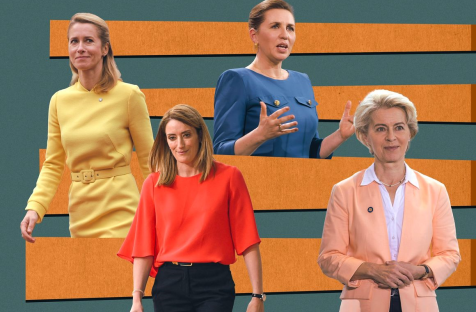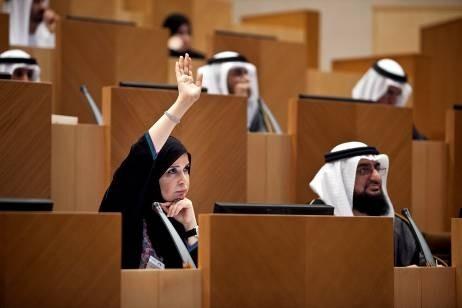
Although two women — Sheikh Hasina and Khaleda Zia — served as prime ministers of Bangladesh for 31 out of 33 years since 1991, the representation of women in national politics is still negligible.
Democracy and the equal participation of men and women in the political arena are closely intertwined. No parliament or any decision-making body can claim to be representative without the participation of both men and women. As stated in the Universal Declaration on Democracy adopted by the Inter-Parliamentary Union’s Member Parliaments in 1997, "The achievement of democracy presupposes a genuine partnership between men and women in the conduct of the affairs of society in which they work in equality and complementarity, drawing mutual enrichment from their differences."
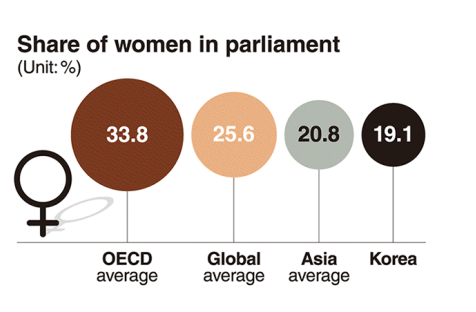
Recent years have seen a steady increase in the number of women in parliament, though the world average of less than 22 percent remains far from the goal of parity between women and men. The election of women to the highest positions of state and government in several countries has also contributed to the changing face of politics.
While the road to election is a difficult one, the challenges for women do not stop there. Once women enter parliament or other bodies, they are faced with many new challenges. Parliament is traditionally a male-oriented domain where the rules and practices have been written by men. It is, therefore, an ongoing challenge to transform parliament into a gender-sensitive environment, to ensure that actions are gender-sensitive and to guarantee that gender is mainstreamed throughout the legislature.
Although two women — Sheikh Hasina and Khaleda Zia — served as prime ministers of Bangladesh for 31 out of 33 years since 1991, the representation of women in national politics is still negligible.
A Glimpse into the Life of a Women in Politics: CEMR Unveils First Data Coming from 31 Countries
Women’s political representation in Indonesia may fall for the first time since the 1999 election, even before the voting starts.
The Standing Committee on State Structure of the Parliament, in cooperation with the UN Promoting Gender Equality and Women's Participation in Decision-making project, organized the First Conference of Women Parliamentarians on September 7, 2022.
Executive director of Baobab for Women Human Rights, Bunmi Dipo-Salami, said the violence against women in politics is rarely reported.
Female politicians have asked their male counterparts to desist from the habit of sexually harassing them, saying the vice is rampant in Uganda’s political corridors.
As the world marks the 16 days of activism against Gender-Based Violence (GBV), the resilient voices of women in Mt Elgon and Trans Nzoia have exposed the harsh realities they encounter within the challenging realm of politics.
FEMALE lawmakers are pushing for the tabling of a Sexual Harassment Bill to protect women in politics against persecution by their male counterparts.
The UN envoy to Libya, Abdoulaye Bathily, met with a delegation from the “High National Council for Libyan Women,” as part of the consultations he is conducting with a number of components of Libyan society, in addition to what he described as his quest to bridge the ga