May 29, 2013
Disenfranchising women in Pakistan
The gender divide is systematic in Pakistan’s electoral system.
Democracy and the equal participation of men and women in the political arena are closely intertwined. No parliament or any decision-making body can claim to be representative without the participation of both men and women. As stated in the Universal Declaration on Democracy adopted by the Inter-Parliamentary Union’s Member Parliaments in 1997, "The achievement of democracy presupposes a genuine partnership between men and women in the conduct of the affairs of society in which they work in equality and complementarity, drawing mutual enrichment from their differences."
Recent years have seen a steady increase in the number of women in parliament, though the world average of less than 22 percent remains far from the goal of parity between women and men. The election of women to the highest positions of state and government in several countries has also contributed to the changing face of politics.
While the road to election is a difficult one, the challenges for women do not stop there. Once women enter parliament or other bodies, they are faced with many new challenges. Parliament is traditionally a male-oriented domain where the rules and practices have been written by men. It is, therefore, an ongoing challenge to transform parliament into a gender-sensitive environment, to ensure that actions are gender-sensitive and to guarantee that gender is mainstreamed throughout the legislature.
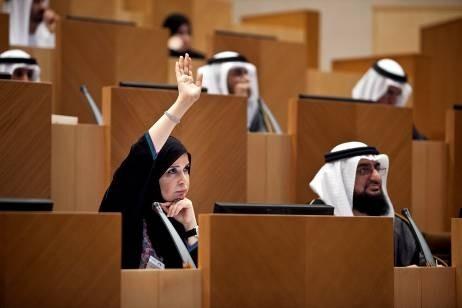
The gender divide is systematic in Pakistan’s electoral system.
After gaining the right to vote and participate in elections in 1952, one would assume that more female politicians would be taking part in Lebanon’s administrative scene.
The Welsh Government has been urged to address the “glass ceiling” of women standing for council seats after local elections on Anglesey saw just three women councillors returned.
Florida has actually taken a small step backwards when it comes to electing women to the state Legislature. According to

The Researchers (TR) under its initiatives - Pakistan Governance Forum (PGF) and Women & Politics in Asia Forum (WPAF) - undertook observation of Election 2013 with a gender lens.
Out of 272 general seats, only six women reached in the National Assembly and eight women got hold of general seats in the Punjab assembly, out of 297 general seats. Although the manifestos of all mainstream political parties claimed greater political participation by wome
Out of 272 general seats, only six women reached in the National Assembly and eight women got hold of general seats in the Punjab assembly, out of 297 general seats. Although the manifestos of all mainstream political parties claimed greater political participation by wome