Parliaments and Representatives
Democracy and the equal participation of men and women in the political arena are closely intertwined. No parliament or any decision-making body can claim to be representative without the participation of both men and women. As stated in the Universal Declaration on Democracy adopted by the Inter-Parliamentary Union’s Member Parliaments in 1997, "The achievement of democracy presupposes a genuine partnership between men and women in the conduct of the affairs of society in which they work in equality and complementarity, drawing mutual enrichment from their differences."
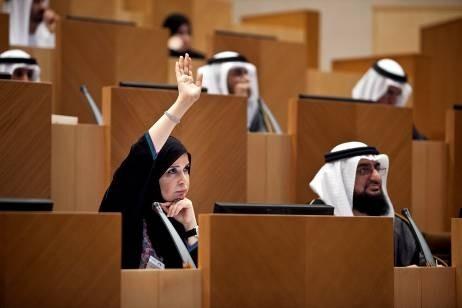
Recent years have seen a steady increase in the number of women in parliament, though the world average of less than 22 percent remains far from the goal of parity between women and men. The election of women to the highest positions of state and government in several countries has also contributed to the changing face of politics.
While the road to election is a difficult one, the challenges for women do not stop there. Once women enter parliament or other bodies, they are faced with many new challenges. Parliament is traditionally a male-oriented domain where the rules and practices have been written by men. It is, therefore, an ongoing challenge to transform parliament into a gender-sensitive environment, to ensure that actions are gender-sensitive and to guarantee that gender is mainstreamed throughout the legislature.
April 11, 2013
Margaret Thatcher paved the way for us female Tory MPs
Margaret Thatcher didn’t smash the political glass ceiling. She refused to acknowledge its existence and my female Conservative colleagues and I are the beneficiaries of her fearless approach, writes Amber Rudd.
Pitch Perfect: Winning Strategies for Women Candidates
Back
April 10, 2013
Pitch Perfect: Winning Strategies for Women Candidates
This research provides a clear road map for women who are running for major statewide office: how to introduce themselves to voters to demonstrate their qualifications; what language contributes to voters believing they are qualified; and how to present themselves in a way that
Print article
This research provides a clear road map for women who are running for major statewide office: how to introduce themselves to voters to demonstrate their qualifications; what language contributes to voters believing they are qualified; and how to present themselves in a way that
April 9, 2013
Politics, Elections and the “Reality” of Women’s Rights in Kuwait
Political authoritarianism has been constant feature in the Arab political systems, and despite the ongoing “Arab Spring,” there is a continuing tendency t
April 9, 2013
Women in Pakistani Politics
Al Jazeera's Kamal Hyder, reporting from Islamabad, discusses women in Pakistani politics.
(We invite our users to watch the video posted Arpil 2 2013)
Event
Fiji's Women Forum 4
Back
Fiji's Women Forum 4
The Fiji's Women Forum is a national consultation to discuss the participation of women in the democratization process. Since last year there have been 3 such national forums.
Print article
April 5, 2013
Women still outnumbered where it counts, Australia
That much-publicised milestone of political gender equality in the US? 20 per cent. Yes. Being outnumbered four to one is a milestone for women in the US Senate.
April 4, 2013
Shura reverses placement of women at top of party lists, Egypt
Shura Council members voted down legislation requiring political parties to display female candidates at the top of party lists.