Dutch voters may be about to get someone very different from the outgoing veteran prime minister Mark Rutte.
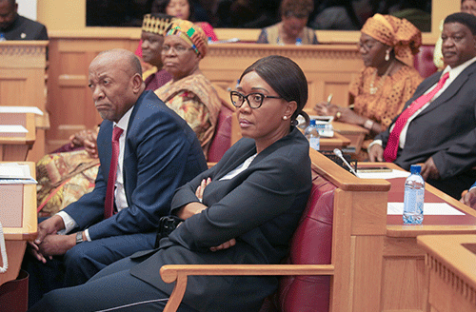
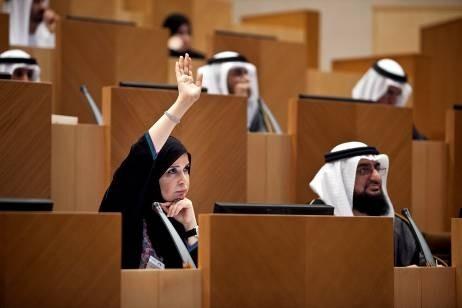
Democracy and the equal participation of men and women in the political arena are closely intertwined. No parliament or any decision-making body can claim to be representative without the participation of both men and women. As stated in the Universal Declaration on Democracy adopted by the Inter-Parliamentary Union’s Member Parliaments in 1997, "The achievement of democracy presupposes a genuine partnership between men and women in the conduct of the affairs of society in which they work in equality and complementarity, drawing mutual enrichment from their differences."
Recent years have seen a steady increase in the number of women in parliament, though the world average of less than 22 percent remains far from the goal of parity between women and men. The election of women to the highest positions of state and government in several countries has also contributed to the changing face of politics.
While the road to election is a difficult one, the challenges for women do not stop there. Once women enter parliament or other bodies, they are faced with many new challenges. Parliament is traditionally a male-oriented domain where the rules and practices have been written by men. It is, therefore, an ongoing challenge to transform parliament into a gender-sensitive environment, to ensure that actions are gender-sensitive and to guarantee that gender is mainstreamed throughout the legislature.
Dutch voters may be about to get someone very different from the outgoing veteran prime minister Mark Rutte.
The average Swiss parliament member is male, well-educated and 50 years old. This year’s elections have accentuated an already existing trend.
Góðan daginn from Iceland, where the threat of an imminent volcanic eruption did not deter 500 women leaders from flying to the country for the Reykjavik Global Forum, an annual gathering of women pol
This week, the water cooler conversation in courts, chambers and newsrooms like ours has been all about representation, helped along by the headlines after Chief Justice D.Y.
Despite being once heralded for becoming the first African country to elect a woman president, Liberia’s political landscape is sorely lacking in its representation of women.
Justice Minister Helen McEntee has opened up about how it can be a “challenge” to raise two children as a cabinet minister and how she sometimes feels “guilty” when she struggles to find a work-life b
The Director General of the Nigeria Institute for Legislative and Democratic Studies (NILDS), Prof.
AN ELECTED member of Cork County Council, who has announced her intention not to run again, has said she received a death threat and online abuse during her two terms as a councillor.
There is a pervasive narrative “that women are running for office in record numbers,” says Erin Loos Cutraro. “People hold onto that. They think it’s still true today.”