Parliaments and Representatives

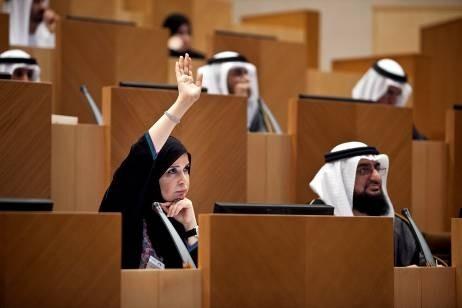
Democracy and the equal participation of men and women in the political arena are closely intertwined. No parliament or any decision-making body can claim to be representative without the participation of both men and women. As stated in the Universal Declaration on Democracy adopted by the Inter-Parliamentary Union’s Member Parliaments in 1997, "The achievement of democracy presupposes a genuine partnership between men and women in the conduct of the affairs of society in which they work in equality and complementarity, drawing mutual enrichment from their differences."

Recent years have seen a steady increase in the number of women in parliament, though the world average of less than 22 percent remains far from the goal of parity between women and men. The election of women to the highest positions of state and government in several countries has also contributed to the changing face of politics.

While the road to election is a difficult one, the challenges for women do not stop there. Once women enter parliament or other bodies, they are faced with many new challenges. Parliament is traditionally a male-oriented domain where the rules and practices have been written by men. It is, therefore, an ongoing challenge to transform parliament into a gender-sensitive environment, to ensure that actions are gender-sensitive and to guarantee that gender is mainstreamed throughout the legislature.

Women in Politics: 2000 (Poster)

Back
February 22, 2007

Women in Politics: 2000 (Poster)

This poster-sized map is a "snapshot" of the presence of women in executive and legislative branches of government as of March 2000.

This poster-sized map is a "snapshot" of the presence of women in executive and legislative branches of government as of March 2000.

Politics: Women's Insight

Back
February 22, 2007

Politics: Women's Insight

This study analyzes the political experiences of women from all over the world, based on a series of interviews with women politicians conducted by the Inter-Parliamentary Union (IPU).

This study analyzes the political experiences of women from all over the world, based on a series of interviews with women politicians conducted by the Inter-Parliamentary Union (IPU).

Parliament and the Budgetary Process, Including from a Gender Perspective (Kenya)

Back
February 22, 2007

Parliament and the Budgetary Process, Including from a Gender Perspective (Kenya)

This report compiles the speeches and presentations made during the seminar entitled, "Parliament and the Budgetary Process, Including from a Gender Perspective," held in Nairobi, Kenya in May 2000.

This report compiles the speeches and presentations made during the seminar entitled, "Parliament and the Budgetary Process, Including from a Gender Perspective," held in Nairobi, Kenya in May 2000.

The Parliament of Timor Leste and the Budgetary Process: Legislative and Oversight Functions

Back
February 20, 2007

The Parliament of Timor Leste and the Budgetary Process: Legislative and Oversight Functions

This report is a compilation of the speeches and statements made during the seminar entitled, "Parliament and the National Budget: Legislative and Oversight Functions," which was held in Dili, Timor Leste in May 2003.

This report is a compilation of the speeches and statements made during the seminar entitled, "Parliament and the National Budget: Legislative and Oversight Functions," which was held in Dili, Timor Leste in May 2003.

The Participation of Women and Men in Decision-Making: The Parliamentary Dimension

Back
February 19, 2007

The Participation of Women and Men in Decision-Making: The Parliamentary Dimension

This paper focuses on the quantitative aspect of women's participation in parliaments. It provides an overview of the gains relating to women's access to parliaments and executive bodies, and highlights some of the factors that influence women's access to decision-making positions.

This paper focuses on the quantitative aspect of women's participation in parliaments. It provides an overview of the gains relating to women's access to parliaments and executive bodies, and highlights some of the factors that influence women's access to decision-making positions.

Strengthening Women's Participation in the Inter-Parliamentary Union (Excerpt from Implementing Quotas: European Experiences)

Back
February 19, 2007

Strengthening Women's Participation in the Inter-Parliamentary Union (Excerpt from Implementing Quotas: European Experiences)

This case study examines the Inter-Parliamentary Union's (IPU) efforts to promote women’s participation in parliament. It focuses particularly on the use of quotas and the role of international organizations in advancing women's political participation.

This case study examines the Inter-Parliamentary Union's (IPU) efforts to promote women’s participation in parliament. It focuses particularly on the use of quotas and the role of international organizations in advancing women's political participation.

Women in Politics: 1945-2005 (Information Kit)

Back
February 19, 2007

Women in Politics: 1945-2005 (Information Kit)

This information kit was published on the occasion of the 49th Session of the United Nations Commission on the Status of Women. It is composed of six data sheets on women's participation in politics over the past sixty years.

This information kit was published on the occasion of the 49th Session of the United Nations Commission on the Status of Women. It is composed of six data sheets on women's participation in politics over the past sixty years.

Women in Politics: 2005 (Poster)

Back
February 19, 2007

Women in Politics: 2005 (Poster)

This poster-sized map is a "snapshot" of the presence of women in executive and legislative branches of government as of January 2005.

This poster-sized map is a "snapshot" of the presence of women in executive and legislative branches of government as of January 2005.