Parliaments and Representatives

Democracy and the equal participation of men and women in the political arena are closely intertwined. No parliament or any decision-making body can claim to be representative without the participation of both men and women. As stated in the Universal Declaration on Democracy adopted by the Inter-Parliamentary Union’s Member Parliaments in 1997, "The achievement of democracy presupposes a genuine partnership between men and women in the conduct of the affairs of society in which they work in equality and complementarity, drawing mutual enrichment from their differences."

Recent years have seen a steady increase in the number of women in parliament, though the world average of less than 22 percent remains far from the goal of parity between women and men. The election of women to the highest positions of state and government in several countries has also contributed to the changing face of politics.

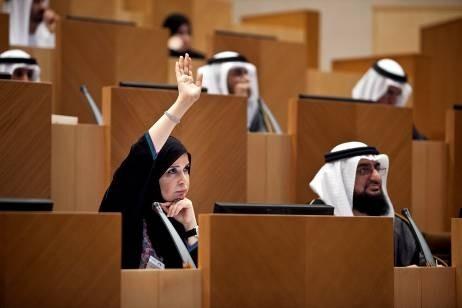
While the road to election is a difficult one, the challenges for women do not stop there. Once women enter parliament or other bodies, they are faced with many new challenges. Parliament is traditionally a male-oriented domain where the rules and practices have been written by men. It is, therefore, an ongoing challenge to transform parliament into a gender-sensitive environment, to ensure that actions are gender-sensitive and to guarantee that gender is mainstreamed throughout the legislature.

Only 5% of Nigeria’s lawmakers are women. It’s about to get worse

Back
October 24, 2022

Only 5% of Nigeria’s lawmakers are women. It’s about to get worse

Nigeria’s two dominant parties, ACP and PDP, have less than 6 per cent of their parliamentary candidates as women.

Nigeria’s two dominant parties, ACP and PDP, have less than 6 per cent of their parliamentary candidates as women.

October 24, 2022
Vanuatu to welcome first female MP since 2008 after snap election

Vanuatu Election Commission yet to declare official results but Julia King likely to be lone female voice in 52-member parliament.

October 21, 2022
Gender-sensitive parliaments can help end conflicts – IPU president

More women parliamentarians can play a major role in addressing global security conflicts, Inter-Parliamentary Union (IPU) president, Duarte Pacheco, has said.

Women’s political participation, East and Southern Africa regional office

Back
October 21, 2022

Women’s political participation, East and Southern Africa regional office

UN Women’s East and Southern Africa programming on Governance, Leadership and Political Participation is focused on providing technical support and capacity building to Member States, civil society and regional organizations, to enable women to fully a

UN Women’s East and Southern Africa programming on Governance, Leadership and Political Participation is focused on providing technical support and capacity building to Member States, civil society and regional organizations, to enable women to fully a

How did Rwanda become no.1 for gender equality?

Back
October 21, 2022

How did Rwanda become no.1 for gender equality?

In 2008, the Rwanda Chamber of Deputies was the first elected national parliament where women were the majority. The proportion of MPs who are women is at 61.25% today, way above the current global average of 26.4%.

In 2008, the Rwanda Chamber of Deputies was the first elected national parliament where women were the majority. The proportion of MPs who are women is at 61.25% today, way above the current global average of 26.4%.

Effective and inclusive parliaments

Back
October 21, 2022

Effective and inclusive parliaments

Ensuring GSP principles are embedded in political institutions is vital for a healthy democracy. It highlights that women’s inclusion and equality does not just stop at the ballot box.

Ensuring GSP principles are embedded in political institutions is vital for a healthy democracy. It highlights that women’s inclusion and equality does not just stop at the ballot box.

Interviews