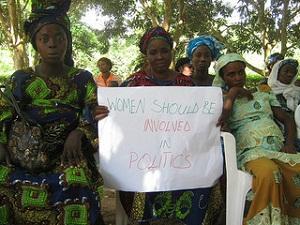
Political Parties
In a representative democracy, political parties function as a link between state institutions and local grassroots organizations. It is political parties that aggregate interests, present political alternatives and nominate candidates. As such, political parties play an essential role for the advancement of women and the promotion of equality. In this section, you will find information on the role of political parties in promoting women's political participation.
Nine Bahraini women have confirmed their candidacy for the upcoming parliament and municipal council elections.
However, they said they will reveal their election campaigns closer to the polls, which are expected to take place in November.
Apparently, some people feel that Datuk Seri Dr Wan Azizah Wan Ismail may not be a suitable candidate for the Selangor menteri besar post because she suffers from “uzur syarie” (menses).
With the role of women in British politics again coming under the spotlight this week, MPs and former ministers have warned that there is a “real problem” with the issue of gender in Westminster.
A female politician and former member of the House of Representatives, Mrs Juliet Nnenne Obasi-Akano, spoke at at her country home, Abajah in Nwangele Local Government Area, while marking her formal declaration for the Senate race of Orlu Senatorial Zone of Imo State in 20
Myanmar's younger opposition members urge elders to step aside for new generation as they aspire towards bigger roles and louder voice.
The heady days when Sydney women looked up to a female prime minister, female premier, governor and governor-general are long gone.
Malawai Congress Party (MCP) member of Parliament for Salima NorthWest constituency, Dr Jessie Kabwila, has been elected as new chairperson for Women Caucus in Parliament.
The incredibly poor gender diversity of elected state officials in the U.S., in 7 maps and charts
South Carolina’s Senate is the nation’s least gender-diverse legislative chamber, with just 2 percent representation, according to data from theCenter for American Women and Politics at Rutgers University’s Eagleton Institute of Politics.
Pagination
- Previous page
- Page 84
- Next page