Democracy’s digital divide: Women politicians face epidemic of online violence
Source: Daily Mirror
Digital platforms are now central to political campaigning in Sri Lanka. During the 2025 local elections, they offered a clearer view of how political engagement unfolds online, particularly for women in public life.
Drawing on Democracy Reporting International’s recent work on Sri Lanka’s 2025 local elections, analysis of Facebook and YouTube comments shared during the campaign period highlights how candidates were discussed on social media, the tone of those conversations, and the contrasting patterns of online responses directed at women and men in politics.
Social media is often viewed as a space that can broaden participation and diversify political debate. In practice, however, online engagement around women candidates frequently extends beyond policy positions, shifting instead toward personal and gendered lines of commentary.
A global pattern
Women who step into public political life face coordinated campaigns of online abuse designed to silence them. In Europe and Central Asia, a 2023 UN Women study across 13 countries found that 53 percent of women online had experienced technology-facilitated violence. Across the Asia-Pacific region, 60 percent of women parliamentarians report facing online gender-based violence. In Brazil, analysis of online content during the 2020 São Paulo mayoral election found that female candidates were targeted with substantially higher levels of abusive and sexist commentary on social media platforms than their male counterparts. This has documented persistent attacks on women candidates’ competence, appearance, and morality, while male candidates were more frequently discussed in relation to policies and political performance.
Similar findings emerged from another analysis conducted in the Middle East and North Africa. Analysing online political discourse across several countries, reveals that women politicians were disproportionately targeted with gendered insults, sexualised language, and threats of violence. The volume and nature of abuse contributed to self-censorship, with many women limiting their online engagement to avoid harassment.
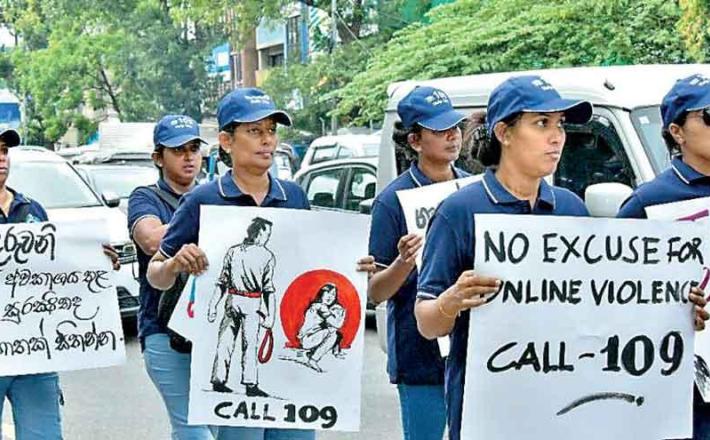
Digital platforms are now central to political campaigning in Sri Lanka. During the 2025 local elections, they offered a clearer view of how political engagement unfolds online, particularly for women in public life.
Drawing on Democracy Reporting International’s recent work on Sri Lanka’s 2025 local elections, analysis of Facebook and YouTube comments shared during the campaign period highlights how candidates were discussed on social media, the tone of those conversations, and the contrasting patterns of online responses directed at women and men in politics.
Social media is often viewed as a space that can broaden participation and diversify political debate. In practice, however, online engagement around women candidates frequently extends beyond policy positions, shifting instead toward personal and gendered lines of commentary.
A global pattern
Women who step into public political life face coordinated campaigns of online abuse designed to silence them. In Europe and Central Asia, a 2023 UN Women study across 13 countries found that 53 percent of women online had experienced technology-facilitated violence. Across the Asia-Pacific region, 60 percent of women parliamentarians report facing online gender-based violence. In Brazil, analysis of online content during the 2020 São Paulo mayoral election found that female candidates were targeted with substantially higher levels of abusive and sexist commentary on social media platforms than their male counterparts. This has documented persistent attacks on women candidates’ competence, appearance, and morality, while male candidates were more frequently discussed in relation to policies and political performance.
Similar findings emerged from another analysis conducted in the Middle East and North Africa. Analysing online political discourse across several countries, reveals that women politicians were disproportionately targeted with gendered insults, sexualised language, and threats of violence. The volume and nature of abuse contributed to self-censorship, with many women limiting their online engagement to avoid harassment.