Over the past two decades, Turkey has undergone a profound authoritarian transformation. Under AKP rule (in power since 2002), the space for political opposition has steadily contracted: press freedom has been gutted, civil society organisations shut down or co-opted, and the legal and electoral frameworks increasingly bent toward the consolidation of power. The tools of this transformation are by now familiar. Which is not limited to outright repression, but a more systematic effort to delegitimise the opposition by fragmenting it, discrediting its leadership, and making organised dissent appear either dangerous or futile. In this context, sustaining any form of political opposition is genuinely difficult.
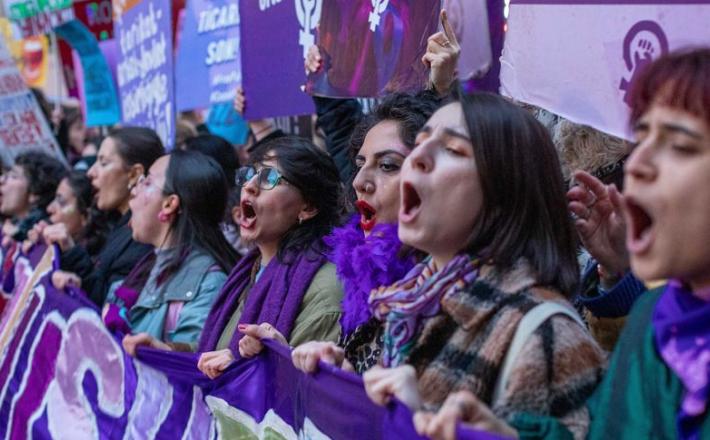
Yet that is precisely what the feminist movement in Turkey has done. The feminist movement has remained a consistent, visible, and expanding political force, capable of bringing tens of thousands of women onto the streets and articulating demands that cross deep political divides. The feminist movement in Turkey has built an alternative political possibility: a living demonstration that politics can be practiced differently, that opposition need not mirror the power it resists. And that collective action organised around shared experience rather than ideological uniformity can hold ground even as authoritarian pressure mounts. In a political landscape where the question of how opposition survives is increasingly urgent, what the feminist movement in Turkey has built is not merely a local story. It is a case study in political possibility.

Hear from women leading change in the political space share their experiences and insights.

Explore a wide-range of audio-visual resources on key topics of gender equality.

Hear from a diverse list of panelists and guests as they reflect on critical issues pertaining Women in Politics.