Parliaments and Representatives
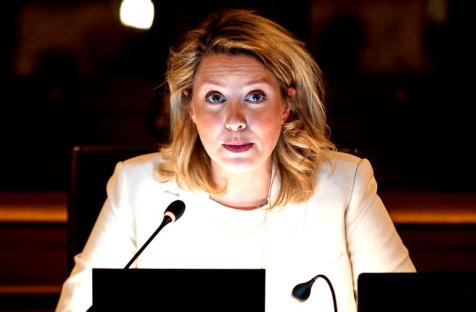
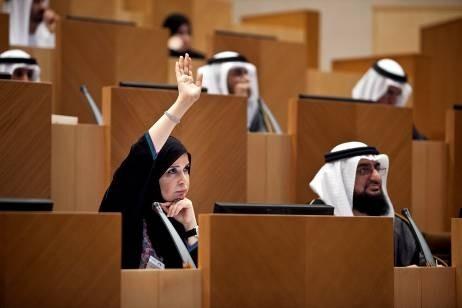
Democracy and the equal participation of men and women in the political arena are closely intertwined. No parliament or any decision-making body can claim to be representative without the participation of both men and women. As stated in the Universal Declaration on Democracy adopted by the Inter-Parliamentary Union’s Member Parliaments in 1997, "The achievement of democracy presupposes a genuine partnership between men and women in the conduct of the affairs of society in which they work in equality and complementarity, drawing mutual enrichment from their differences."
Recent years have seen a steady increase in the number of women in parliament, though the world average of less than 22 percent remains far from the goal of parity between women and men. The election of women to the highest positions of state and government in several countries has also contributed to the changing face of politics.
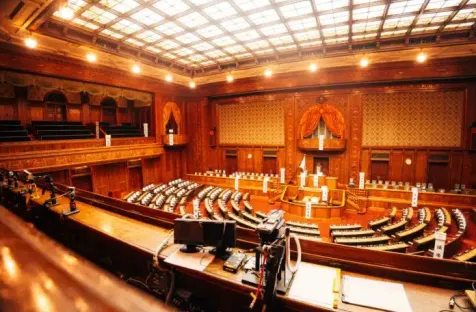
While the road to election is a difficult one, the challenges for women do not stop there. Once women enter parliament or other bodies, they are faced with many new challenges. Parliament is traditionally a male-oriented domain where the rules and practices have been written by men. It is, therefore, an ongoing challenge to transform parliament into a gender-sensitive environment, to ensure that actions are gender-sensitive and to guarantee that gender is mainstreamed throughout the legislature.
Entretiens
La Première dame Neemat Aoun a présidé vendredi une réunion de la Commission nationale pour les affaires de la femme libanaise (NCLW), consacrée au soutien d’un projet de loi visant à instaurer un quota féminin pour les élections législatives prévues en 2026.
À mesure qu’approche l’échéance électorale 2026, le débat sur la place des femmes dans la sphère politique prend de l’ampleur, tellement l’enjeu est grand pour la démocratie marocaine en cours de consolidation.
Et si les femmes prenaient (enfin) le pouvoir ?
Dix élections présidentielles se dérouleront sur le continent en 2026, mais aucune d’entre elles n’a la moindre chance de se conclure par la victoire d’une candidate.
Infographie sur la participation des jeunes dans les parlements nationaux 2025
En octobre 2024, l’UIP a modifié ses Statuts afin de préciser la définition d’un jeune parlementaire comme étant une personne âgée de moins de 40 ans. Auparavant, cette limite était fixée à 45 ans.
Dans l’émission « Les candidats face aux femmes », Ahoua Don Mello dévoile un programme audacieux axé sur la recon
Le premier bulletin de vote rempli par une femme pour participer aux élections québécoises a été déposé aux urnes en 1940.
Le plafond de verre de la maternité vient-il d’être définitivement brisé en politique ? Le 24 septembre 2025, l’élue allemande Hanna Steinmüller est intervenue en séance plénière en portant son bébé à la tribune. Un geste salué par le Parlement allemand.
À 64 ans, Sanae Takaichi s’apprête à devenir la première femme Première ministre du Japon.
Pagination
- Page précédente
- Page 2
- Page suivante