Post-conflict and Transitional Participation
According to the Ploughshares, in 2005, armed conflicts raged in 27 countries. In five of them, casualties exceeded 100,000 people, and the indirect costs in human capital, infrastructure and effect on future development are beyond estimation. The transition period begins when wars end through negotiated settlements or other means. With international and regional assistance, parties seek ways to deter the cycle of conflict by establishing a stable government to protect and provide for its citizens.
Formally and informally, women around the world are contributing to post-conflict reconstruction in the areas of security, justice and reconciliation, governance and socio-economic development. In 2000, the United Nations (UN) Security Council passed resolution 1325, a landmark decision mandating the participation of women in peace processes. Since the adoption of the resolution, awareness of the importance of including women in peace and reconstruction processes has grown enormously. Yet, implementation of the resolution’s mandate remains sporadic and ad hoc, and the gaps in practice are vast. Nonetheless, women’s participation in post-conflict reconstruction processes continues to increase.
In Sri Lanka, pressure by women’s organizations led to the establishment — within the structure of the formal negotiations — of a ten-member Subcommittee on Gender Issues in 2002. In Northern Ireland, women representatives were trusted as mediators during conflict negotiations, with such trust stemming from the women’s platform of respect for human rights, inclusion and equality. In Haiti, the women’s ministry and women’s organizations participated in a consultative process, resulting in the UN mission incorporating women’s priorities into its mandate and establishing the Disarmament, Demobilization and Reintegration Programme. In Rwanda, women formed the first cross-party parliamentary caucus composed of both Hutus and Tutsis, addressing issues of concern to women from all political parties. In Sierra Leone, a women’s task force was established to foster women’s participation in the design of the Truth and Reconciliation Commission and the special unit investigating war crimes. According to the World Bank, in Afghanistan, efforts by the international community and local women’s organizations have led to girls accounting for 40 percent of all children attending school in 2003, compared to only 9 percent before the war.
While significant and encouraging, such examples and best practices do not equate with the systematic inclusion of women in peace processes. It remains critical to amplify the role and contribution of women during political transitions to capitalize on this window of opportunity.
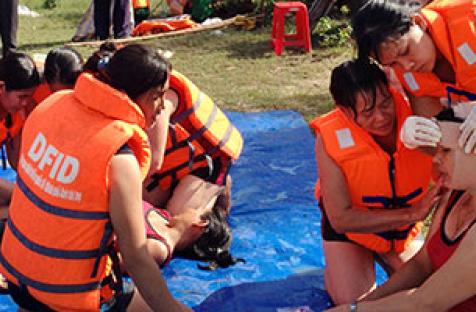
Grâce à la formation dispensée aux femmes sur la gestion des catastrophes et les actions de lobbying national, la contribution des femmes a été reconnue, et un décret gouvernemental offre aujourd’hui une place officielle à l’Union des femmes dans les organes décisionnels du pays.
Les histoires de viols collectifs, de mariages forcés et de pères contraints de violer leur propre fille sous la menace d’une arme l’empêchent de dormir.
Le document officiel du gouvernement tunisien levant officiellement les réserves de la Tunisie sur la Convention sur l’élimination de toutes les formes de discrimination à l’égard des femmes (Cedaw), a été déposé, le 17 avril courant, auprès du Secrétaire général des Nations Unies.
L’UIP est profondément alarmée par l’assassinat brutal de deux parlementaires somaliens en moins de 24 heures dans la capitale, Mogadiscio, et demande instamment aux autorités de ce pays de la Corne de l’Afrique de renforcer la protection des parlementaires.
L’article 23 du code électoral, instituant la parité avec alternance dans les listes des candidats aux élections de l'Assemblée du peuple, sera voté le mercredi 23 avril 2014.
Situation des femmes marocaines et transition démocratique
Présentation de l’Association Démocratique des Femmes du Maroc sur la situation des femmes marocaines et la transition démocratique du pays.
Event
Elections à l'Assemblée constituante en Libye
Le 20 Février, les Libyens vont élire 58 des 60 membres de l'Assemblée constituante.
Disc. en ligne
La participation des femmes dans le processus de rédaction d’une Constitution
iKNOW Politics a organisé une discussion en ligne sur «la participation des femmes dans le processus de rédaction constitutionnel ». La discussion a reçu des contributions en arabe, anglais, français et espagnol de plus de 20 membres provenant de divers pays, dont l'Équateur, Indonésie, Kenya, Mexique, Nigeria, Sierra Leone, Slovénie, Espagne, Soudan, Tunisie et Etats-Unis. Vous pouvez lire le résumé ici.
Pagination
- Page précédente
- Page 4
- Page suivante