Aller au contenu principal

Post-conflict and Transitional Participation

According to the Ploughshares, in 2005, armed conflicts raged in 27 countries. In five of them, casualties exceeded 100,000 people, and the indirect costs in human capital, infrastructure and effect on future development are beyond estimation. The transition period begins when wars end through negotiated settlements or other means. With international and regional assistance, parties seek ways to deter the cycle of conflict by establishing a stable government to protect and provide for its citizens.

Formally and informally, women around the world are contributing to post-conflict reconstruction in the areas of security, justice and reconciliation, governance and socio-economic development. In 2000, the United Nations (UN) Security Council passed resolution 1325, a landmark decision mandating the participation of women in peace processes. Since the adoption of the resolution, awareness of the importance of including women in peace and reconstruction processes has grown enormously. Yet, implementation of the resolution’s mandate remains sporadic and ad hoc, and the gaps in practice are vast. Nonetheless, women’s participation in post-conflict reconstruction processes continues to increase.

In Sri Lanka, pressure by women’s organizations led to the establishment — within the structure of the formal negotiations — of a ten-member Subcommittee on Gender Issues in 2002. In Northern Ireland, women representatives were trusted as mediators during conflict negotiations, with such trust stemming from the women’s platform of respect for human rights, inclusion and equality. In Haiti, the women’s ministry and women’s organizations participated in a consultative process, resulting in the UN mission incorporating women’s priorities into its mandate and establishing the Disarmament, Demobilization and Reintegration Programme. In Rwanda, women formed the first cross-party parliamentary caucus composed of both Hutus and Tutsis, addressing issues of concern to women from all political parties. In Sierra Leone, a women’s task force was established to foster women’s participation in the design of the Truth and Reconciliation Commission and the special unit investigating war crimes. According to the World Bank, in Afghanistan, efforts by the international community and local women’s organizations have led to girls accounting for 40 percent of all children attending school in 2003, compared to only 9 percent before the war.

While significant and encouraging, such examples and best practices do not equate with the systematic inclusion of women in peace processes. It remains critical to amplify the role and contribution of women during political transitions to capitalize on this window of opportunity.

janvier 23, 2014
Liban : Ni ministre ni même politique, la femme attendra…

De conditions en concessions, la formation du gouvernement continue de piétiner.

janvier 22, 2014
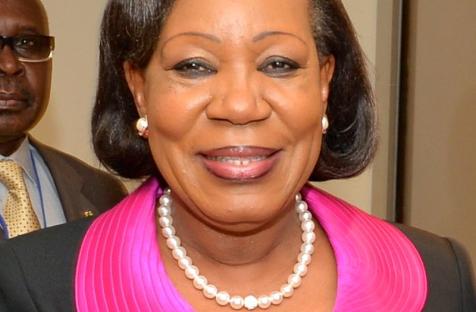
ONU Femmes salue l’élection de Catherine Samba-Panza en tant que Chef d’État de transition en République centrafricaine...
Catherine Samba Panza
janvier 20, 2014
Transition centrafricaine: Mme Samba Panza succède à Michel Djotodia

Mme Catherine Samba-Panza, la maire de Bangui, a été élue présidente de transition de République Centrafricaine, ce lundi 20 janvier, par le parlement du pays lors d'une séance publique.

janvier 20, 2014
Centrafrique : Catherine Samba-Panza, maire de Bangui, élue présidente de transition

Catherine Samba-Panza, maire de Bangui, a été élue lundi présidente de transition par le centrafricain.

janvier 8, 2014
ONU Femmes réunit des femmes syriennes pour soutenir les efforts de paix

Sommaire de la discussion en ligne sur la participation des femmes à la vie politique dans les pays en (post) conflit : Le rôle des femmes dans les négociations de paix

Back
December 12, 2013

Sommaire de la discussion en ligne sur la participation des femmes à la vie politique dans les pays en (post) conflit : Le rôle des femmes dans les négociations de paix

iKNOW Politics a organisé une discussion en ligne sur la participation politique des femmes dans les pays en (post) conflit et leur rôle dans les négociations de paix.

iKNOW Politics a organisé une discussion en ligne sur la participation politique des femmes dans les pays en (post) conflit et leur rôle dans les négociations de paix.

L'ONU: Les femmes, la paix et la sécurité

Back
November 4, 2013

L'ONU: Les femmes, la paix et la sécurité

Plusieurs résolutions du Conseil de sécurité consacrées aux femmes, à la paix et à la sécurité nous chargent de veiller à l’égalité des sexes.

Plusieurs résolutions du Conseil de sécurité consacrées aux femmes, à la paix et à la sécurité nous chargent de veiller à l’égalité des sexes.

Femmes, conflits armés et processus de paix: victimes, spectatrices, protagonistes, mais surtout…actrices!

Back
November 4, 2013

Femmes, conflits armés et processus de paix: victimes, spectatrices, protagonistes, mais surtout…actrices!

Cette thèse s’intéresse à l’agentivité des femmes et à la participation de ces dernières aux efforts visant la cessation des hostilités et la consolidation de la paix suite à un conflit armé.

Cette thèse s’intéresse à l’agentivité des femmes et à la participation de ces dernières aux efforts visant la cessation des hostilités et la consolidation de la paix suite à un conflit armé.

Femmes, paix et sécurité: Explorer les situations des conflits en Afrique

Back
October 25, 2013

Femmes, paix et sécurité: Explorer les situations des conflits en Afrique

Une présentation sur les meilleurs pratiques, lecons apprises au Burundi et dans la région des Grands Lacs Africains