Advocacy & Lobbying
The Economic Community of West African States (ECOWAS) has intensified efforts to close the gender gap in political leadership across the subregion, with a fresh push to achieve at least 30 percent female representation in national parliaments and decision-making bodies.
Through the ECOWAS Female Parliamentarian Association (ECOFEPA), women lawmakers have launched a mentorship initiative to groom over 200 emerging young women leaders from West Africa and the Sahel, aimed at building their confidence, political skills, and readiness to participate in governance.
Themed “Strengthening Women’s Role in Political Parties and Parliaments in West Africa and the Sahel,” the session, held at the ECOWAS Parliament in Abuja, marked a major step in advancing gender equality and nurturing the next generation of women in governance across member states.
This report was written by researchers from the Organization for Justice and Accountability in the Horn of Africa (OJAH) and Physicians for Human Rights (PHR).
The report benefited from reviews by members of PHR staff, the PHR Advisory Council, and the PHR Board of Directors, as well as members of the OJAH Board of Directors.
The research team would like to recognize the strength and resilience of the survivors whose experiences and stories are reflected in this data, as well as the dedication of the health professionals who provided services and documented these violations—often at grave risk to their personal safety.
About Physicians for Human Rights (PHR)
Physicians for Human Rights (PHR) uses medicine and science to document and draw attention to human rights violations. PHR was founded on the belief that physicians and other health professionals possess unique skills that lend significant credibility to the investigation and documentation of human rights abuses.
In response to the scourge of sexual violence, PHR launched its Program on Sexual Violence in Conflict Zones in 2011. The program works to confront impunity for sexual violence in the Central African Republic, the Democratic Republic of the Congo, Ethiopia, Iraq, Kenya, Myanmar, and Ukraine.
PHR has conducted research to understand the scale and scope of conflict-related sexual violence in various conflicts and contexts, including in the Democratic Republic of the Congo, Kenya, Myanmar, and Sierra Leone.
About the Organization for Justice and Accountability in the Horn of Africa (OJAH)
The Organization for Justice and Accountability in the Horn of Africa (OJAH) is an independent and impartial organization dedicated to strengthening justice and accountability mechanisms in the Horn of Africa through evidence collection and preservation.
The organization’s mission is to deter war crimes, crimes against humanity, conflict-related sexual violence, and other severe human rights abuses across the Greater Horn of Africa. It pursues this mission by conducting documentation and investigations, advancing the environment for justice and accountability, preserving and analyzing materials, and supporting international justice and accountability actors and efforts.
Full report here.
This report advocates for thorough protection of human rights in the digital age, emphasizing the strength of constitutional safeguards over ordinary legislation. As digital technologies increasingly influence civil and political rights, online as well as offline, robust constitutional frameworks are essential to address new challenges such as unwarranted surveillance, censorship and data monopolies. Ensuring adequate constitutional protection helps anchor fundamental rights in an evolving digital landscape.
Click here to read the full report.
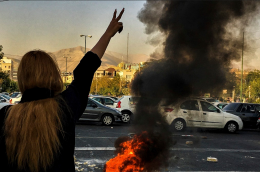
It’s been six months since the latest spark ignited mass protests in Iran — the death of 22-year-old Kurdish-Iranian Mahsa (Jina) Amini in morality police custody after she was arrested for allegedly failing to wear her hijab properly.
The outrage over her killing resulted in women-led protests. Their slogan “woman, life, freedom,” originally a Kurdish manifesto, has helped fuel the Iranian protesters’ demands for radical change.
Read more: Iranian women keep up the pressure for real change – but will broad public support continue?
The perseverance, bravery and determination of the Iranian protesters, particularly women and girls, have been heroic. Despite risks to their lives and freedoms due to a brutal government crackdown, many remain active in publicly articulating their grievances in a variety of ways.
In recent months, while some street presence has continued in Iran — for example, in response to the poisonings of schoolgirls in cities across the country — protesters are also organizing strikes, sit-ins, boycotts and publicizing their demands in the form of manifestos, charters and bills of rights.
In fact, a key distinguishing factor between the recent protests and the previous ones is that Iranians have been forming coalitions to advocate for important structural and institutional changes in support of equality, human rights, democracy and freedom.
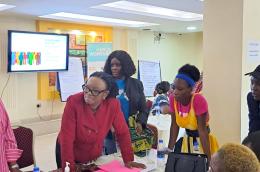
More than 40 representatives from civil society organizations (CSOs), women’s rights groups, gender advocates, and key national institutions have completed a three-day capacity-building workshop aimed at strengthening coordination and advocacy for increased women’s political participation in Liberia.
Jointly organized by UN Women and UNDP under the Liberia Electoral Support Project (LESP), the training was supported by the European Union, Ireland, and Sweden, with technical assistance from the UN Electoral Assistance Division (EAD) of the Department of Political and Peacebuilding Affairs.
The workshop gathered participants from the National Elections Commission (NEC), the Women’s Legislative Caucus of Liberia (WLCL), the Law Reform Commission (LRC), the Ministry of Gender, Children, and Social Protection, youth and disability organizations, and election observers. It focused on enhancing knowledge, practical advocacy skills, and strategic coordination to promote women’s leadership and political inclusion.
Expert Insights and Interactive Learning
Mr. Maarten Halff, Senior Political Affairs Officer and Electoral Systems Expert at the UN EAD in New York, facilitated virtual sessions on Obstacles to Women’s Participation in Liberia: An Analysis of the 2023 Results, Quotas in Context: An ABC of Electoral Systems, and Quotas and Quotas in the Liberian Context: Options and Implications.
These sessions offered comparative insights into how gender quotas operate across various electoral systems and their potential to enhance women’s representation in Liberia.
Additional sessions were led by Ms. Rindai Chipfunde-Vava, an international consultant from Zimbabwe, and Mr. Zage Filiposki, UNDP Liberia Electoral Specialist, using the BRIDGE (Building Resources in Democracy, Governance and Elections) curriculum.
Topics included Women’s Participation in Politics: Targets and Numbers, Sex and Gender Definitions, Equality, Level Playing Field, and International Standards of Elections, Advocacy, Campaigning, and Lobbying for Women’s Political Empowerment and Strategic Planning, Stakeholder Mapping, and Message Delivery Methods.
UN Women India Country Representative Kanta Singh has launched a new think-tank aimed at advancing women’s equity.
New Delhi based thriWe – The Hub for Research and Innovation on Women’s Equity is a think tank committed to advancing women’s equity through research, innovation, and collaboration. It aims to bridge the gap between policy and practice by focusing on evidence-based research, policy advocacy, and capacity building to support gender equity across sectors.
Singh highlighted India’s success in various fields and increased participation of girls and women.
“However, there still is a lot to do,” she added and emphasised the need to further increase women participation in the labour force and representation in political leadership.

In this report, the Working Group examines discrimination against women and girls in cultural and family life. The cultural construction of gender determines the role of women and girls within the family, including in marriage. After analysing the impact of culture and religion on the enjoyment of equal rights by women and girls in society and the family, the Working Group redefines family by incorporating a gender perspective. In reaffirming equality between the sexes and family diversity, it is necessary to apply the principle of women’s right to equality in all forms of family law, in secular family law systems, State-enforced religious family law systems and plural systems. After recalling the obligation of States to combat discrimination against women in cultural and family life, the Working Group makes several recommendations, drawing on good practices, for the establishment of true equality between the sexes in cultural and family life.
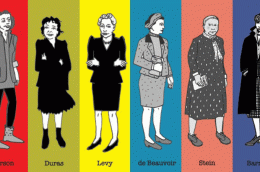
This year, for the first time ever, two of the largest neuroscience societies are led by a female scientist: the Society for Neuroscience (SfN), with nearly 42,000 members, and the Federation of European Neuroscience Societies (FENS), which represents more than 22,000 neuroscientists in 42 member societies across Europe. While the SfN has a history of female presidents, 9 out of 45, FENS welcomed its first female president only recently. Why do women move so slowly through the ranks of the system and why is it important that they do so? More urgently, what can be done to change this and by whom? Here we address current challenges and recommend concrete actions.
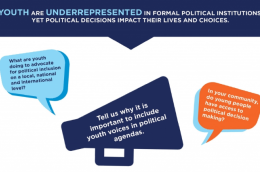
· Young people are not at the center of political decision making even though almost half the world’s population is under 30 years old. [UNDP, 2013, http://bit.ly/1dd2a2L]
· Globally, less than 6% of the parliamentarians are under 35 years old [UNDP, Fast Facts: Civic Engagement and Participation of Youth in Politics and Public Institutions, 2014, p.1, http://www.undp.org/content/undp/en/home/librarypage/results/fast_facts/Fast-Facts-youth-civic-engagement-and-participation/]
· Globally, less than 2 per cent of parliamentarians are under 30 years old. [SDG indicator 16.7.1; Inter-Parliamentary Union, 2016: Youth participation in national parliaments, 2016, http://goo.gl/A83XGf]
· The average age in parliament in 53 years old. [UNDP, 2013, http://bit.ly/1dd2a2L]
· Only 1.65% of parliamentarians around the world are in their 20’s and for a third of countries, eligibility for national parliament starts at 25 years old. [UNDP, 2013, http://bit.ly/1dd2a2L]
· Voter turnout among 18-25 year olds continues to be lower than other age groups [UNDP, Fast Facts: Civic Engagement and Participation of Youth in Politics and Public Institutions, 2014, p.1, http://www.undp.org/content/undp/en/home/librarypage/results/fast_facts/Fast-Facts-youth-civic-engagement-and-participation/]
[[{"fid":"10718","view_mode":"default","fields":{"format":"default","field_file_image_alt_text[und][0][value]":"","field_file_image_title_text[und][0][value]":""},"type":"media","link_text":null,"attributes":{"style":"display: block; margin-left: auto; margin-right: auto;","class":"media-element file-default"}}]]
· 2 out of 3 countries DO NOT consult young people as a part of the process of preparing poverty reduction strategies or national development plans. [The Global Youth Call “Prioritizing Youth in the Post-2015 Development Agenda,” http://www.un.org/youthenvoy/wp-content/uploads/2014/09/The_Global_Youth_Call.pdf]
Source:
http://www.un.org/youthenvoy/wp-content/uploads/2015/06/YouthStatsPublicandCivicParticipation1.pdf
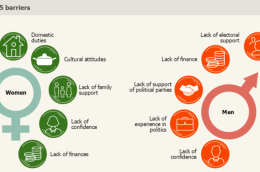
The Compendium of Good Practices on Advancing Women’s Political Participation in the OSCE Region, compiled on the occasion of the 20th anniversary of the Beijing Declaration and Platform for Action, presents good practices for enhancing women’s participation in parliaments, political parties, elections and local politics in the OSCE region.
Learn more about the challenges facing women in politics in our infographic, which is based on statistical data in the compendium. Click here to access the high resolution version of the visual.
[[{"fid":"10688","view_mode":"default","fields":{"format":"default","field_file_image_alt_text[und][0][value]":"","field_file_image_title_text[und][0][value]":""},"type":"media","link_text":null,"attributes":{"style":"display: block; margin-left: auto; margin-right: auto;","class":"media-element file-default"}}]]

As a result of the cooperation between the Centre for Arab Women Training and Research (CAWTAR), UN Women and UNDP, and with the financial support of the Ministry of Foreign Affairs of Finland, and the Arab Gulf Program for Development (AGFUND), CAWTAR successfully launched the “Legal and Human Rights of Women and Men: between Equality and Gaps” in Tunis on 28 March 2016. The e-platform aims to assist policy makers, women machineries and concerned civil society organization to better asses, analyze and understand the legal status of women across the region by compiling laws related to the status of gender and human rights in 20 Arab countries. The e-platform enables users to search by different topics and related rights, such as education, health, violence, political participation and contribution, access to justice and right to litigation in economy in each country. The online tool also allows for regional, cross-country comparisons across topics and indicators and provides information about best practices to facilitate experience exchange among Arab countries, and accordingly encourage legal reforms. Click here to know more.

The first ever indigenous peoples world conference concludes with a focus on climate.The Outcome Document also focuses on the rights of indigenous women and addressed the problem of violence against women, which he said “must be at the top of the agenda.”