Advocacy & Lobbying
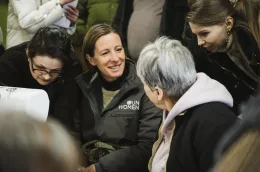
Four years have passed since the full-scale invasion of Ukraine on February 24, 2022. Daily life is a struggle to survive and tackle economic insecurity, power outages during brutal winters, constant security risks, and displacement.
But this is only half the story.
The other half is about remarkable resilience, courage, and determination of Ukrainian women who have led the war response from day one. They've distributed aid to those most in need, kept food on tables and businesses running, fought on the front lines, held communities together, cared for the sick, and kept essential services operating. Yet today, Ukrainian women and women-led organizations need our support more than ever to keep going and to continue the critical work they do.
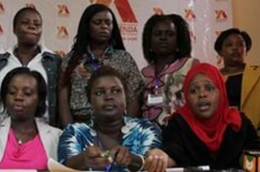
Every election year, Kenya has the same conversation. Where are the women? Why are so few of them on the ballot? And the answers tend to point back at women themselves, their confidence, their readiness and their willingness to step forward. Rarely do we turn the spotlight where it belongs; on the system that makes stepping forward so costly.
Kenya's Constitution is among the most progressive on the continent on gender equality. Yet more than a decade since the two-thirds gender rule was enshrined in law, it remains unmet. Parliament has failed repeatedly to legislate it into reality. And so a constitutional promise sits on paper while the political landscape remains stubbornly, predictably male.
Last week, a gathering of Kenyan women, lawyers, diplomats, conservationists, business leaders, women who have spent careers navigating power in its many forms, sat together and spoke with rare candour about exactly this. Not in the language of activism or advocacy, but in the plain, direct way of people who have lived it. That conversation, and what it revealed about leadership, politics, and the price women pay for public life, is at the heart of this week's cover story. It is worth your time. What struck me reading through it was how consistent the story is, how little the barriers have changed regardless of the generation telling them.
As communities across Ontario prepare for the 2026 municipal elections, Run Where You Are – Say Yes! is calling on women and gender-diverse people to take the next step toward public leadership.
The free, non-partisan virtual event is produced by six grassroots campaign schools across Ontario, including Grey Bruce’s electHER Now. The online event will take place on Tuesday, Feb. 24, from 7 to 8:30 p.m., and is open to participants across the province.
Building on the momentum of the 2025 Run Where You Are initiative, Say Yes! is designed for those who are curious about running for office, actively considering a campaign, or seeking clarity on what leadership could look like in their own community. The free event focuses on breaking down barriers, addressing self-doubt, and offering practical insight from those who have already said “yes” to leadership.
“Many women don’t always recognize just how ready they already are for leadership,” says Laura Wood, co-founder of electHER Now. “The Say Yes event will help people see that the skills they possess today have prepared them for leadership at the local political table tomorrow."
The virtual panel will feature municipal leaders from across Ontario who will share candid reflections on their paths to public office, including lessons learned, challenges faced, and what they wish they had known before running.
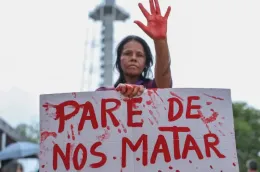
Over the weekend of November 6 and 7, 2025, thousands of Brazilians took to the streets to call attention to the rampant number of cases of violence against women. Since then, a new cycle of brutal stories occupied the news. Among them was a woman who jumped from a moving car after being kidnapped and stabbed by her ex-partner. Another woman was killed, and her body was discovered in a trash can, with her hands and feet bound. The body of an 18-year-old trans woman was brought to a police station by a ride-share driver who admitted to having killed her; he was freed right after. In another case, a 25-year-old woman died after being beaten and falling from the 10th floor of a building — her partner was arrested as the main suspect.
The number of cases of gender violence has been worrisome for some time in the country, even with laws increasing penalties for aggressors. But what are the reasons for the apparent surge in reported cases? To understand this context, Global Voices interviewed Isabella Matosinhos, a researcher for the Brazilian Forum for Public Security (Fórum Brasileiro de Segurança Pública).

For Kgomotso Modise, a South African journalist covering courts and criminal justice, online harassment has become a daily reality. “The insults are very sexual,” she explains to Global Voices in an interview, noting that her male colleagues expressing similar views never face comparable abuse. Her opinions are routinely sexualized and delegitimized. When she posted content criticizing extrajudicial killings in her country, the backlash escalated into a violation: trolls retrieved childhood photos from her Facebook account and posted them alongside threats of sexual violence against her and her underage niece.
But the harm extends far beyond individual journalists. Cybercrime accounts for more than 30 percent of all reported crime in West and East Africa, according to Interpol’s 2025 Africa Cyberthreat Assessment Report. Two-thirds of African member countries surveyed said that cyber-related crimes accounted for a medium-to-high share of all crimes, with online scams, ransomware, business email compromise, and digital sextortion among the most reported threats. Digital threats now reach ordinary users, public institutions, and essential services, creating conditions where intimidation and harmful content can spread easily.
Across Africa, Reporters Without Borders has documented sustained online harassment and surveillance targeting women journalists in Africa, noting that digital abuse has become an emerging barrier to press freedom. This year’s 16 Days of Activism (November 25 to December 10) against gender-based violence (GBV) comes at a time when online harm is shaping public life as much as offline violence. Women who comment on public issues, work in journalism, or engage in civic life face increasing hostility that limits their participation.
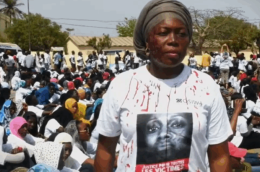
However, in Senegal, this right largely remains mere words. Human rights organizations, such as the International Federation for Human Rights (FIDH), the Senegalese League of Human Rights (LSDH), and the African Assembly for the Defence of Human Rights (RADDHO), a national NGO based in the Senegalese capital Dakar, denounce the State’s non-compliance with its international commitments. In 2024, these three organizations published their Dual Hardship report, warning that Article 14 of the Maputo Protocol has not been transposed into national legislation, and that women victims of rape or incest must consequently carry their pregnancy to term.
In Senegal, Article 305 of the Criminal Code prohibits abortion, except under limited therapeutic circumstances intended to save a mother’s life. This situation drives many women, including the victims of rape or incest, towards illegal, dangerous, and often life-threatening practices.
According to Prison-Insider, a France-based platform that shares information on prisons across the world, up to 46 percent of the women held in Liberté VI prison in Senegal are convicted of infanticide, demonstrating the scale of the problem.
While the right to abortion is barely recognized, the reasons are not only legal, but also socio-cultural.
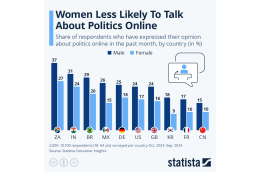
Women are more likely to be hesitant in expressing their opinions about politics online than men, a new survey by Statista Consumer Insights has found. This was the case in all of the 21 countries polled, with the gender gap narrowest in Finland at 3 percentage points (22 percent male, 19 percent female) and widest in Mexico at 10 percentage points (26 percent male, 15 percent female). This mirrors wider patterns of gender roles and equality in society, with Finland having scored in the top three places in this year’s Global Gender Gap Index by the World Economic Forum.
Even aside from gender, the degree to which people express their views on politics online varies greatly by country. For example, in China only 13 percent of respondents on average said they had expressed their opinion about politics online in the past month. This includes having commented on or even liked a post related to politics on social media. In Japan (not shown on this chart), the figure was even lower at just 5 percent (7 percent men, 3 percent women). At the other end of the spectrum comes South Africa, where 32 percent of respondents said they had expressed their political opinion in the past four weeks (37 percent men, 27 percent women).
Read here the full article published by Statista on 17 January 2025.
Image by Statista
Background
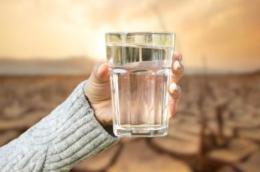
The access to water and sanitation is recognised as human right and the access to clean drinking water and sanitation are essential to the realisation of all human rights. The EESC with this own-initiative opinion is aiming to address the issue of water-related challenges for the most vulnerable population on the planet and to propose options for their empowerment.
Key points
In the opinion the EESC:
-
stresses that young people, women, and indigenous and local communities (including migrants and people with disabilities) are the most vulnerable to water stress and have a large untapped potential for contributing to sustainable water management, for turning water into an instrument of peace and stability, and, thus, for contributing to blue diplomacy;
-
calls on the EU to pay due attention to these groups in its external relations and international cooperation and suggests a lighthouse partnership programme related to water stress for addressing how to empower them in an integrated manner;
-
notes that access to clean water, education, employment and participation in policymaking are key elements of empowerment. Better access to water, sanitation and hygiene (WASH) services is crucial, as it frees up time for education and vocational training and opens up more diverse options for employment and the ability to contribute to water management and policies;
-
reaffirms that blue and digital technologies are instrumental for improving water management and access to clean water and sanitation;
-
highlights that meaningful partnership and funding are critical in the development of infrastructure, education and general capacity building. Both EU funds and national donors’ programmes play a crucial role here and coordination is vital to create synergies and make the most of the allocated resources.
Read here the full article published by the European Economic and Social Committee on 4 December 2024.
Image by the European Economic and Social Committee
What you need to know:
-
To effectively address TFGBV, support systems must be integrated into existing reporting mechanisms, providing clear communication channels for women to report incidents.
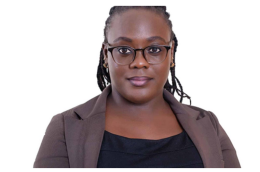
Uganda is making significant strides in its democratic processes, but the intersection of technology and politics poses both opportunities and challenges, especially for women. Technology-facilitated gender-based violence (TFGBV) has emerged as a major barrier for women in politics, where harassment, intimidation, and violence are prevalent.
As we commemorate the 16 Days of Activism against Gender-Based Violence under the theme “Towards Beijing +30: UNiTE to End Violence Against Women and Girls,” it is crucial to address TFGBV through a multifaceted approach, including communication channels, education, awareness, and strong support systems. TFGBV is a pervasive issue that affects women at all levels of political engagement, from grassroots activism to national leadership.
The Amplified Abuse report by Pollicy highlights the alarming prevalence of online violence during periods of political activity in Uganda. This violence, particularly directed at women in public life, exemplifies Violence Against Women in Politics (VAW-P). The research, conducted during the January 2021 general elections, examined social media accounts to assess how online harassment affects women’s political engagement
Read here the full article published by Monitor on 25 November 2024.
Image by Monitor
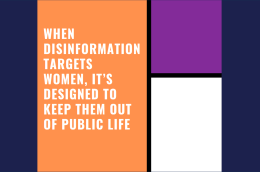
By the time the first verified reports about COVID-19 were published, misinformation about the virus was already being shared. Disinformation and ‘fake news’ soon followed. It didn’t take much time at all before distortions, lies and fictions were reaching more people, more quickly, than facts.
None of this should surprise us, since we’ve known for some time that lies spread faster than truth. The real problem arises when lies are believed. And when does that happen? Research tells us that lies are more likely to be believed, and especially catch fire, when they reinforce our pre-existing beliefs. While some beliefs are harmless, others can be weaponized, with the help of disinformation, to achieve undemocratic ends.
In the world of politics, this is already happening. Disinformation campaigns regularly rely on sexist beliefs about women, power and politics in attempts to delegitimize women who hold or seek office. Distinct from online abuse, trolling, revenge porn or even pornographic deepfakes, disinformation is a stealthier, more pernicious way to undermine women and dissuade them from entering politics. This emerging threat has devastating implications for women in public life and, by extension, democracies everywhere.
It’s crucial that we pay attention, and commit energy and resources to better understand this problem. What’s at stake is simply too important to ignore, especially now. Just when women are inching closer to a more equitable share of public power, trying to actualize democracy’s promise of government by the people, for the people—women being a key part of the people—gendered disinformation puts hard-fought gains at risk.
Read here the full overview published by Fundación Multitudes.

Multiple studies show that the use of social media has a negative impact on the political leadership of women and girls in Latin America. Social media is one of citizens' most used tools in the region to get information and communicate with others, with a high level of internet penetration, and raising a series of issues related to the low level of digital literacy in the countries.
One of the biggest problems with the massive penetration of social media in Latin America is that users don’t have the knowledge nor the tools to know what is real and what is not. Identifying gender political violence online, including disinformation and fake news, is particularly difficult considering that lies spread faster than truth , making them more vulnerable to disinformation.
In order to understand if the safeguards in place are efficient, it is essential to identify the state of implementation of the institutional incentives for women to participate in politics, in addition to looking at the existing safeguards and legislation to counter online gender-based violence and disinformation in Latin America. Specifically, we look at the current state of affairs in four countries of the region. Our research question is: What is the state of implementing the institutional incentives for women to participate in politics, the existing safeguards to counter gender-based violence online, and the existing legislation against disinformation in Colombia, Mexico, Argentina, and Brazil?
Access here the full report published by Fundación Multitudes.
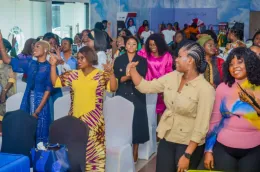
A research study by Voice of Women Radio has shown why women don’t vote for female political aspirants in Nigeria.
The reasons ranged from their ignorance of the existing female political aspirants to beliefs that existing female political aspirants are inexperienced. Similarly, many women in the grassroots believe that men are better leaders than women.
There is also the issue of culture, inaccessibility of campaign funding for women as their male counterparts, and family upbringing, which favour males taking up leadership roles. However, higher among the reasons is female electives’ inability to connect with or impact their female electorates once elected into office.
The report detailing the research carried out in the six geopolitical zones of Nigeria reveals that only 31 percent of 83 percent of female voters (that is, 8 out of 10 women possessing permanent voters’ cards) voted for women at the last elections.
Read here the full article published by Leadership News Nigeria on 8 October 2024.
Image by Leadership News Nigeria