Advocacy & Lobbying
Exile Hub is one of Global Voices’ partners in Southeast Asia, emerging in response to the 2021 coup in Myanmar, focusing on empowering journalists and human rights defenders. This edited article is republished under a content partnership agreement.
Kant Kaw’s journey into journalism officially began in 2009, but her story started long before that. As a child, she devoured books of every kind, captivated by the power of language. She dreamed of becoming a writer, yet understood early that writing alone could not sustain her. So she pursued practical jobs while holding on to her passion.
Everything changed the day she discovered journalism. For her, it was the perfect convergence of purpose and livelihood. It allowed her to write, to witness, and to serve the public. Fifteen years later, she remains in the field, saying that she never stopped loving the work.
“I absolutely love thinking up and writing news and article ideas. I can't give it up.”
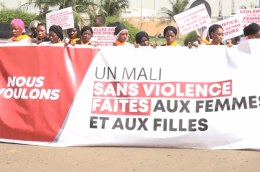
Since 2012, Mali has been in security turmoil with the emergence and expansion of several radical non-State armed groups: Jamāʿat Nuṣrat al-Islām wal-Muslimīn (JNIM), Al-Qaeda in the Islamic Maghreb (AQMI), Katiba Macina, Al Mourabitoun, and the Islamic State Sahel Province (EIGS). These groups demand the independence and empowerment of territories in the northern region of the country, using targeted violent action to weaken and overthrow the powers that be. The current state of affairs has led to ongoing security disruptions across Mali and other Central Sahel countries.
Today, the security situation in Mali, a member of the Alliance of Sahel States (AES) that withdrew from the Economic Community of West African States (ECOWAS) on January 28, 2024, has been marked by clashes between the Malian armed forces and their allies and non-State armed groups. This situation continues to disproportionately affect the civilian population, especially women and girls who are often victims of sexual violence.
According to the United Nations Population Fund’s (UNFPA) May 2025 Mali Situation Report, the armed groups’ attacks also result in forced marriages and considerably limit access to essential sexual and reproductive health and protection services.
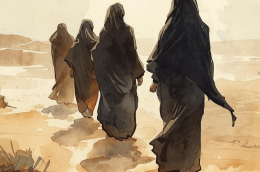
Over the past decade Somaliland has seen a worrying convergence of political exclusion for women and active pushback against progressive sexual-offences laws and gender-equity measures. The result is not only weaker legal protection for survivors, but social environments that enable sexual violence and silence victims. This article examines recent examples and reports, connects them to the rollback of protections and low female political representation, and outlines the human-rights and social costs for Somaliland’s women and girls.
This article is released by the Women’s Human Rights, Education & Environment Association (WHEEA), with KOMBOA through the Strategic Initiative for Women in the Horn of Africa (SIHA) Network. It aims to expose the growing impact of backlash against the women’s rights movement in Somaliland, particularly following the rejection of progressive sexual-offences legislation. By documenting recent cases of sexual violence, political exclusion, and institutional failures, the article highlights how resistance to women’s rights has deepened impunity and vulnerability for women and girls. In addition to analysis, the article provides concrete policy recommendations for lawmakers, religious leaders, civil society, and international partners to strengthen protection, accountability, and women’s political participation in Somaliland.
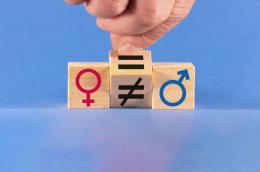
“Closing the gender pay and pension gaps is not only a matter of fairness, but also a strategic economic necessity for Europe’s competitiveness, growth, and fiscal sustainability,” said Mirosława Nykiel MEP, negotiator of the report on gender pay and pension gaps in Parliament’s Committee on Women’s Rights and gender equality, after the vote.
“At a time of growing geopolitical pressure and unfair international competition, Europe must fully harness all its talents. Closing these gender gaps is not optional - it is essential”, Nykiel stressed.
According to estimates, gender pay and pension gaps cost the EU EUR 390 billion in 2023 due to lost earnings and lower public revenues. Closing the gender employment gap could boost GDP per capita by between 3.2% and 5.5% by 2050, while higher wages would encourage more women to enter and remain in the labour market.
“Europe cannot afford to waste women’s talent,” Nykiel added. “Pay and pension gaps are an economic inefficiency - they keep people out of work and weaken Europe’s ability to respond to demographic decline and skills shortages.”
The report places competitiveness and productivity at the heart of the debate, highlighting that women’s full economic participation is indispensable for Europe’s long-term prosperity.
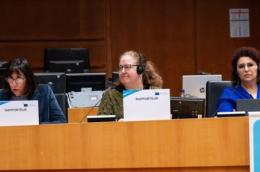
At its January 2026 plenary session, the European Economic and Social Committee (EESC) adopted a resolution outlining the EU’s priorities for the 70th United Nations Commission on the Status of Women (UN CSW70). With a strong focus on access to justice, women’s participation in public life and the elimination of gender‑based violence, the EESC sets out a roadmap to strengthen women’s rights and reinforce democracy across Europe and beyond.
The resolution builds on the EESC’s longstanding engagement with global gender‑equality frameworks and its sustained cooperation with the European Union at the UN level. With democratic backsliding, harassment in digital and real life and structural discrimination affecting women and girls in every region of the world, the Committee calls for a renewed commitment to advancing women’s rights in all their diversity and for placing access to justice at the centre of this work.
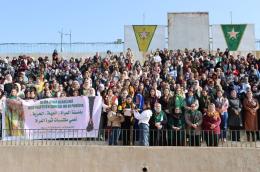
The Joint Platform of Women’s Movements and Organizations in Rojava and North and East Syria announced the launch of a national and international campaign demanding the safeguarding of women’s rights in a new Syria and emphasizing women’s active participation in drafting the anticipated constitution.
The announcement came during a statement delivered today, Wednesday, at the 12 March Stadium in the city of Qamishlo, attended by dozens of activists and members of women’s organizations, alongside intellectuals, politicians, and rights advocates.
Twenty-nine women’s movements, organizations, unions, and political parties signed the statement, coinciding with the approaching International Women’s Day on March 8 each year. The statement was read in three languages: the Kurdish version by Kongra Star spokesperson Rihan Loqo, the Arabic version by Mona Youssef, an administrator in the Syrian Women’s Council, and the Syriac version by Samira Gawriah Hanna, a member of the Syriac Women’s Union Party.
Implementation Of The Beijing Declaration And Platform For Action (1995) And The Outcomes Of The Twenty Third Special Session Of The General Assembly (2000) In The Context Of The Of The Thirtieth Anniversary Of The Fourth World Conference On Women And The Adoption Of The Beijing Declaration And Platform For Action 2020
Read here the full country report published by UN Women Africa on 30 September 2024.
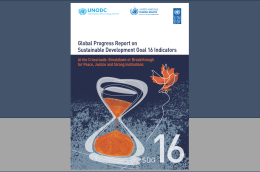
The 2nd Global Progress Report on SDG16 Indicators represents a unique and pivotal UN inter-agency effort toward supporting the realization of the 2030 Agenda. This report reveals critical trends that, if not reversed, could jeopardize the achievement of all goals set by the international community, leaving an increasing number of people behind.
Released in 2023, the first joint Global Progress Report on SDG 16 served as a wake-up call for action on strengthened efforts towards justice, peace, and strong institutions. The report portrayed a sobering picture, revealing that progress toward the 2030 Agenda was alarmingly off track, with advancements on goal 16 worryingly slow. In some instances, even moving in the wrong direction. The report, however, acknowledged some significant strides towards supporting countries in addressing data gaps through partnership, technical assistance and production of evidence.
This report, the second dedicated to Goal 16, compiles contributions from all indicators in a single document providing the best regional and global data that the UN system can offer across all targets. The data, statistics and accompanying analysis spotlight trends that have and will continue to shape our world, policy options and underscore the urgent need for action to reverse negative trends and to foster a more just and sustainable future.
Click here to access the full report published by UNDP on 17 July 2024.
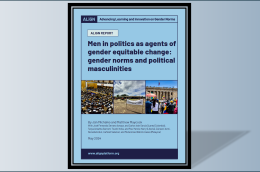
Men in politics as agents of gender equitable change examines why men in politics decide to support gender equality, how they explain and frame their allyship, and how their actions are perceived by women politicians, activists and students. Drawing on evidence from three countries: Colombia, Liberia and Malaysia, this research contributes in-depth, qualitative and cross-country analysis of how gender norms are influencing decisions of men politicians to support gender equality in the Global South.
As key stakeholders in changing norms around political masculinities and representation in politics, the project responded to feminist calls for a better understanding of how more men can be motivated to take an active role in addressing gender inequalities. Despite their diverse histories, social, political and economic contexts, all three countries had senior government officials expressing support for feminist foreign policy and a greater public discourse on gender equality or feminist politics among men politicians.
Based on key informant interviews and focus group discussions with politicians, activists and university students, the study explores how personal motivations, political institutions, social norms, and global gender equality regimes help to shape men’s engagement – or lack of it – with gender equality, while being mindful of the risk of the appropriation of feminist principles to maintain patriarchal inequalities and intersecting systems of oppression.
This cross-country analysis, together with the three country reports, tease out the implications for politicians, international donors, civil society and researchers on how best to engage with men in positions of power to promote the sustainable transformation of unequal gender norms.
Read here the full report published by the ALIGN Gender Norms Platform on 28 May 2024.
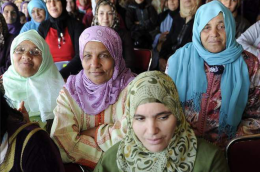
Despite overall progress in terms of more women participating in political decision-making worldwide, gender equality in political participation remains elusive. Deeply entrenched discrimination continues to hinder women’s full participation in political and electoral processes. In its efforts to advance women’s rights and gender equality, UN Women recognizes women’s political participation as a key area of focus.
UN Women’s initiatives to advance women’s political participation include:
¨promoting supportive legislative and institutional reforms;
¨building the capacity of women political aspirants and leaders;
¨monitoring, preventing and mitigating violence against women in politics; and
¨encouraging social norms change to recognize women’s political leadership.
UN Women is also actively engaged in promoting women’s political participation through coordination and advocacy efforts across the UN system.
In 2023, UN Women’s Independent Evaluation Service conducted an evaluation of UN Women’s support to women’s political participation. The primary focus of the evaluation was the impact of UN Women’s efforts to support women’s political participation at the national (and subnational) level. The evaluation also identified lessons learned; examined the contribution of regional and global-level support/guidance; and tracked both positive and negative unintended consequences, including cases of backlash against women’s political participation.
The evaluation included a retrospective view of results achieved during the UN Women Strategic Plan 2018–2021 period, as well as a forward-looking view to support implementation of the UN Women Strategic Plan 2022–2025. The geographic scope covered UN Women’s programming across all six regions through a representative sample of 12 country offices.
Read here the full report published by UN Women on 18 May 2024.
KARACHI: The Uks Research Centre (URC) has urged the media outlets in the country to recognise the transformative potential of women in politics and foster a more inclusive media environment for democratic, inclusive, and representative discourse.
The Pakistani media has been urged to increase the coverage of women's issue to address gender imbalance prevailing in the country -- a phenomenon witnessed during the news coverage of pre-and post-election period.
The URC organised a dialogue, titled 'Gender Representation in Media During Pakistan's 2024 Elections'. The event, hosted by URC Executive Director Tasneem Ahmar, was attended by politicians, representatives of journalists, and researchers.
In her brief remarks, Ahmar said that her organisation monitored gender representation in the Pakistani media, and conducted research on emerging trends and created awareness about inclusion and negative stereotyping through training and advocacy.
On the occasion, Shahrezad Samiuddin presented a data-based analysis of the media coverage of the pre- and post-election scenarios. She highlighted that during the election coverage, more than 90% of journalists, who reported to both print and electronic media, were males.
A better representation of was seen on TV screens where 33% announcers were women. Similarly, Samiuddin pointed out that the coverage of women-specific news did not exceed 10-13% in both forms of media. The share of women-related news increased in the current affairs shows to 38%.
Read here the full article published by The Express Tribune on 18 May 2024.
Image by The Express Tribune
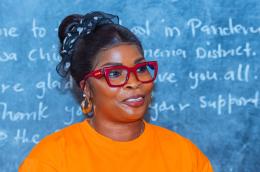
Africa Renewal: What best practices you would you like to share with other countries regarding your government’s work to empower women?
Dr. Mahoi: Everybody knows what we have been through in Sierra Leone—war, Ebola, landslides, flooding, and more. In all these, women suffered the most but we have picked ourselves up. Our focus now is ensuring that women's empowerment is at the centre of development.
We have ratified numerous international agreements such as the Convention on the Elimination of All Forms of Discrimination against Women (CEDAW), the Protocol to the African Charter on Human and Peoples' Rights on the Rights of Women in Africa, also known as the Maputo Protocol, and the Beijing Declaration, and so on. So, we are on course in domesticating these treaties and implementing our mandates and obligations as a country.
On the domestic front, we have enacted many gender-related laws such as the Devolution of Estates Act, 2007; the Domestic Violence Act of 2007; and the Customary Marriage and Divorce Act of 2009. For me, these are outdated laws, even though they were steps in the right direction at the time.
In the last few years, we reviewed some of those laws and are trying to address existing gaps. For example, in 2019, we reviewed the Sexual Offenses Act of 2012, to impose stiffer punishments on perpetrators of sexual violence. President Julius Maada Bio demonstrated his passion for the well-being of women by declaring in 2019 a State of Emergency over rape and sexual violence.
We established a Sexual Offences Model Court to try cases of sexual violence against minors and impose stiff punishment. Those cases are now fast-tracked. We enacted the Gender Equality and Women’s Empowerment Act(GEWE), in 2022, to reaffirm our commitment to the empowerment of women and girls. We also have the Customary Land Rights Act, which guarantees women the right to own, hold, use, and inherit land.
All these efforts are translating into tangible results.
Click here to read the full article published by the United Nations Africa Renewal News on 30 April 2024.
Image by UN News
.